What makes a benefits package truly attractive? Not long ago, “great benefits” were shorthand for ping-pong tables and free snacks—perks many now see as superficial. By contrast, traditional packages emphasized fixed vacation allowances and core coverage like health insurance.
But today, many companies are rethinking benefits with flexibility at the core. To explore what that looks like in practice, we interviewed HR consultant Jayne Murphy (MA, MACIPD).
We’ve worked with Jayne before, as she shared her advice on how to deal with a horrible boss. The HR professional’s 25 years of experience give her a wealth of insight into career topics from both an employee and management perspective.
Here are the key points:
- Benefits improve employee engagement, reduce turnover, and make people feel valued at work.
- Must-have benefits vary by region—health insurance is critical in the U.S., generous paid time off is baseline in Europe.
- While individuals’ preferences vary, benefits like parental leave and mental health support top the list.
- Companies that don’t offer dealbreaker benefits might be damaging their reputation.
- Younger workers opt for benefits that immediately improve their wellbeing, while older employees focus more on long term financial security.
- Flexible benefits plans or cafeteria plans that allow employees to spend a predetermined budget on the perks they want could be the future.
- Workers should continually review their benefits.
Benefits packages make employees feel valued and boost morale
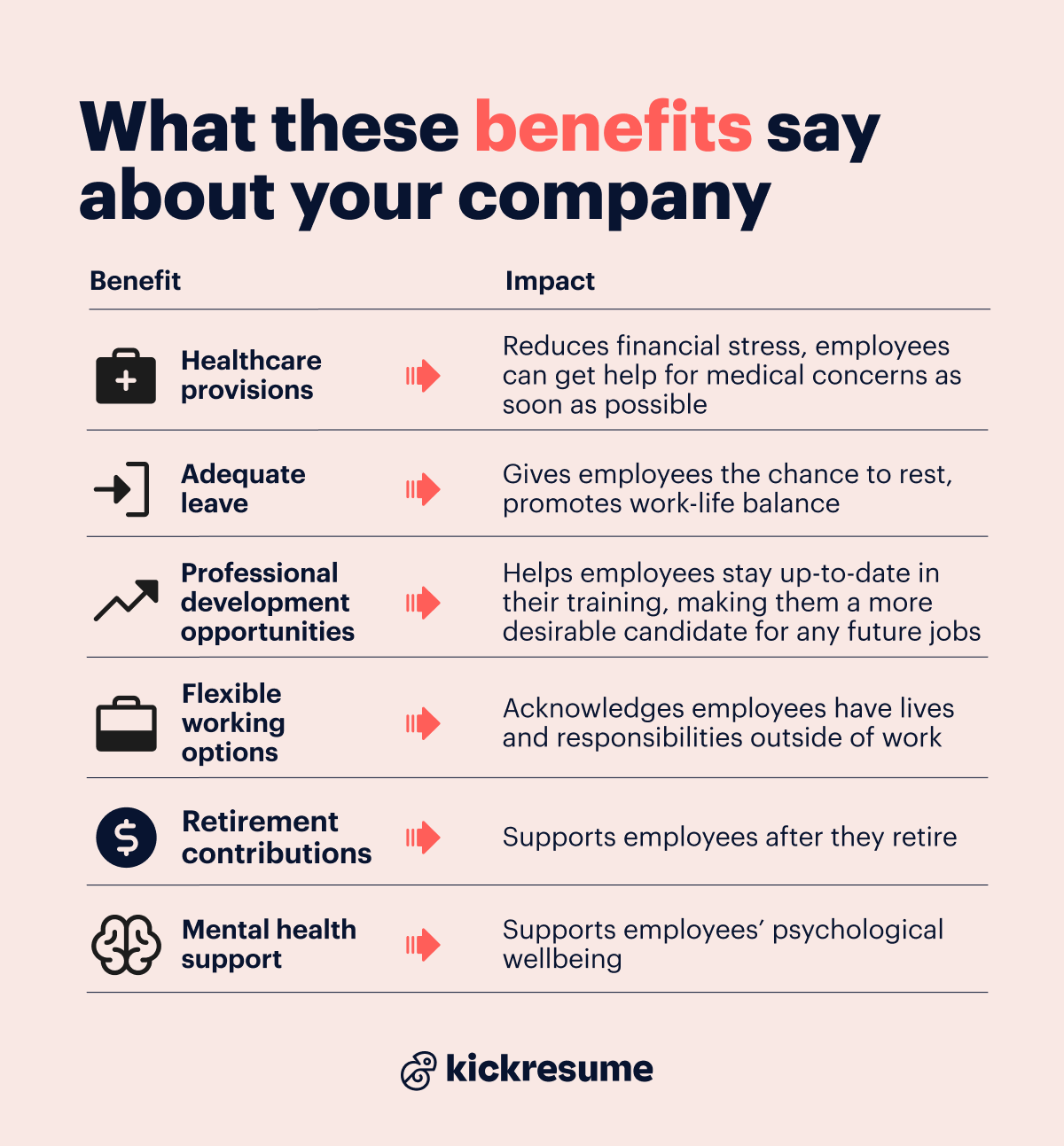
Jayne Murphy shared that benefits that are genuinely meaningful make employees feel “valued as whole people rather than interchangeable resources”. The benefits that matter the most are those that make a real difference to people’s lives. That means anything that eases their financial worries, helps their long term career development, or improves their physical and mental health and wellbeing.
Benefits that make employees feel valued pay off. Jayne Murphy shared that the right kind of perks foster “engagement, retention, and genuine organizational commitment”. One 2024 survey of 1,500 Americans found that feeling appreciated is the top factor influencing people to stay at their company.
The HR expert went on to add that understanding the importance of different benefits “helps companies design effective packages bespoke to their own culture”. We asked Jayne to unpack the most popular benefits and what they signal about a company.
Regional realities: the core benefits employees expect
Some benefits are simply non-negotiable for most people. While “competitive salaries that reflect cost of living increases” are top priority for many, that’s compensation, not a benefit. To identify which benefits are truly essential, we asked Jayne Murphy, who noted that the answer varies around the world.
- In the U.S., where access to healthcare often depends on employment, comprehensive health insurance matters a great deal.
- Paid time off is another key benefit that nearly all employees look for. In Europe, workers might expect 25-30 days. In contrast, the average number of vacation days for American employees is only 11, according to the Bureau of Labor Statistics.
- Opportunities for career development are a must, and a major factor in whether people decide to stay at a company long term. U.S. workers may be slightly more willing to “job hop” for their next opportunity, especially given the shorter notice period of only 2 weeks. So European workers might be thinking a little more about career growth possibilities, if they decide to stay at the company for the next few years.
- Lastly, the HR expert told us that for many, flexible working arrangements have also become a must-have, with many professionals only wanting a job that offers remote or hybrid working. This might be especially important for U.S. workers looking to work for a company in another state.
Top priorities: paid parental leave and mental health support
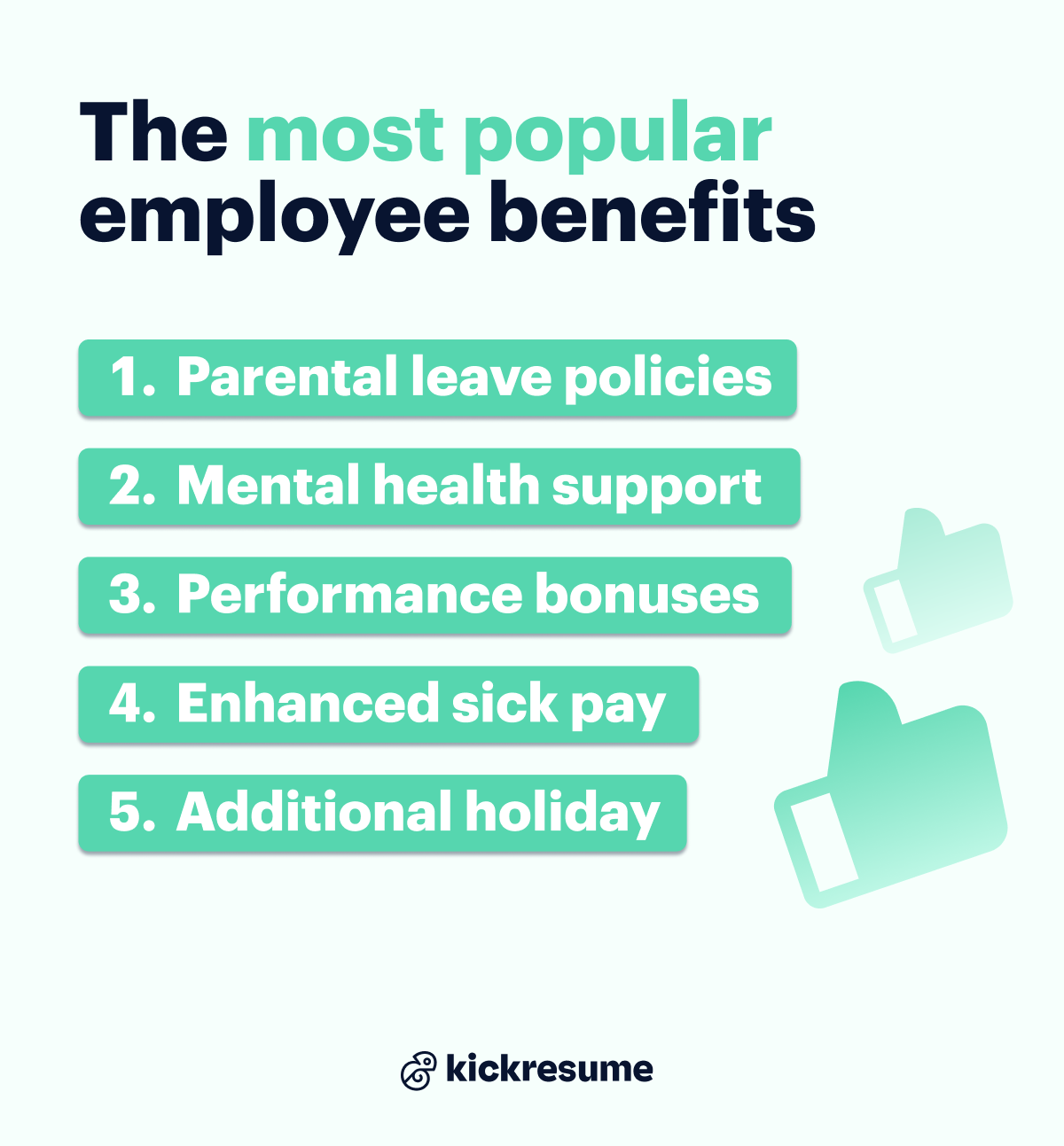
Aside from those must-have benefits, how can employers provide the most value to their staff? In Jayne Murphy’s experience, the below benefits are the most desirable for most workers—although this order “shifts dramatically” according to people’s individual circumstances.
Top employee benefits:
- Parental leave
- Mental health support
- Performance-related bonuses
- Enhanced sick pay
- Additional vacation days
The HR expert told us that parental leave policies are extremely important, especially in the U.S., where the minimum leave for new parents is only 12 weeks unpaid. Companies can give parents a bit more peace of mind by being more generous with time off—and paying them for it.
As awareness is raised about workplace stress, mental health support is becoming an increasingly popular and well-known workplace benefit. In practice, this benefit might look like workplace wellbeing programs and access to counselling.
Performance-related bonuses or profit-sharing schemes are an effective way to make sure staff feel rewarded for their hard work.
Jayne identified enhanced sick pay as the next most desirable benefit—a well-being-focused perk that gives employees security when they’re too ill to work.
Lastly in the top five benefits, the expert named additional vacation days, specifically in European countries where it’s more common for companies to offer a higher number of paid days off. Some companies even grow the number of paid vacation days for every year of service.
Free snacks and on-site gyms: the less popular benefits
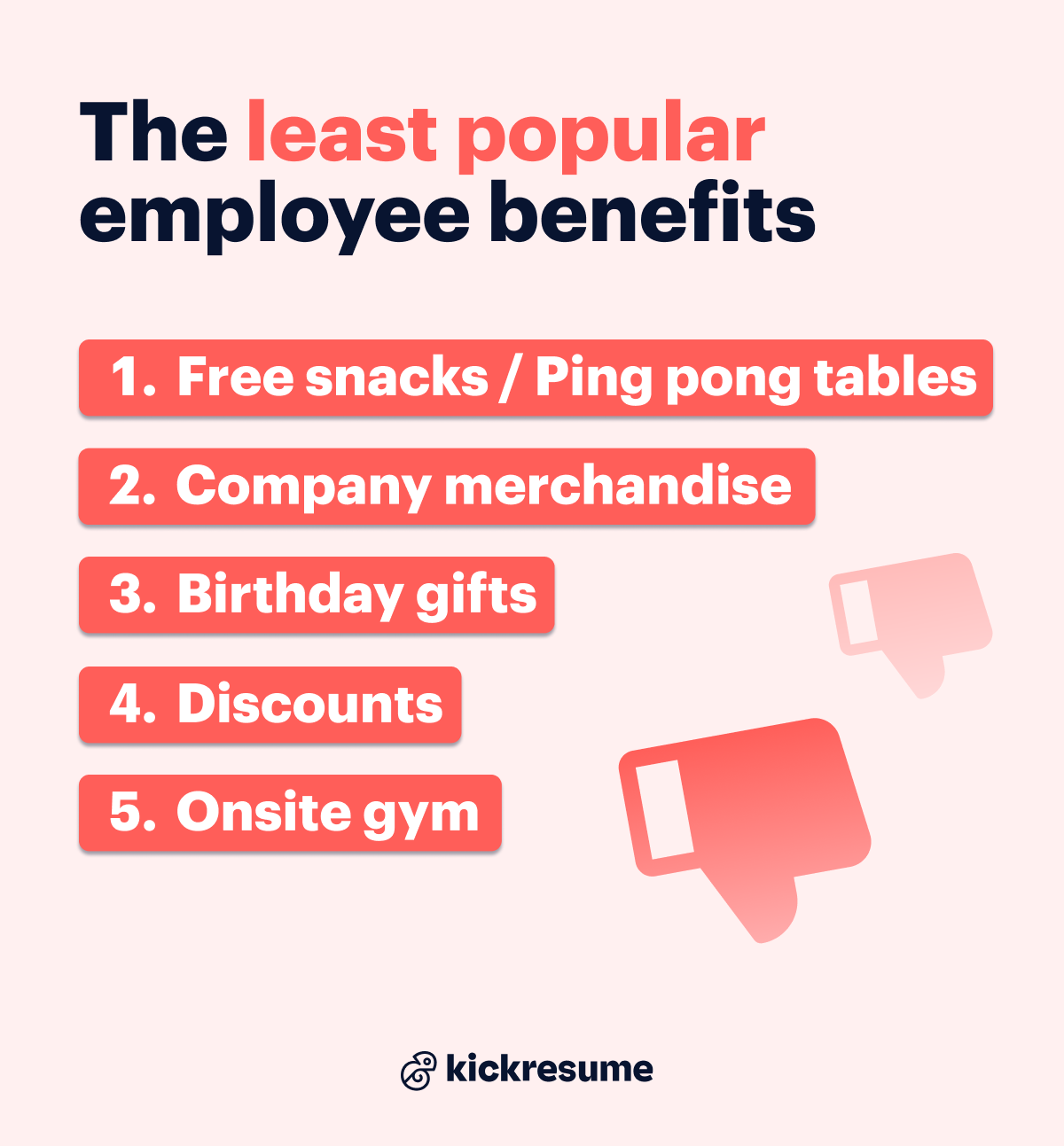
In contrast to these popular benefits, Jayne Murphy also told us that there are some perks that are typically much less important to people. That’s not to say that for some people these benefits might be very desirable!
The least popular benefits:
- Free snacks / Ping pong tables
- Company merchandise
- Birthday gift
- Discounts
- Onsite gyms
There are two workplace perks that Jayne Murphy ranked as the least important to most people, in joint lowest position: free snacks or fruit and recreational facilities like ping pong tables. While providing snacks is a plus, it doesn’t affect most workers that much. Ping pong and foosball tables are fun for lunch breaks, but they won’t fix burnout or boost retention.
Next up was company merchandise, which Jayne Murphy said employees typically aren’t bothered about. After the first week, most of it lives in a drawer, while meaningful perks actually change daily work.
Offering your employees a birthday gift might be a nice way to show you appreciate them, but this isn’t a benefit that will affect their day-to-day experience at the company. It’s certainly not on the same level as a performance bonus or extra time off.
The HR expert advised that in her experience, discounts for employees on various products and services often don’t add that much value—especially if they’re only able to get discounts on things that they don’t really need.
Lastly, onsite gyms can be a really impressive sounding benefit, and lots of people enjoy using this facility at their workplace. But not every employee will make use of it. An onsite gym might not be enough to tempt remote workers to return to the office more often, although this may be their employers’ goal.
Companies should stop calling the essentials “benefits”
Have you ever asked a friend “So what are the benefits at your new job?” and felt annoyed on their behalf when they tell you a list of things that aren’t really benefits? Jayne Murphy explained that sometimes companies might present standard parts of the contract as perks, when they should just be part of the job.
For instance, in Europe, pension contributions, sick pay, and at least 20 days of paid vacation days are all legal obligations that companies must provide. It’s also standard for companies to provide their employees with equipment like laptops.
Companies need to know what people really consider perks when writing job adverts or describing their culture and benefits to current employees. Jayne Murphy said that for these standard aspects of the job to become a real benefit, they need to go above and beyond. For instance, this might mean parental leave that exceeds the legal requirements, such as paid paternity leave for new fathers in countries where this isn’t standard.
No deal‑breaker benefits? Expect reputational damage
Some benefits are a dealbreaker. We’ve looked at what it says about a company if they offer certain benefits, but what does it signal if they don’t provide these must-haves? Jayne Murphy explained that companies who don’t give their employees desired perks could be damaging their reputation and losing candidates’ trust.
However, the HR specialist also advised that companies need to go further than just offering benefits. They need to make sure their employees feel comfortable using them. For example, when organizations offer unlimited vacation without clear guidelines, employees may take less time off than they would with a fixed number of days because they fear taking too much.
As employees age, benefit needs change
A varied benefits package meets different employee needs—and boosts satisfaction. Younger employees, for instance, might have different priorities to those who are older and closer to retirement. We asked Jayne Murphy about which benefits appeal to different generations the most.
- The HR specialist told us that Gen Z values “mental health support, flexible working, continuous learning, purpose-driven work, and student loan repayment assistance. They'll leave roles that don't offer flexibility or wellbeing support.” A previous survey of ours confirmed that Gen Z are the most likely to want mental health support at work, at 22%.
- As many Millennials are now at an age where they have kids, Jayne Murphy advised us that this generation prioritizes, “parental leave policies, flexible working, professional development, and mental health support. Competitive salaries for mortgages and pension contributions are becoming increasingly important.”
- Gen X on the other hand “focuses heavily on pension and retirement planning, private healthcare for families, job security, flexible working (often juggling elderly parent care), and life insurance.”
- And finally, Baby Boomers prioritize “pension contributions, private healthcare, life insurance, flexible working for phased retirement, and job security.”
Overall, Jayne shared that younger generations might be drawn to benefits that offer flexibility and an immediate well-being boost. Older generations may be looking more for long-term financial security.
Let employees pick perks—and cut waste
So far, we’ve covered Jayne Murphy’s advice that employers should go for benefits that offer real value, as well as understanding employees’ different needs and preferences. The HR expert had further tips for businesses on how to make sure they’re providing a great benefits package.
One way to make your benefits package customizable for employees is to go for a “cafeteria style benefits system”, also known as a “flexible benefits plan”. This system allows workers to set aside a certain amount of their salary pre-tax to pay for the benefits that matter most to them. The fact that no money is being spent on benefits they don’t want reduces wasted spend.
While it’s true that some benefits, like a yearly bonus, can be expensive for the company, there are ways to offer a package that pleases employees at a lower cost if the budget’s tight. Jayne told us, “sometimes policy changes cost nothing but deliver substantial value, such as flexible hours or genuine remote working options.” And as we’ve seen, flexible working arrangements are some of the most desirable!
Companies should make benefits easy to access
We asked Jayne for her tips on how to make sure employees are making use of the benefits package on offer.
Jayne advised businesses to regularly consult their employees to find out what benefits matter to them most. Times change, so it's worth continually updating your package to keep them from heading to a competitor. Anonymous surveys are a great way to find out what people want.
The HR consultant also urged HR teams to communicate clearly about what’s available and how staff can access benefits. Managers have a role to play as well by encouraging their reports to use their perks, and using them themselves. In a healthy work environment, people feel comfortable using benefits like vacation days without worrying about getting passed over for a promotion or falling behind.
A simple checklist to pick your benefits
But while providing a genuinely valuable benefits package is up to the employer, how to identify which benefits you want is down to you. This could influence how to spend your flexible benefits, or even which employer to choose when searching for a new job. We asked Jayne Murphy to give some advice on how employees can work out which benefits matter the most to them.
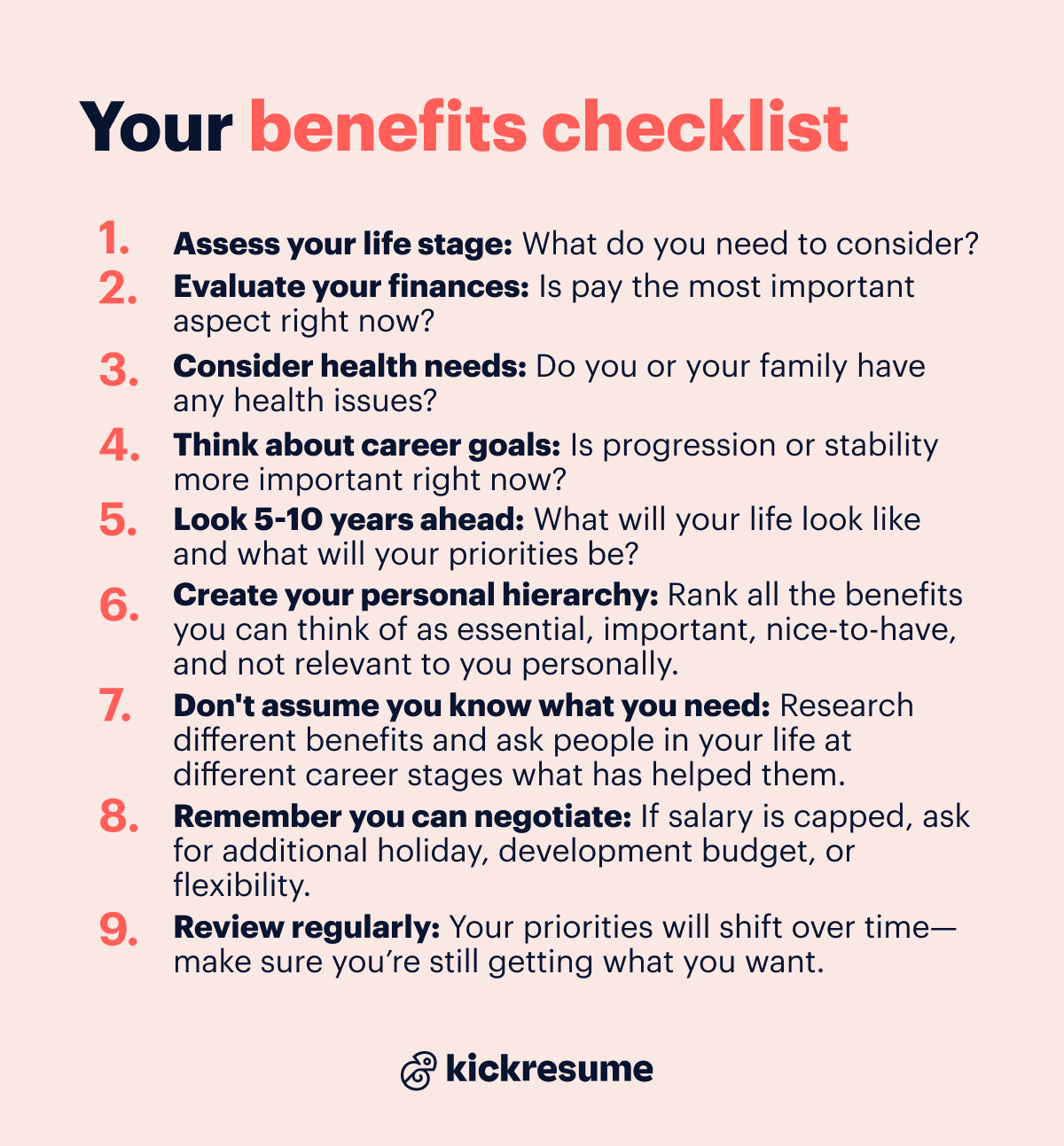
The HR consultant drew up this handy checklist for us:
- Assess your life stage: Are you early career, mid-career, or approaching retirement? Do you have or plan to have children? Are you supporting older relatives?
- Evaluate your finances: Do you need maximum salary now, or can you trade some for better benefits? Are you managing debt or saving for a house?
- Consider health needs: Do you or your family have ongoing health conditions? How important is mental health support to you?
- Think about career goals: Do you want rapid progression or more stability?
- Look 5-10 years ahead: Where do you want to be financially? What major life changes might be coming?
- Create your personal hierarchy: List all the benefits you can think of and pick which ones are essential, important, nice-to-have, and not relevant to you personally.
- Don't assume you know what you need: Research unfamiliar benefits like pension impact. Talk to people at different career stages about what they wish they'd prioritised.
- Remember you can negotiate: If salary is capped, ask for additional holiday, development budget, or flexibility.
- Review regularly: Your priorities will change every few years. Don't stay in roles where benefits no longer align with your needs.
All in all, Jayne Murphy stressed that there isn’t a universal right answer about what the best benefits package will look like. It varies based on your individual circumstances, which themselves may change over time. This means it’s worth regularly revisiting the “personal hierarchy” Jayne recommended and reviewing your current benefits package against it.
Wondering about how to find out if your prospective new job offers the perks you want? Our previous interview with career coach Ruth Tegen includes plenty of helpful tips on how to ask about benefits in the interview stage. The expert emphasized that job seekers should ask open-ended questions like “What’s your approach to flexible working here?”
Final thoughts
The benefits package offered by a company is one of its most powerful tools in attracting new staff and keeping the existing team happy. And while traditional perks remain extremely desirable, customizable benefits plans might make it easier to please a wider number of employees.
Even companies that do not introduce a "cafeteria benefits plan” can still take a leaf out of that book and make their offer a bit more flexible. The first step might be sending out surveys or conducting consultations to check whether employees are still content. If they aren’t, the money currently spent could be reinvested into something they'd prefer—like professional development training.
So whether you’re an employee, a team leader, or a senior manager, now could be a great time to start thinking about benefits for 2026—either the ones you personally would like to see, or those you could introduce.
Note
Kickresume spoke to HR Consultant Jayne Murphy, MA MACIPD in October 2025. The HR consultant shared her insights and experience into workplace benefits, exploring which are the most and least desirable. Jayne Murphy also shared tips for employers and employees.
About Kickresume
Kickresume is an AI-based career tool that helps candidates land jobs and raise their salary with powerful resume and cover letter tools, skills analytics, and automated job search assistance. It already helped more than 8 million job seekers worldwide.