Four years ago, unhappiness at work looked like a wave of resignation letters. Today, it looks more like quiet dissatisfaction, with people staying in jobs they no longer enjoy. Discontent didn't resolve—it went private.
Across six Kickresume surveys, the same pattern appears again and again: people who want something different, can't afford the exit, and arrange a Plan B instead.
They consider a trade. They regret the degree. They price their own departure. They build a second income, sometimes on company time. They keep a referral in reserve. And a large number have worked out that they may never get to stop working at all.
Here are some of the key findings:
- More than half of office workers have thought about leaving for a trade.
- 52% have some level of regret about their degree.
- Only 28% are satisfied with their salary.
- Only 31% say salaries are discussed openly at their workplace, while 37% say their workplace prohibits these discussions.
- 56% have found out that a colleague earns more for doing the same job.
- 61% have a side hustle and 48% of them started because of financial pressure.
- Nine in ten workers have seen someone hired primarily because of who they know.
- 57% expect to retire later than they'd like.
Half of office workers want to switch to the trades—but can't afford to
Start with the most drastic option: leave the desk entirely.
Kickresume surveyed 1,003 workers on the white-collar-to-blue-collar switch. And among the office workers, more than half have thought about walking away from the desk for manual work.
- 52% have considered leaving for a trade—18% think about it regularly, 34% occasionally.
- Engineering and manufacturing (64%) rank highest for willingness to switch jobs, followed by business, management and consulting, and marketing, advertising and PR (59% each).
- The top reason isn't money. It's meaning. 23% want work that feels more rewarding, ahead of physical or mental health (13%) and work-life balance (12%).
- 43% say a pay cut is what stops them.
- 96% of those open to a change would switch for a trade if retraining and lost income were covered—54% immediately.
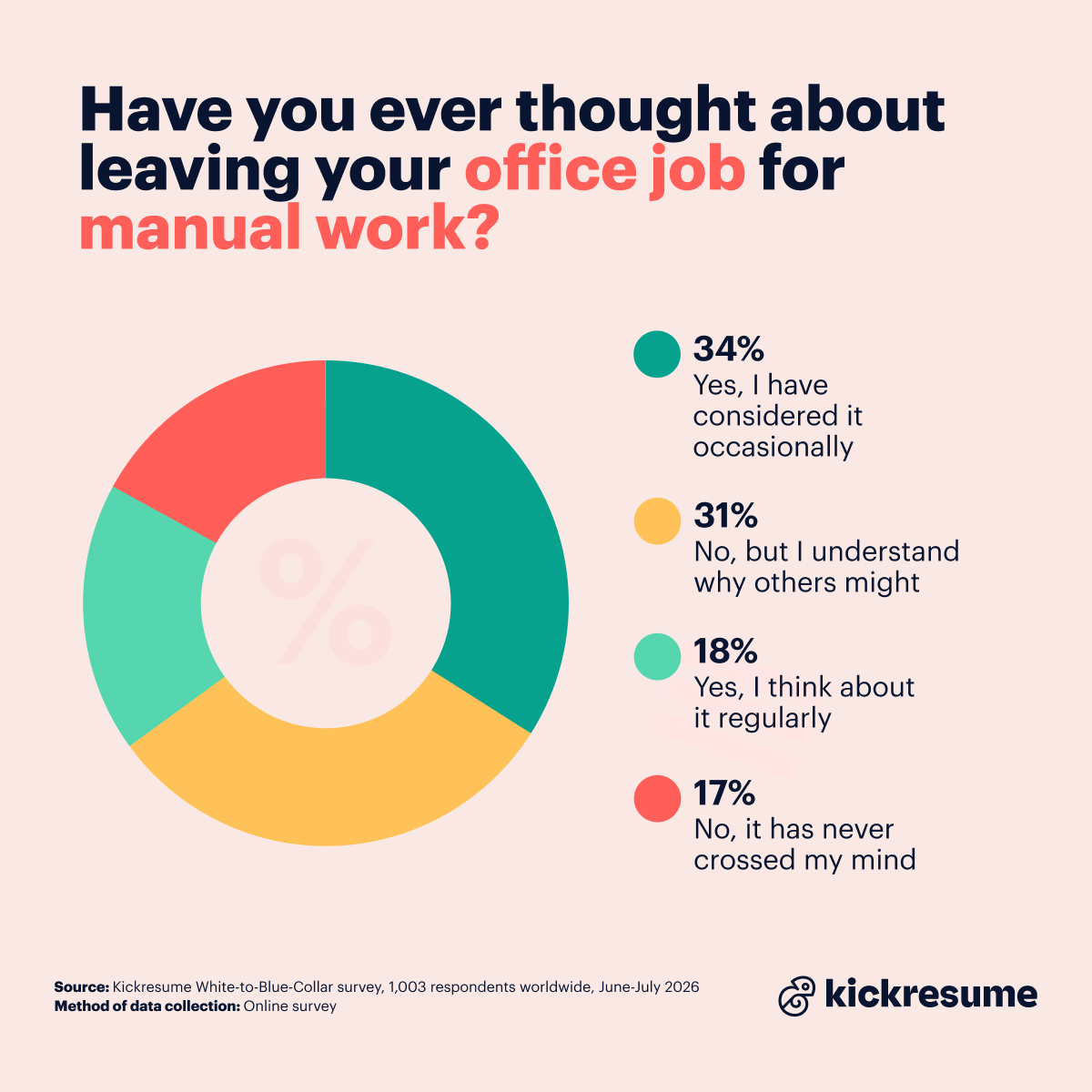
The message in those last two numbers is quite clear: the interest is there, but the cost gets in the way. Take away the financial risk, and almost everyone who’s open to a switch says they’d make it.
Two footnotes stop this being a simple grass-is-greener story. Around half of office workers say school never presented trades as a serious path—and among the tradespeople surveyed, 79% have considered moving the other way, into an office.
Considering a trade means looking ahead. But it also means looking back, and asking whether the path you took was worth taking.
More than half regret the degree that got them here
The second-guessing doesn’t stop with the job. We asked 1,052 people worldwide whether they regret their degree, and for many, the diploma they once saw as the ticket to a career no longer feels like it paid off.
- 52% report some level of regret about their degree.
- Inside that 52%: 21% would pick a completely different field, 4% would have gone straight into work, and 4% would have taken a vocational path.
- 55% say a diploma is becoming less important in their industry.
- 20% say their degree may never feel financially worth it.
- Only 6% say their degree helped their career more than anything else.
- Science workers are most likely to regret their degree (71%), followed by those in law (65%) and education (64%).
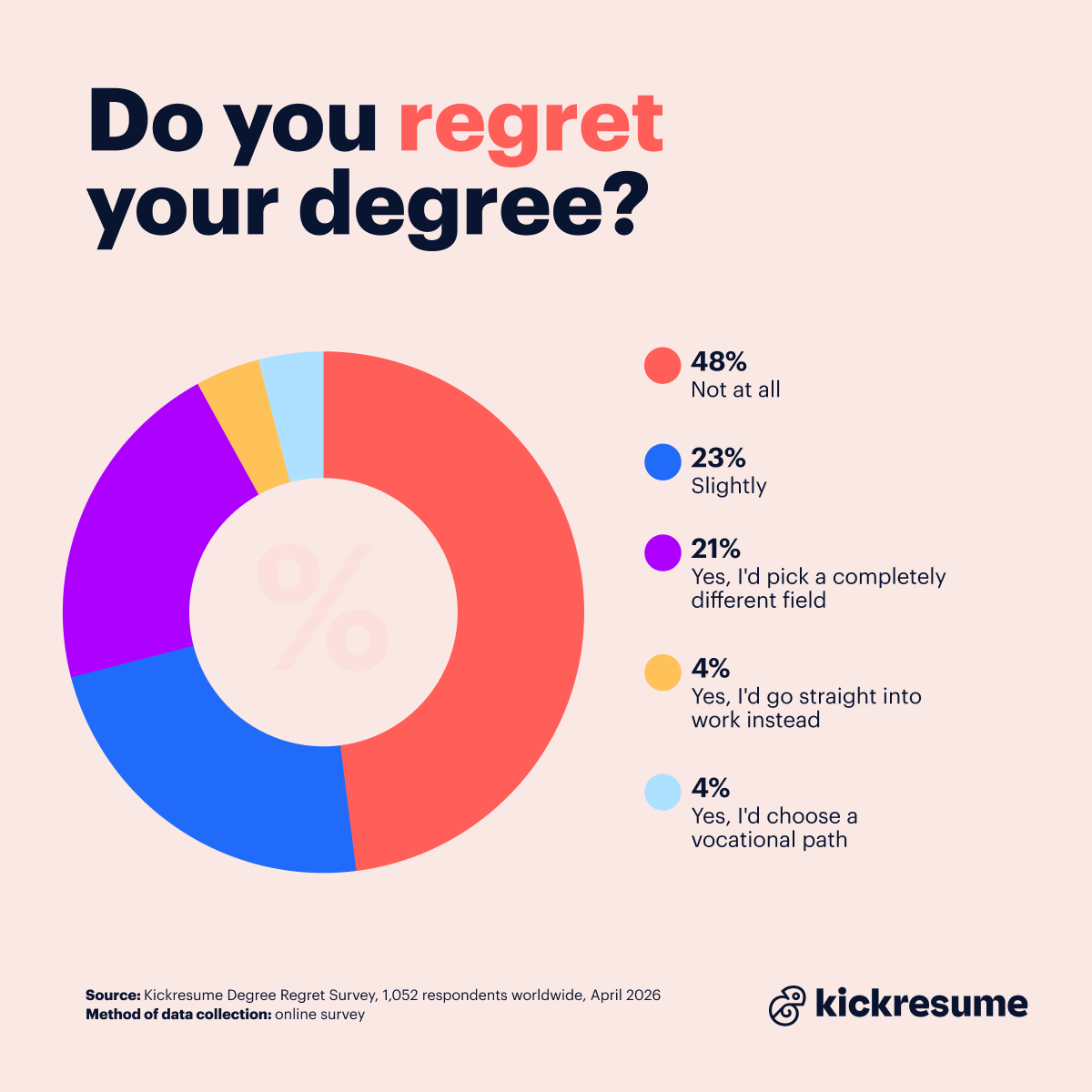
But that doesn’t mean the degree was useless. For many, it still opened the door. 55% of degree-holders say they needed the diploma to get the job they have now. 42% ended up working in a field directly related to what they studied, and 36% use what they learned on a daily basis.
The catch is that the degree gets people through the door, but experience gets them further once they’re inside. Only 6% say the degree itself helped their career most, compared with 36% who say work experience did.
The same tension shows up among people who never got a degree. 26% say not having one noticeably limited their career, while another 37% say it occasionally did.
So neither side looks completely satisfied with the deal. Graduates wonder whether they paid too much for what the degree delivered. Non-graduates wonder whether they’re paying for not having one.
And that gets us to the bigger question: what would actually make people change course?
The wall is priced, and it's about 20%
In our Salary satisfaction survey of 1,850 workers, we asked how people feel about what they earn—and how they would react to a meaningful difference in pay elsewhere.
- Only 28% describe themselves as content with their salary.
- 80% doubt their employer understands the true cost of living. Only 20% think their boss gets it.
- Just 18% fully trust their company to pay them fairly. 34% say they have to push for it.
- 49% would absolutely leave for 20% more pay elsewhere—61% in the US, 46% in Europe, 39% in Asia. Another 30% said "maybe."
- Only 3% would stay in the same job no matter what.
- Trust falls with age: 26% of Gen Z trust their employer on pay, against 16% of Millennials and 13% of Gen X.
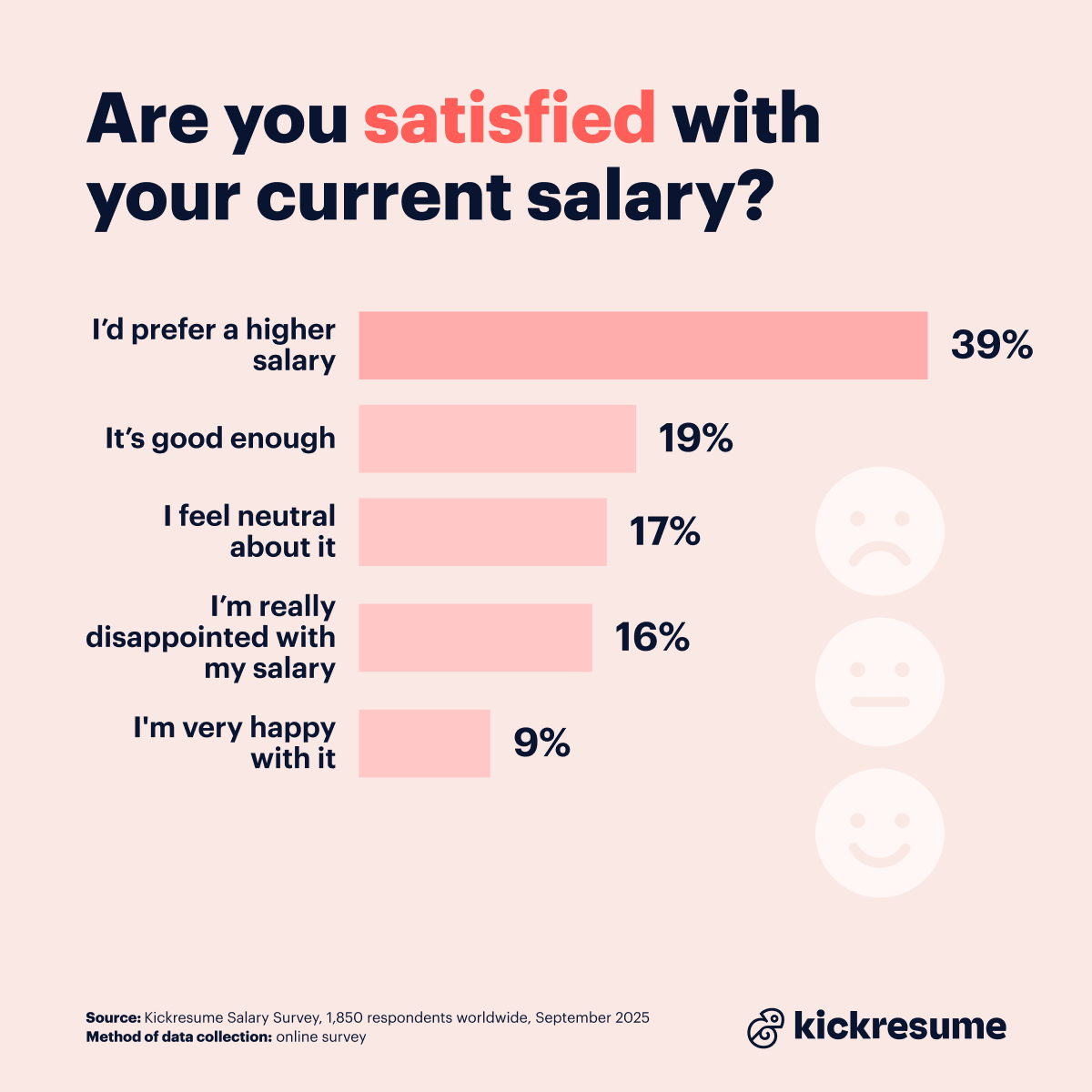
Fair pay, for most employees, still feels like something they have to fight for—not something they can trust their employer to get right.
The regional spread shows that 20% more pay doesn't mean the same thing everywhere. Americans are most willing to move; Europeans have more to weigh before leaving.
But knowing you'd leave for 20% more is one thing. Knowing what you're worth in the first place is another.
And the price is deliberately hidden
You can't argue about a number you're not allowed to see. The same 1,850 workers were asked how pay actually gets discussed—and in most workplaces, the number is off-limits.
- Only 31% say pay is discussed openly. 37% work somewhere that prohibits it.
- Of those under a ban, 20% comply—and 17% swapped salary information anyway.
- 56% have discovered a coworker earns more for the same job; 36% were “pretty upset”.
- Another 24% suspect they're underpaid.
- Talking to the boss is harder than talking to peers: only 24% feel very comfortable, 39% are a bit nervous, 18% very anxious, and 19% avoid it entirely.
- 48% of women say men have it easier getting raises. Just 17% of men agree.
- 46% would support full pay transparency at their workplace.
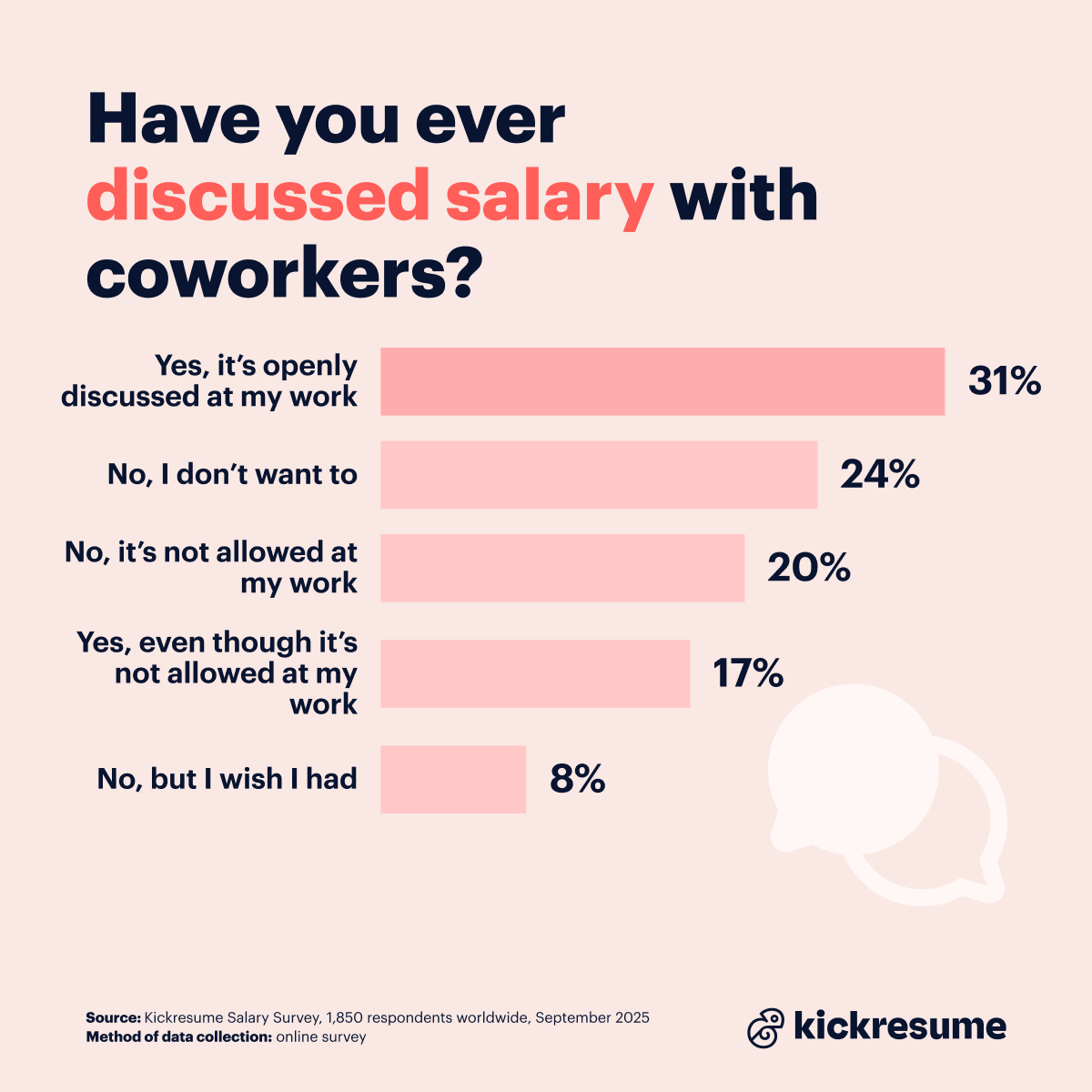
The interesting question is what happens when the number does get out. When a coworker talks openly about what they earn, curiosity is the most common reaction: 32% say they want to know more, while 8% feel annoyed and just 4% jealous. The dominant response isn't resentment. It's wanting to understand where one stands.
And now, when asking is uncomfortable and leaving is unaffordable, one option remains: build an income nobody has to approve.
61% have a side hustle—and two-thirds have done it on the clock
Sometimes dissatisfaction with the main job doesn't show up as quitting. It shows up simply as a side hustle. Kickresume surveyed 1,070 workers about what they're doing outside their main job—and why.
- 61% have a side hustle—29% regularly, 32% occasionally.
- 48% started because of financial pressure—60% in the USA. Passion (12%) and career-building (11%) trail far behind.
- 24% say income from their side hustle is essential to survival; another 31% call it important.
- 66% have worked on it during working hours—13% often.
- 36% don't tell their employer about their side hustle.
- 39% enjoy the side hustle more than the main job. Only 21% prefer the main job.
- 46% would leave their main job if the side hustle matched their salary—21% immediately. Creative and Media workers are most ready to leave: 63% would quit.
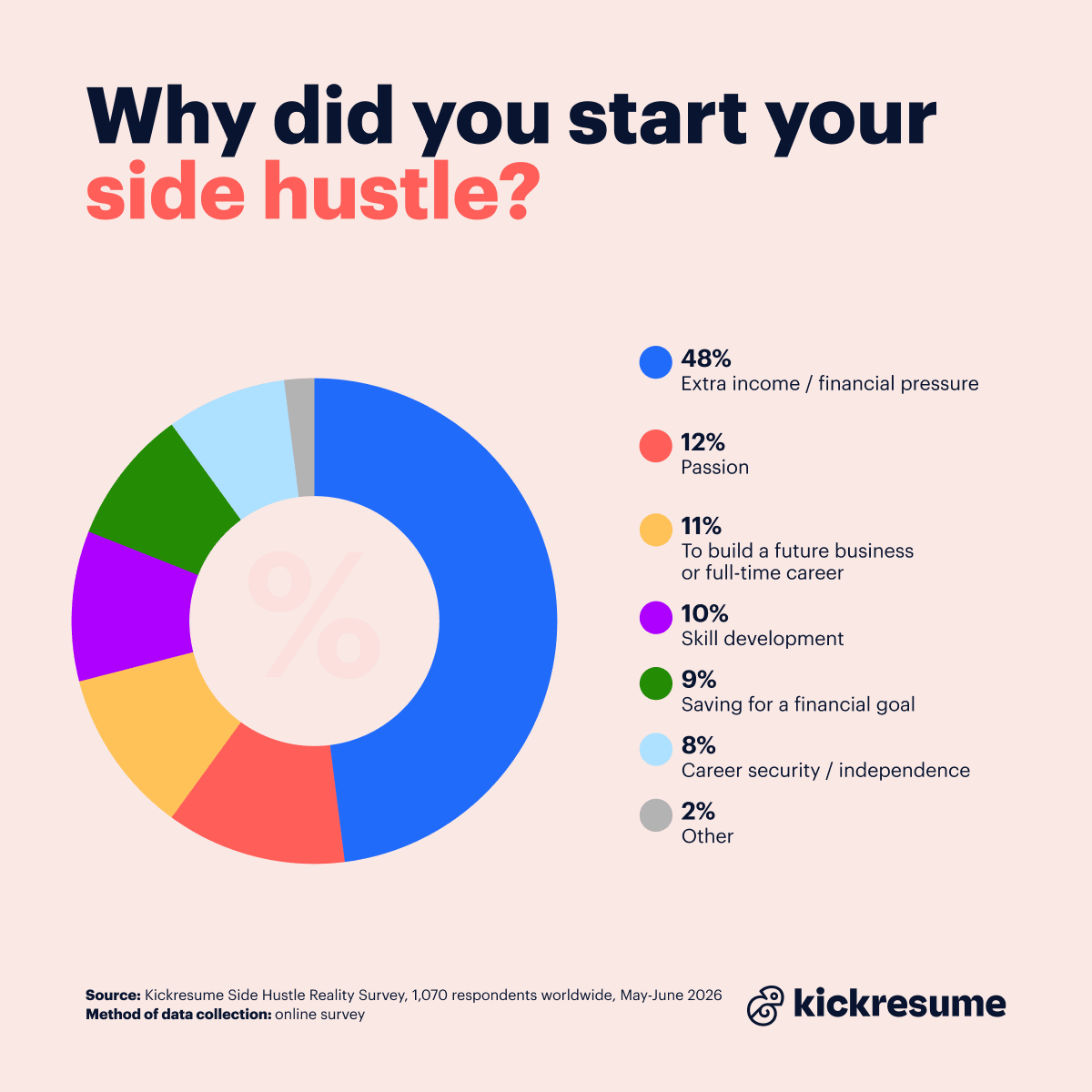
When people who hide their side hustles were asked why, the top answer wasn't fear of getting caught. It was "it's nobody's business" (47%). Fear of conflict came to 9% and fear of looking unprofessional to 7%.
That's not guilt. It's a boundary. Workers have reclassified their income as private information, just as their employers have classified salary bands as confidential. So, the secrecy goes both ways.
If the side hustle is one way out, connections are another—and workers are surprisingly honest about how that one works.
90% have seen nepotism—and most would use connections themselves
Few things are more frustrating at work than watching someone get ahead because of who they know. So we asked 1,030 workers about nepotism: how often they've seen connections influence hiring, whether they'd use connections themselves, and whether they still believe merit is enough.
- 90% have seen a colleague hired mainly because of connections.
- 38% found their current job through referrals or networking, just ahead of the 36% who applied directly.
- On using connections to beat a better-qualified candidate: 28% have no problem with it, 49% say it depends, 16% probably wouldn't, 7% never.
- On referring an unqualified friend or family member: 49% are at least open.
- 61% would trust their boss "100% more" if promotions were purely merit-based; another 30% would trust them somewhat more.
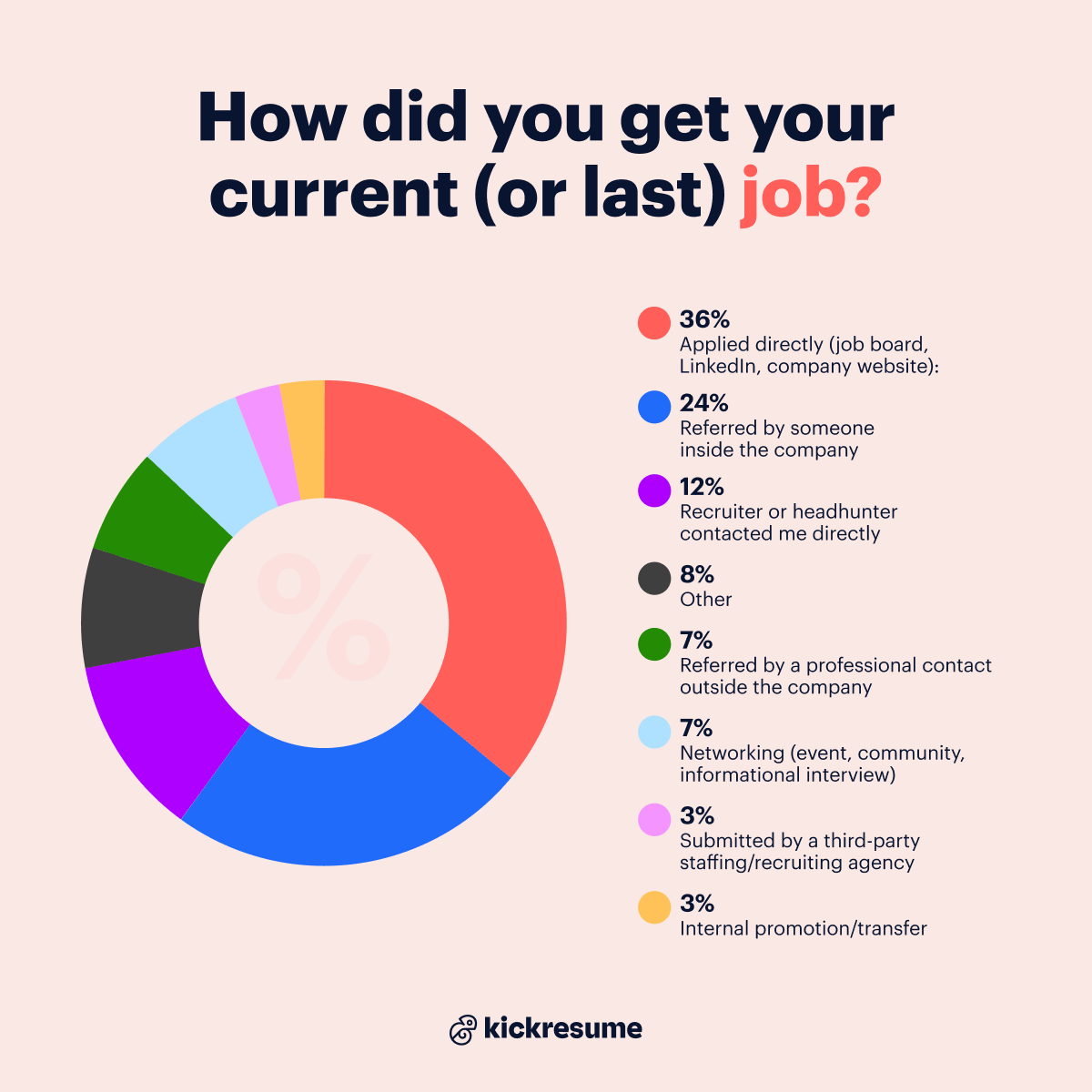
The 61% and 49% overlap, and that's the finding. People want a merit-based system, but many are also willing to use connections themselves. Not necessarily because they think nepotism is fair, but because they've seen referrals work while traditional applications often don't.
In a job market where who you know can matter as much as what you can do, workers are adapting.
Retirement is the reason some people can't afford to leave
Getting ahead at work is one thing. Being able to stop working is another. For many workers, the problem isn't just whether they can find a better job today. It's whether all those years of working will eventually buy them the freedom to leave.
We asked 1,294 workers when they want to retire and how they expect to pay for it. The gap between those answers is one of the biggest ongoing pressures in this report.
- 54% want to retire before 60. Only 28% think they will.
- Average ideal age: 58. Average expected age: 62.
- 57% expect to retire later than they'd like.
- 60% expect to fund retirement from their own savings and investments.
- 13% aren't contributing to a retirement fund at all.
- 11% can't name a single source of retirement money.
- 20% expect to keep working—not by choice, but for the income.
- 67% think retiring comfortably will be harder for them than for their parents.
- 10% don't think they'll ever retire.
- Asked what would help most: higher income now (25%).
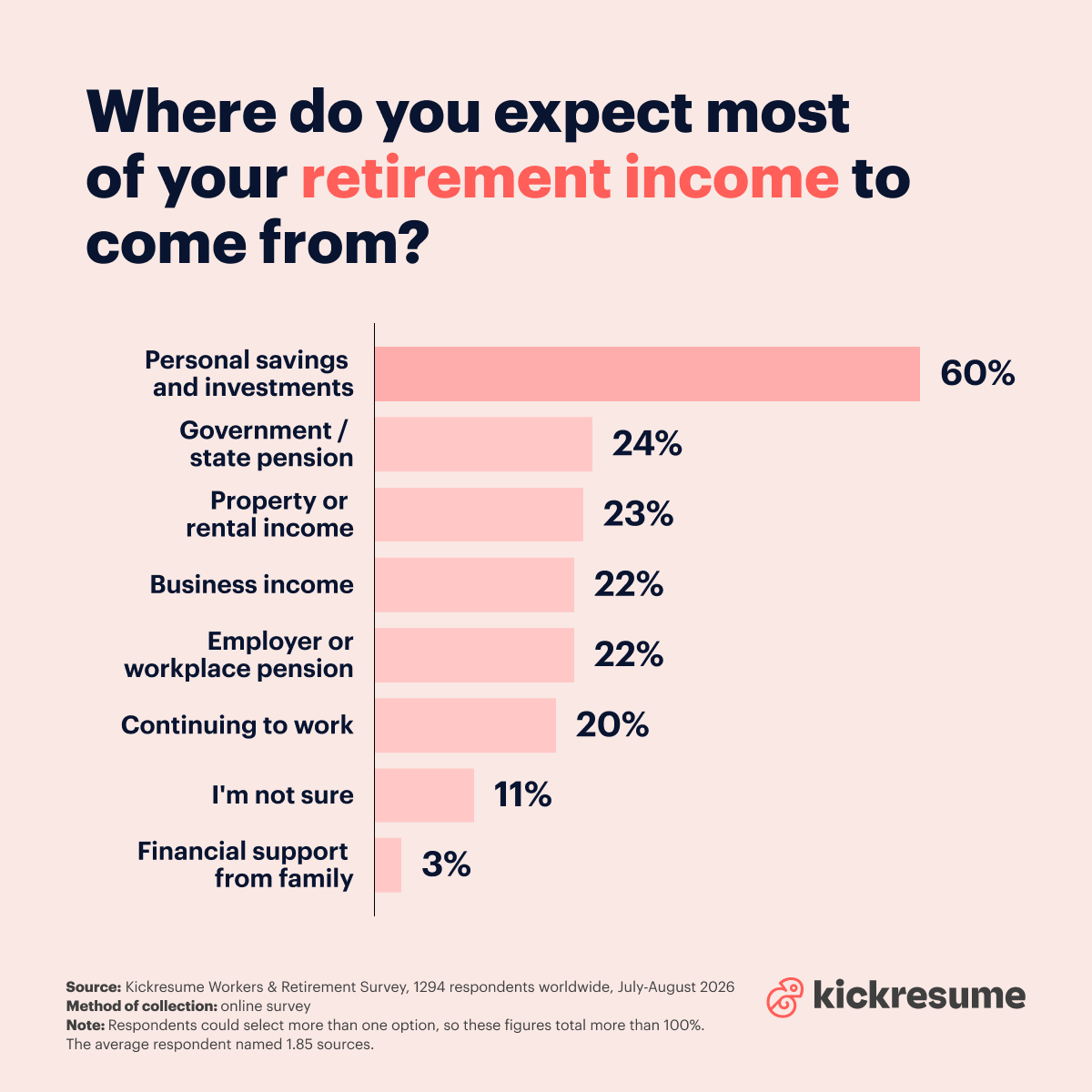
The least confident group isn't the youngest. It's people aged 46–61, for whom retirement numbers are no longer just hypothetical.
This is the chapter with no easy way out, and it changes how you read everything above it. Someone who expects to fund their retirement alone and is already four years behind their target can't afford to take a pay cut to retrain, spend time building a side income, or walk away because a pay conversation with their boss went badly.
They asked for one thing above all: more money in the paycheck now. Not reform. Just room.
Final thoughts
The numbers suggest that workplace discontent is less about one big breaking point and more about people making practical decisions around work. 61% have a side hustle, 49% would leave for 20% more pay, and 52% have considered switching from office work to the trades.
At the same time, 52% regret their degree to some extent, while 67% expect retirement to be harder than it was for their parents. These aren't isolated frustrations. They point to people questioning whether their current job is giving them enough in return—financially, professionally, or personally.
Methodology
Findings draw on six Kickresume surveys, conducted between September 2025 and August 2026. All were anonymous online surveys distributed through Kickresume's internal database, covering students, employees, freelancers, managers and business owners across regions, industries and generations. Percentages are rounded to the nearest whole number.
Surveys included in this report:
- White to blue collar survey: 1,003 respondents
- Degree regret survey: 1,052 respondents
- Salary satisfaction survey: 1,850 respondents
- Side hustle survey: 1,070 respondents
- Nepotism in hiring survey: 1,030 respondents
- Workers & retirement survey: 1,294 respondents
The Salary Satisfaction Survey's 1,850 respondents were asked about both salary satisfaction and salary transparency, which are reported as two separate sections in this report.
About Kickresume
Kickresume is an AI-based career tool that helps candidates find jobs and raise their salary with resume and cover letter builders, skills analytics and automated job search assistance. It has helped more than 8 million job seekers worldwide.