
Have you ever helped a friend or family member get a job at your company, or has someone ever given you a leg up in this way? Referrals are a very common practice but there’s a question hovering over them. Is it fair to give someone the advantage in a job hunt—especially if they’re not as qualified as other candidates?
To find out more about the impact of referrals and networking, Kickresume surveyed 1,030 people around the world. We explored how personal connections shape career paths, as well as whether some people are more likely than others to network.
We also asked people to share how acceptable they think it is to use connections to get ahead professionally, or recommend their friends and family for jobs—even if this means a more qualified candidate would miss out.
Here’s a quick snapshot of the key takeaways from our survey:
- 38% of workers found their current job through referrals or networking, slightly more than the 36% who applied directly for it.
- Over half our respondents at 52% believe your resume or LinkedIn profile is no longer enough to get an interview at top companies.
- Men are 8% more likely to actively network.
- US respondents are more exposed to nepotism and more open to using connections themselves.
- 9 in 10 people have seen nepotism influence hiring decisions at least once.
- Nearly half at 49% would be open to recommending an unqualified friend or family member for a job.
- 61% of people would trust their boss more if they knew that promotions were entirely based on merit.
36% applied for their job—38% got it through referrals or networking
What’s the most common way to find a job? Our data revealed that the top method was to apply directly, with 36% securing their current or most recent role like this. After that, 24% were referred by a friend, family member, or former colleague. That’s a quarter of respondents whose connections opened the door.
Direct recruitment / Headhunting accounted for 12% of hires, highlighting the power of a standout CV and experience. Surprisingly, traditional networking and external referrals both lagged behind at just 7% each. Many job seekers may be missing out by not making more use of their professional circles.
When we group together internal and external referrals alongside networking, these connections account for 38% of job outcomes, slightly more than direct applications (36%), which remain the most common single method.
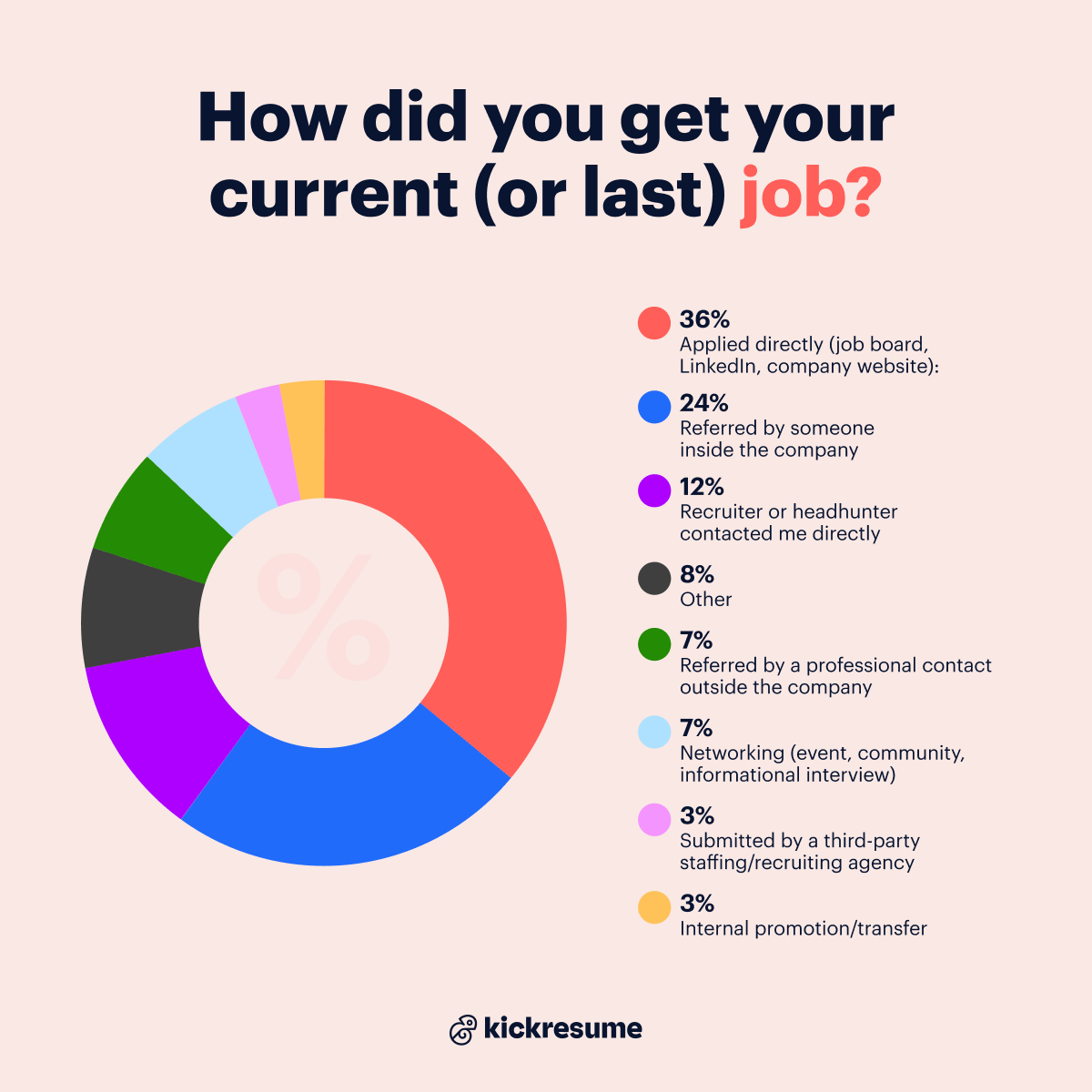
Here’s the full breakdown:
- Applied directly (job board, LinkedIn, company website): 36%
- Referred by someone inside the company (friend, family, colleague): 24%
- Recruiter or headhunter contacted me directly: 12%
- Other: 8%
- Referred by a professional contact outside the company: 7%
- Networking (event, community, informational interview): 7%
- Submitted by a third-party staffing/recruiting agency: 3%
- Internal promotion/transfer: 3%
Broken down by generations, one difference that emerges is that Gen Z workers, the most recent additions to the workforce, are the most likely to have got their job by applying, at 42%. They were also the least likely to have been recruited or headhunted, with 5% finding their role this way.
In contrast, 32% of Gen X applied for their current or most recent job, with 25% being referred into the role and 15% being recruited for it. That could be because they’ve had longer in the workforce to make connections and develop their skills.
Over a third actively network for career opportunities
As well as people you already know, others in your industry you haven’t met yet can also be a big help. We asked our respondents “Have you actively networked to get opportunities you wouldn’t have otherwise?”
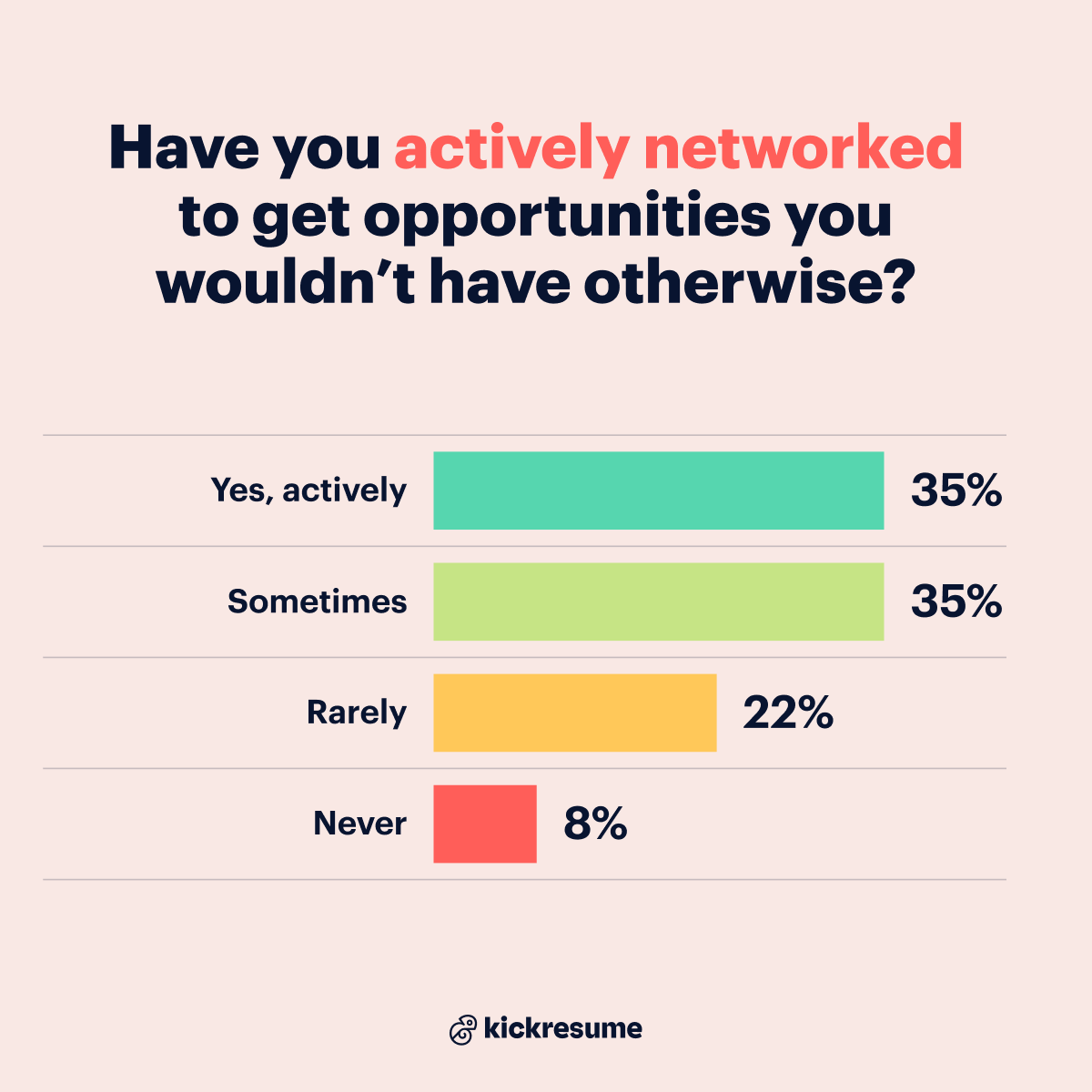
While only 7% had found their current or most recent job by networking, many more people had found it helpful in the past. 35% said they actively work to build connections and relationships to help them find career opportunities. The same percentage reported “sometimes” networking.
Just under a quarter shared that they rarely network, at 22%, and only 8% said they never do it. This may reflect different working styles or priorities, such as industry differences, time constraints, or simply a preference for more formal job search methods.
In some cases, people’s feelings of anxiety around networking might put them off. Imposter syndrome can make people feel that they don’t deserve to be in networking spaces. Their fear might be holding them back from meeting potential peers and mentors, or asking contacts for a reference.
What’s more, there’s a significant difference between how men and women answered this question. 38% of men actively network, compared to 30% of women. Women are also slightly more likely to say they never network (10%) compared to men (7%).
Research has suggested that it can be harder for women to access professional networks. For women with children in particular, the time constraints that come with family life can make it more difficult to attend additional events outside of work. The same study also found that women can sometimes be more reluctant to make use of their connections because of what the researchers called “gendered modesty”.
More than half say your resume or LinkedIn profile’s not enough to secure an interview
For those who don’t have a strong network of professional contacts, or a recruiter supporting them, candidates rely on the strength of their application.
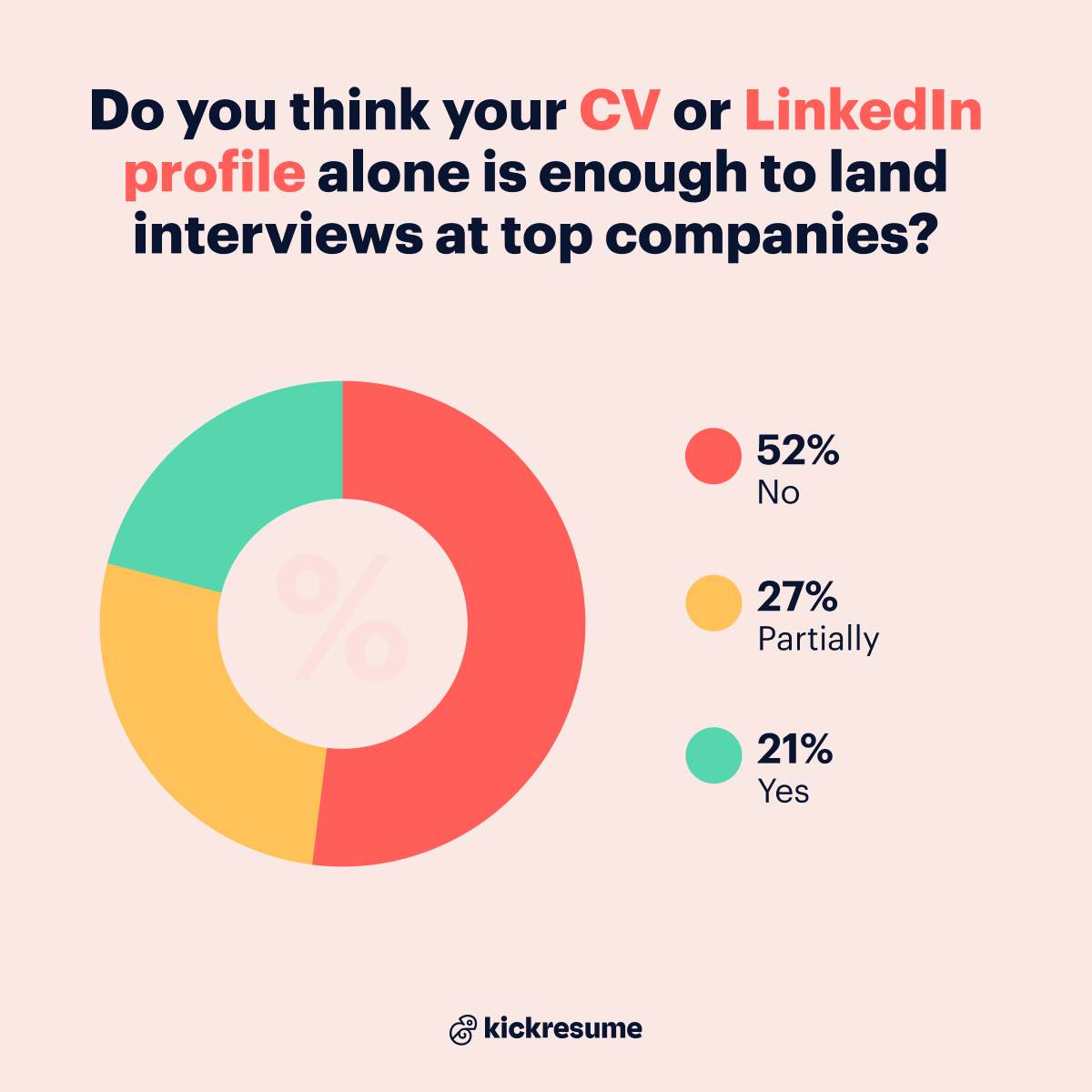
- Just over half of our survey respondents felt that a resume or LinkedIn profile isn’t sufficient to bag an interview at a top employer, at 52%.
- 27% partially agreed that your resume or LinkedIn profile could help get your foot in the door.
- However, about a fifth at 21% thought that providing a picture of your career history using these methods would be enough to convince top companies to offer you an interview.
Generational differences stand out. 25% of Millennials believe it’s possible to secure an interview at a top company just using these methods, which is higher than average. But in Gen Z this drops to 18%.
This may be due to the tough job market. Our survey found that 58% of recent graduates were still job hunting, compared to 25% in previous years. These young workers might feel that even a well-optimized resume isn't enough to break into their field.
It’s not skills vs connections—most say you need both
Beyond how people find jobs, we also asked what people believe actually drives career success in general. It turns out most people think you need both skills and connections.
- A little more than half our respondents agreed that both are equally important in their industry, at 53%.
- Over a quarter told us that what you know is more significant than who you know, with 27% saying your skills and experience are what matter most.
- But nearly 1 in 5 felt that connections and networking are more important, with 18% selecting this option in our survey.
When broken down by industries, those who work in Education / Academia were the most likely to say that your expertise is the main driver of success, at 36%. 36% of people who work in Engineering / Manufacturing also gave this answer.
This reflects how these fields are structured around formal qualifications. For example, in education, having the right teaching credentials is essential, regardless of personal connections.
On the other hand, some industries were more likely than others to say that who you know is what matters most. Even though these sectors also require specialist knowledge, it seems these workers’ networks might have a bigger impact on their careers.
- 30% of those who work in Sales / Retail told us that your connections are the biggest factor in career success.
- 24% of Construction / Real Estate professionals also said it’s all about your contacts.
In these industries, networking with potential clients is essential. This makes having the right contacts key for both getting the job, and for your long-term career.
How people see their own success
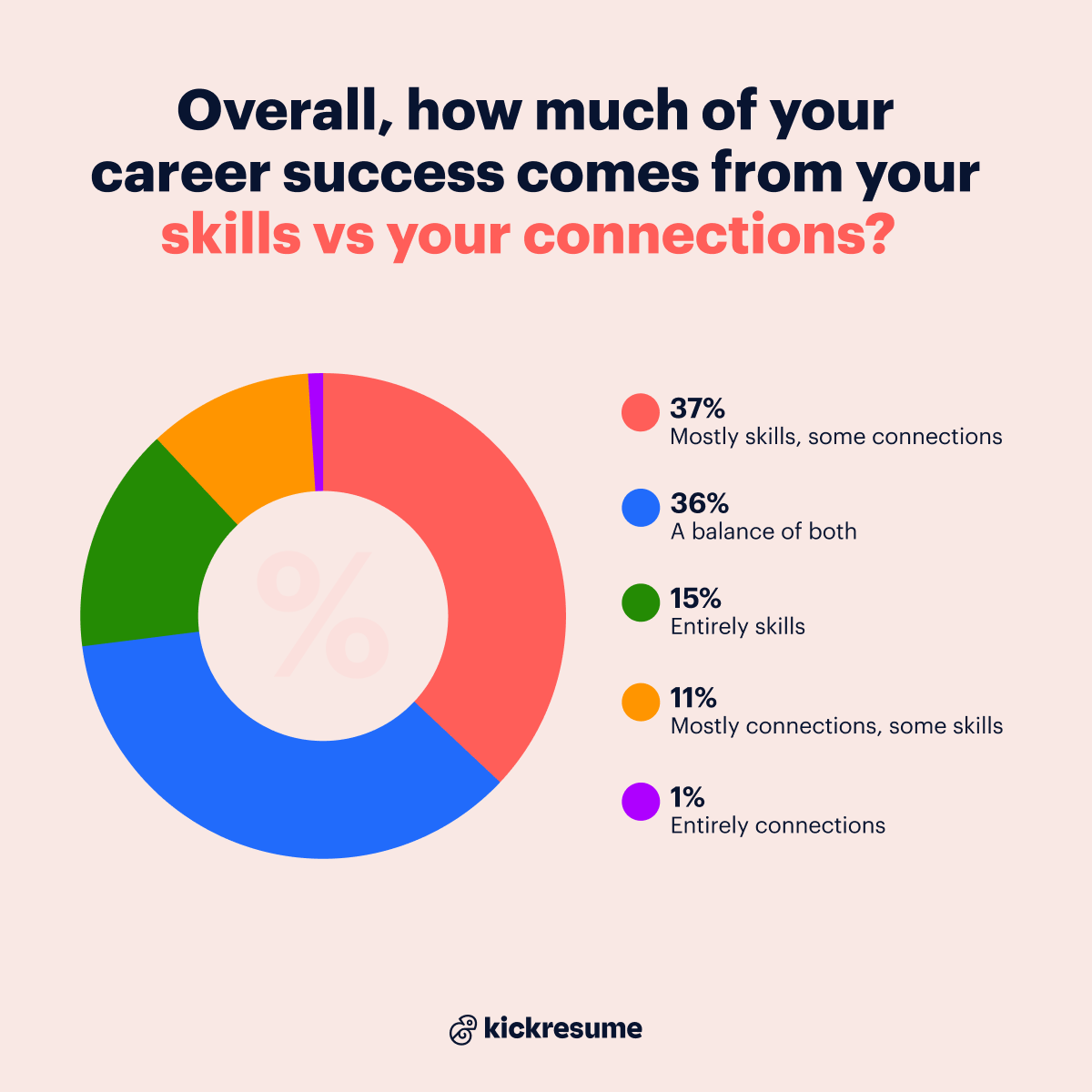
Beyond what people think drives success in general, we also asked what they believe has contributed most to their own career success. For 37%, the answer was “mostly skills, some connections”. Almost the same percentage at 36% shared that it was a balance of both.
15% told us that it was entirely their skills and experience that had got them to where they are today. In contrast, 12% thought their career success had been founded on “mostly connections, some skills”. Only 1% said it was all down to who they knew.
When you compare men’s and women’s experiences, there are some differences. Most strikingly, 18% of women said their success is totally down to their skills, compared to 13% of men. This may be linked to earlier findings that women are less likely to network.
Broken down by generations, the data shows that Millennials are the most likely to feel that their career success so far depends entirely on their skills, with 18% selecting this answer. This may reflect the fact that many entered the workforce during a difficult job market in the 2010s and have since progressed into more senior roles.
Another statistic that stands out is that Gen X are the most likely to say their career has been built on “mostly connections, some skills” at 14%. Gen X, who are often further up the ladder, might be thinking about promotions and opportunities they snagged thanks to existing connections.
So far, we’ve looked at how people find jobs and what they believe drives career success. But how do they actually feel about the role of connections in the workplace?
Networking plays a significant role, especially in sectors like Sales and Retail. However, the line between professional networking and nepotism can sometimes become blurred. Most workers seem to feel that hiring practices today are not entirely fair.
One in five believe referrals give people with connections an unfair advantage
People had mixed responses when we asked them whether referrals are actually helpful for finding better candidates. Our data showed that this way of finding a job is fairly common, with 31% of workers having been referred into their current or most recent role. But do people think it’s fair?
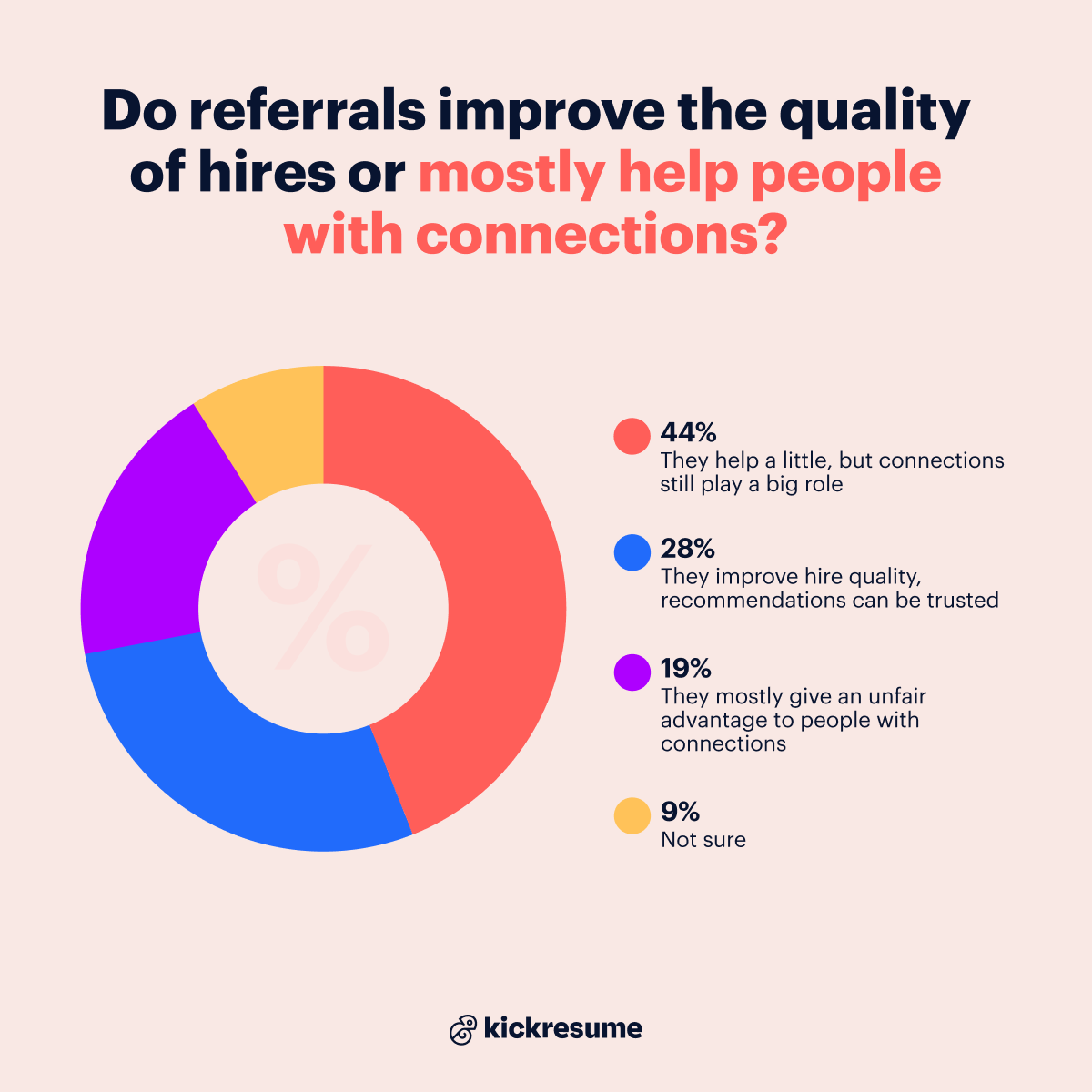
28% had a positive perspective on referrals, agreeing that they help companies hire better candidates. This method of hiring can help connect talented professionals with roles they’re perfect for. For instance, people often recommend previous colleagues who they loved working with.
On the flip side, 19% felt that referrals mostly give people with connections an unfair advantage, possibly due to experiences where less qualified candidates are still hired.
Most respondents occupy the middle ground. 44% think that while referrals can improve the quality of new hires, personal connections are still a gatekeeper for even getting a foot in the door.
When broken down into generations, there are some differences. Gen Z were the least cynical about referrals, with 32% believing they help businesses find the best candidates. These young professionals—who haven’t spent as long in the workforce—might have not seen as many unsuccessful referrals.
Millennials, on the other hand, took a measured approach. This generation most agreed that referrals help improve the quality of hires a bit, but people’s connections play a big role in who gets referred in the first place (48%).
Nearly two thirds say fairer promotions would boost trust at work
It’s only natural that people pay attention to who gets promotions, with more senior responsibilities and higher pay. Some people feel these career boosts don’t always go to the best person.
61% said they would “100%” trust their boss more if promotions were only based on “merit”, such as the candidate’s skills and hard work. That’s more than half of our respondents who feel like they can’t totally trust their manager to pick the best person for the job because of worries about favoritism. A further 30% said it would make them trust their manager a bit more.
9 in 10 have witnessed nepotism at least once
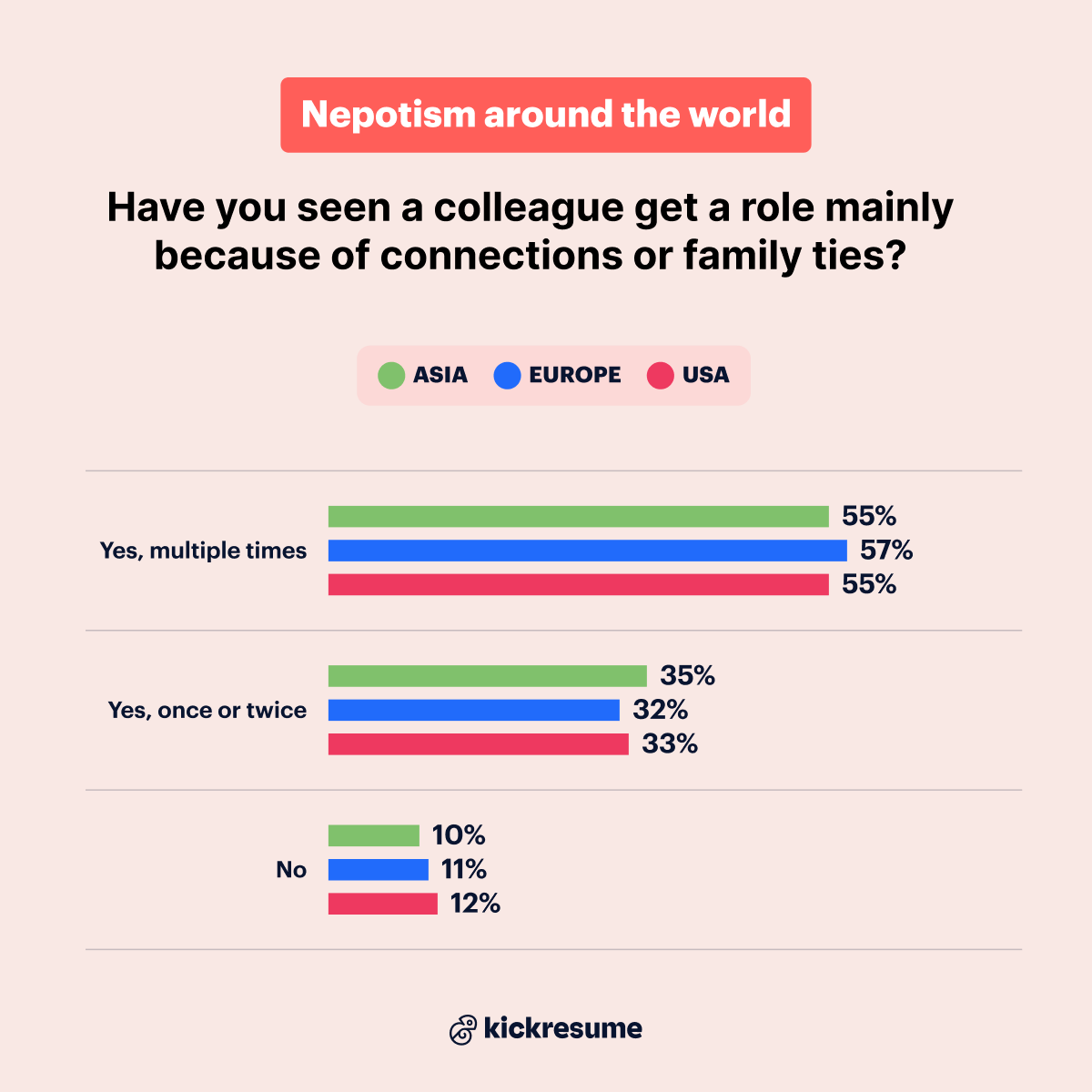
Some people’s connections aren’t just their foot in the door—they’re the main reason they get hired. In fact, overall 90% of our respondents said they had seen this happen during their career at least once.
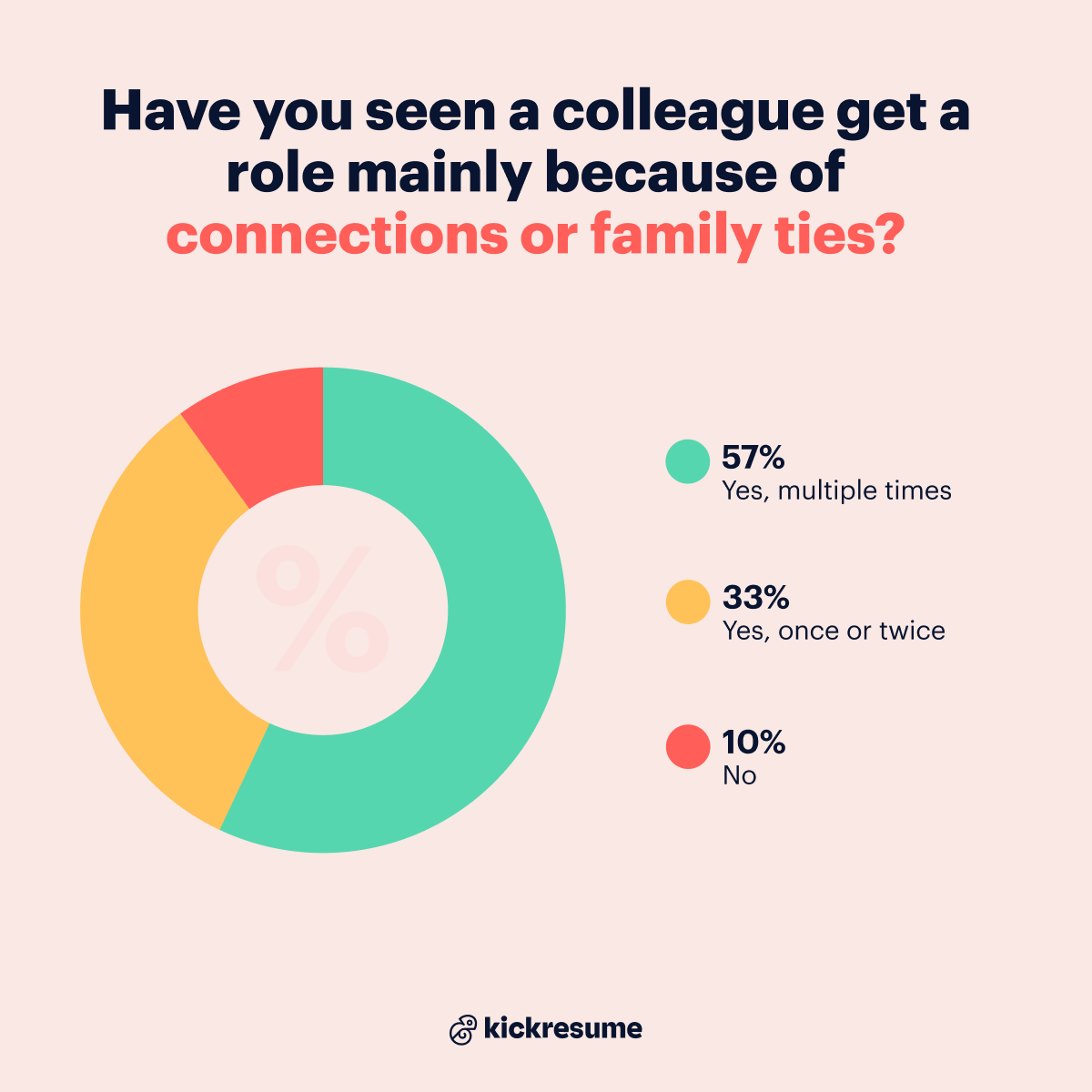
- 57% said they had seen a colleague get a job mainly due to their connections multiple times in their career.
- This was followed by 33% who had seen it happen once or twice.
- That leaves only 10% who shared that they hadn’t ever experienced this.
This demonstrates just how common it is. Nearly everyone in our survey had seen a job awarded to someone based on who they knew rather than their qualifications or experience.
It’s worth noting that perceptions of nepotism may sometimes be shaped by personal workplace experiences rather than full visibility of hiring decisions.
Most people would be open to using their connections to give them a boost
As our survey shows, many of us use our connections to help our careers—but how far would you be willing to go? We asked if people would be willing to use their network to get a job, even if it meant skipping over a more qualified candidate.
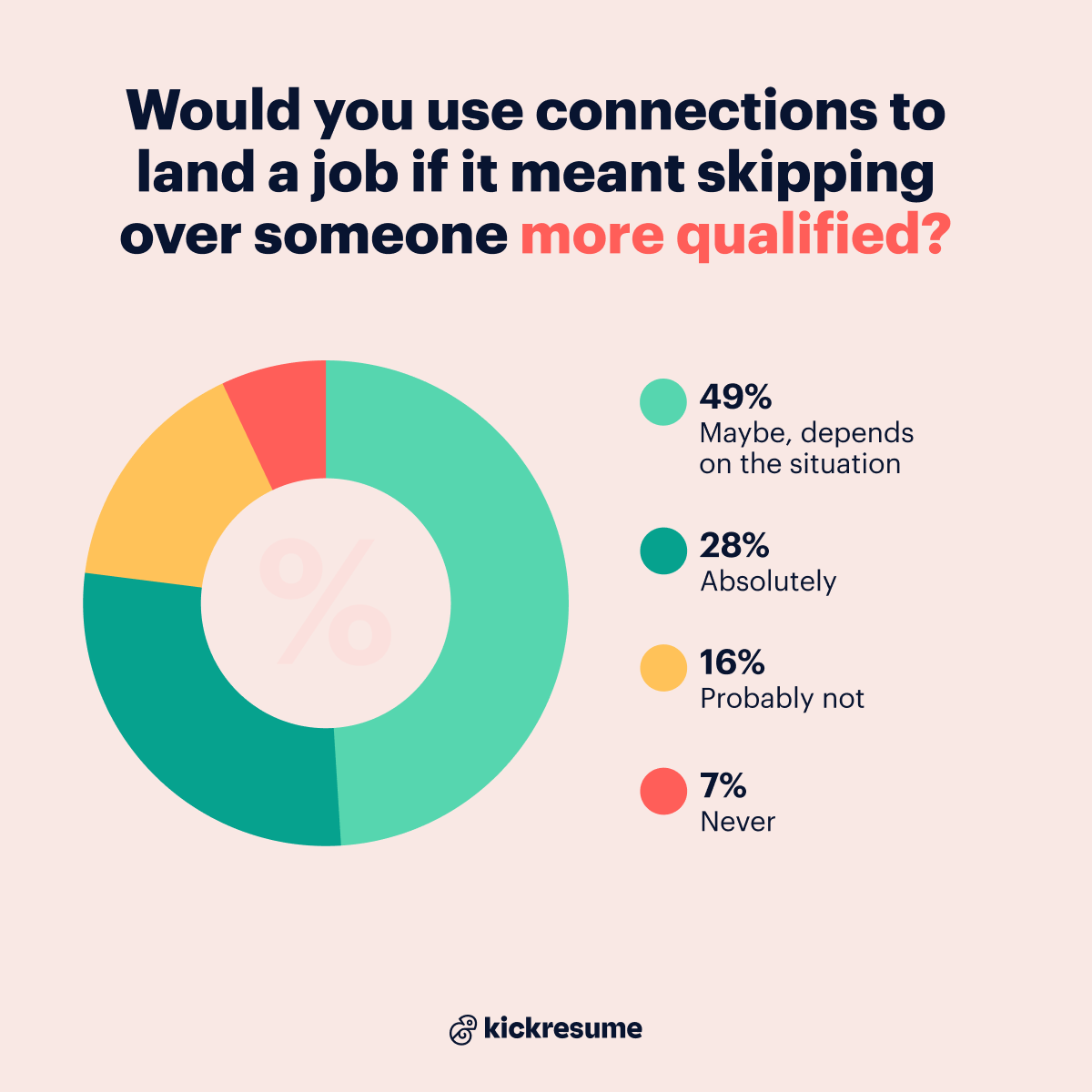
The most popular answer was “maybe”, with 49% of people saying it depends on the situation. After that, 28% said they had no problem at all with calling in a favor to help them beat a more qualified candidate to a job.
There were also 16% who would “probably not” use their connections in this way, and 7% who said that they would never do this. These workers might be worried about what it would be like taking on a role they don’t feel ready for, or they might not think it’s the right thing to do.
Half would consider referring an unqualified friend or family member
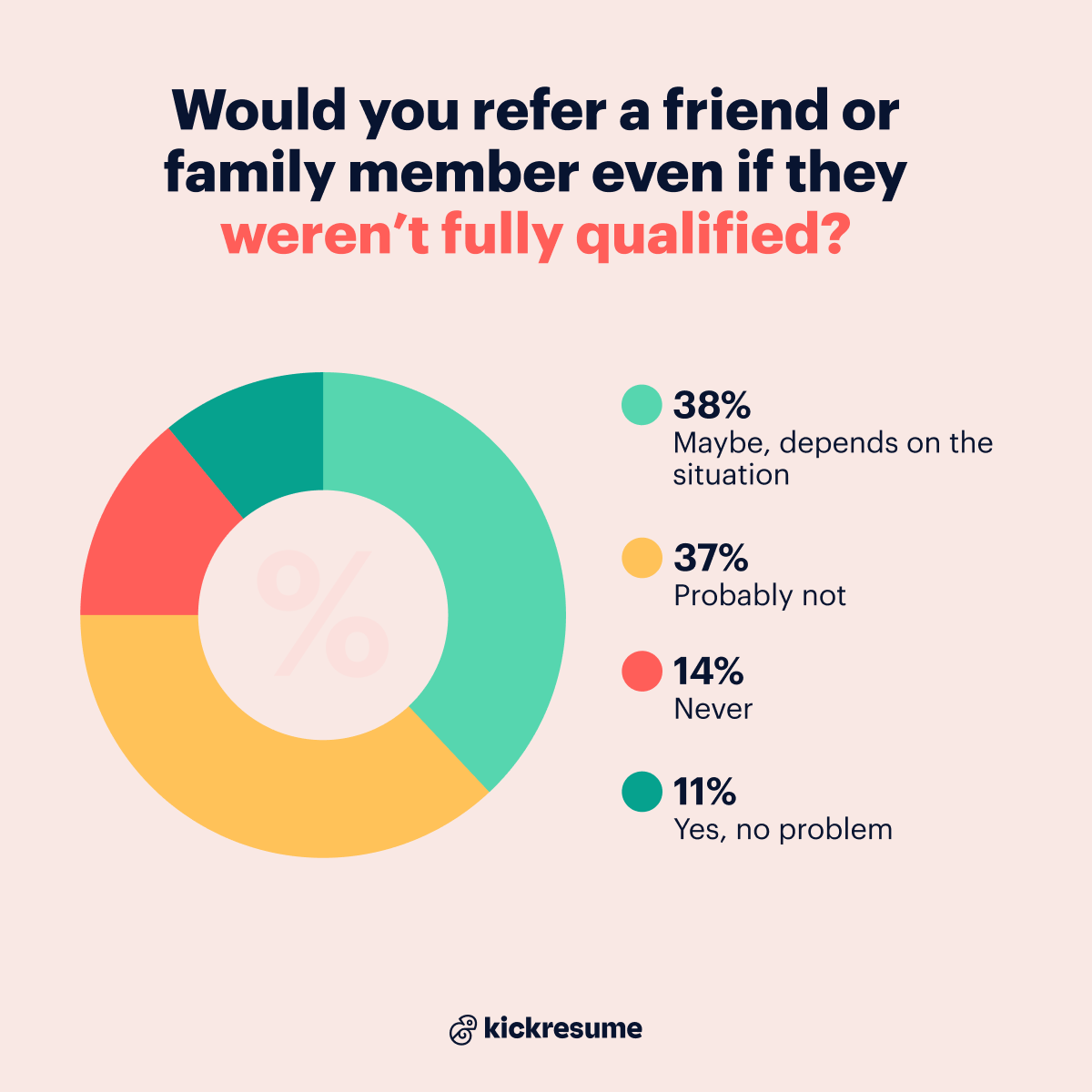
When we asked our respondents if they’d be willing to recommend a friend or family member who wasn’t qualified, it was quite an even split. 51% were leaning against—breaking this down further, we see that:
- 37% said they probably wouldn't do this.
- 14% firmly said they would “never” consider it.
People might be worried that recommending someone who isn’t right for the role could backfire, making them look bad at work. It could also affect their relationship with their friend or family member if everything goes south when they start the job.
On the other hand, that leaves 49% who were at least open to the idea. This splits into two groups:
- More than a third at 38% said it depended on the situation
- 11% would have “no problem” with it.
Knowing somebody well on a personal level can give you a good understanding of their strengths and weaknesses. While they might not have the exact qualifications on paper, you might be sure they have the right transferable skills to do a great job.
The US most likely to consider using nepotism
While many people are open to using their connections to climb the ladder, this isn’t universal and answers were different around the world.
In terms of using who you know to get ahead of a candidate who’s more qualified, the US were the most likely to say they’d definitely do this, at 36%. In contrast, workers in Asia were nearly three times as likely to rule it out entirely.
.png)
US workers were also the most likely to say they’d consider referring a friend or family member who isn’t fully qualified, at 45%—a further 10% said they’d definitely do this.
17% of workers in Asia said they’d “never” refer a friend or family member for a job they weren’t totally qualified for—a pattern that suggests nepotism is less acceptable here. In Europe, 14% ruled this out, compared to only 9% in the US.
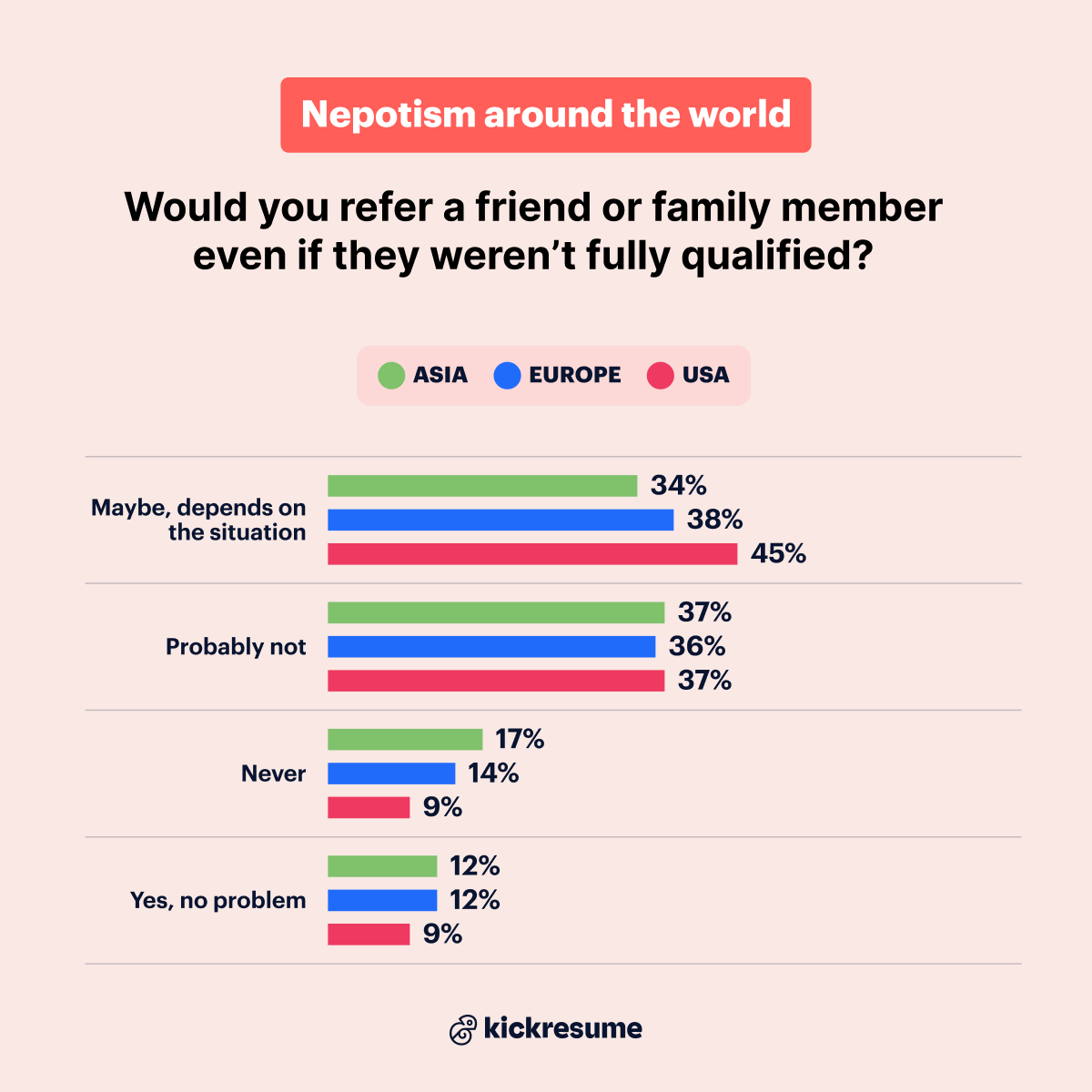
Europe is somewhere in the middle on every question—not ruling using your connections out entirely, but less likely than the US to say they’d consider it.
Final thoughts
When comparing what people have noticed in their careers to how they feel about these patterns, our survey revealed a paradox at the heart of hiring decisions.
A large majority (61%) wish promotions were given out based purely on merit. But nearly a third (28%) said they’d be happy to use connections to skip ahead of more qualified candidates. A further 49% said they’d consider it. It seems like workers accept that who you know matters a lot.
While some people like networking more than others, everyone can benefit from finding peers and mentors in their industry. People who don’t have a wide network of professional contacts might find themselves at a disadvantage, even if they’re a great candidate in every other way. 53% of people agree that in their field, skills and connections both matter.
While networking can definitely give you a boost, your application is still the main way to land a job. 36% found their latest role by applying directly through a company website or job board. Additionally, nearly half believe their resume and LinkedIn profile could be sufficient to secure an interview, if they don’t have a contact at the company.
All in all, it turns out the secret to finding a job might be a mix of technical skills, a great resume, and good connections.
Demographics
Gender
- Man: 69%
- Woman: 31%
- Non-binary or other: 1%
Age
- Under 18: 2%
- 18–28: 27%
- 29–44: 45%
- 45–60: 24%
- 61–79: 2%
- 80 or older: <1%
Location
- Europe: 28%
- North America: 26% (84% based in the USA)
- Asia: 23%
- Africa: 12%
- Latin America: 10%
- Australia / Oceania: 1%
Industry
- IT / Technology: 30%
- Marketing / Advertising / PR: 10%
- Finance / Banking: 7%
- Engineering / Manufacturing: 6%
- Sales / Retail: 6%
- Healthcare / Medicine: 5%
- Currently unemployed / Looking for work: 5%
- Education / Academia: 5%
- Other: 4%
- Student: 4%
- Human Resources / Recruitment: 3%
- Creative / Design / Media: 3%
- Hospitality / Tourism: 3%
- Government / Public Service: 3%
- Transport / Logistics: 2%
- Construction / Real Estate: 2%
- Legal: 1%
- Science / Research: 1%
Note
This anonymous online survey by Kickresume, conducted in March 2026, gathered insights from 1,030 respondents globally. All participants were reached via Kickresume's internal database.
About Kickresume
Kickresume is an AI-based career tool that helps candidates source jobs and raise salary with powerful resume and cover letter tools, skills analytics, and automated job search assistance. It has already helped more than 8 million job seekers worldwide.