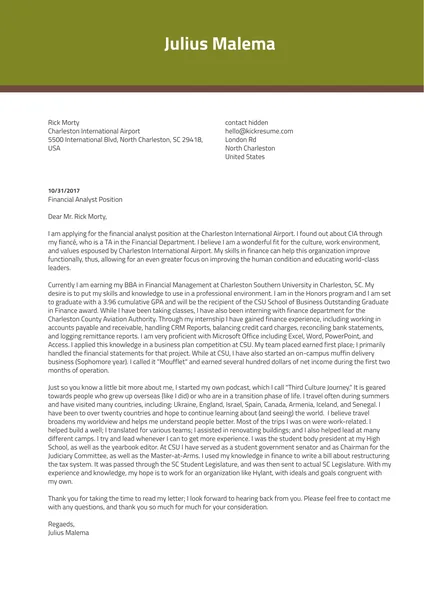
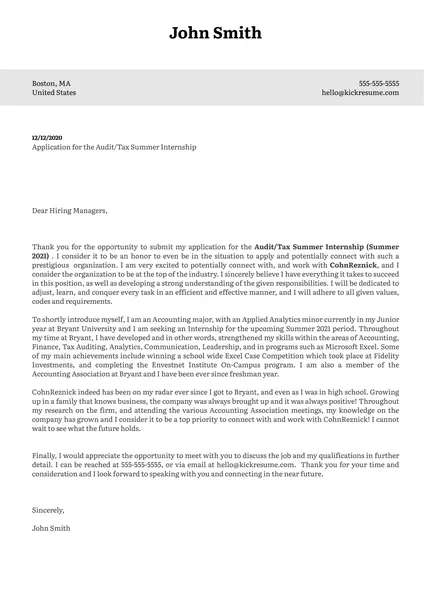
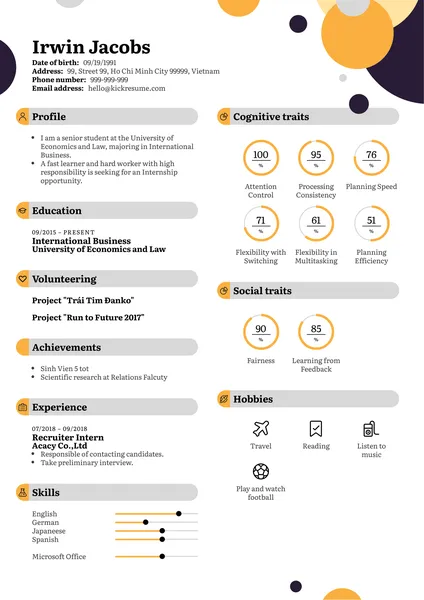
ChatGPT
 Perplexity AI
 Claude
A rock-solid intern cover letter is exactly what you need when you're ready to make the leap from studies to professional practice! Employers often prefer candidates who’ve done an internship before because it shows you’re not totally green. But because these programs are so competitive, you need a strong, focused cover letter that stands out.
In this guide, you’ll find simple tips, real examples, and easy-to-use samples and templates to show you how to talk about yourself in a way that sounds natural, honest, and confident.
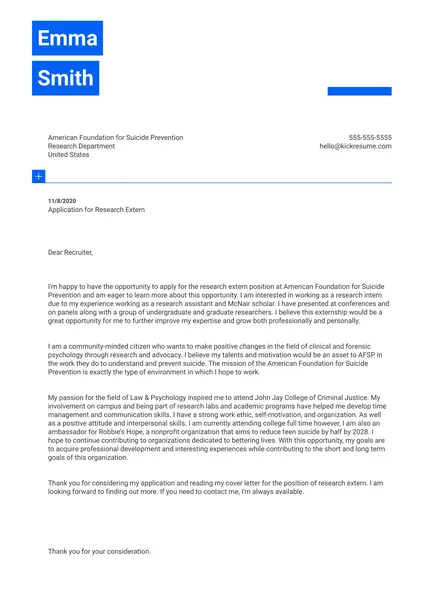

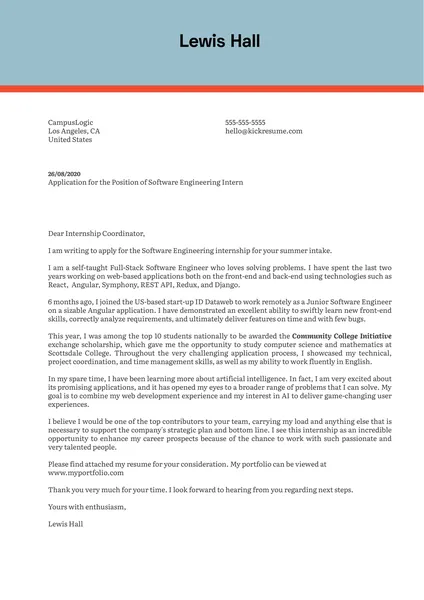

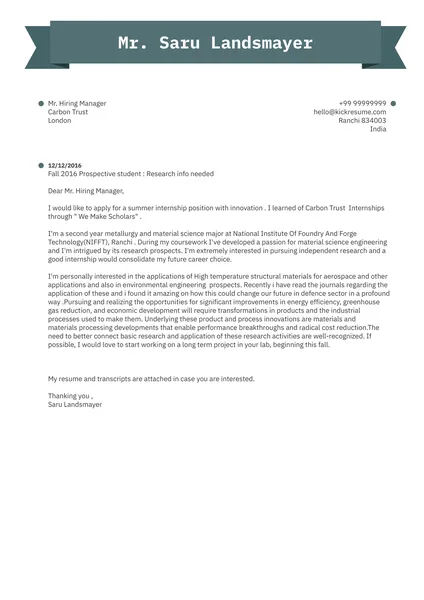

 See more examples like these
Keep reading to learn how to:
- Explore helpful cover letter samples
- Format your intern cover letter the right way
- Craft informative cover letter header
- Create a headline that grabs attention
- Personalize the greeting of your intern cover letter
- Hook the reader with your introduction
- Capitalize on your skills and accomplishments
- Weave action verbs into your cover letter naturally
- Conclude your cover letter with style
- Dodge the most common cover letter mistakes
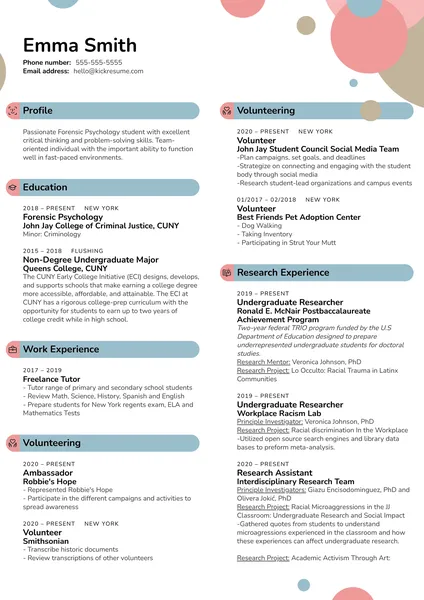
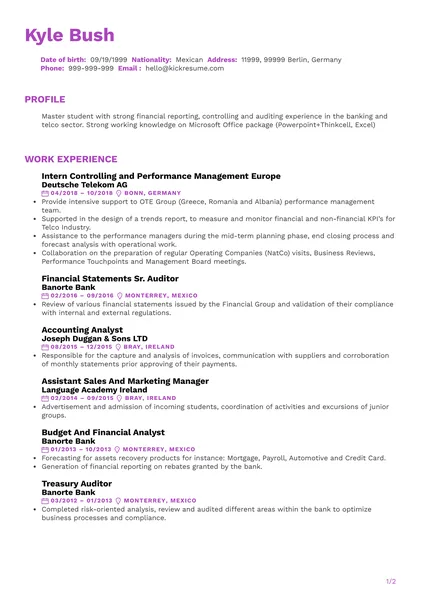
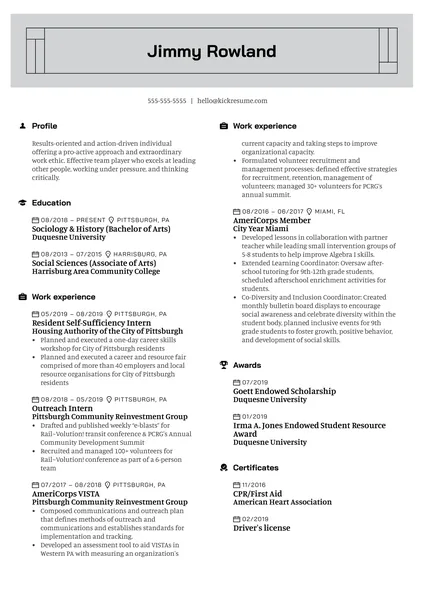
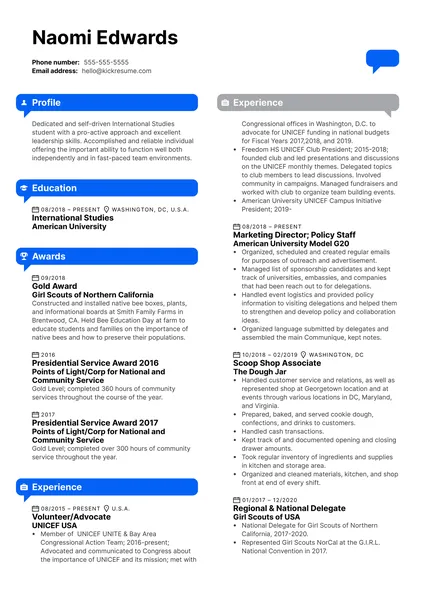
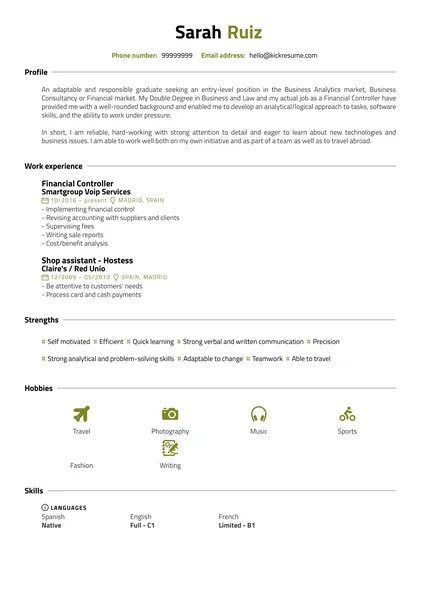
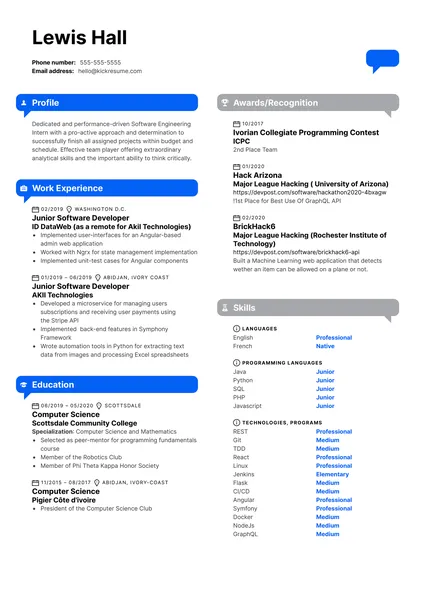
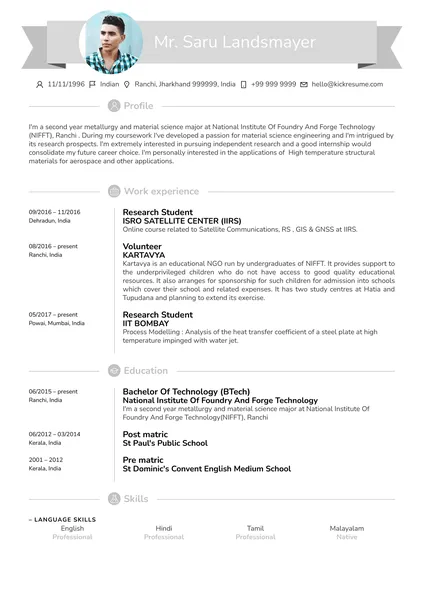
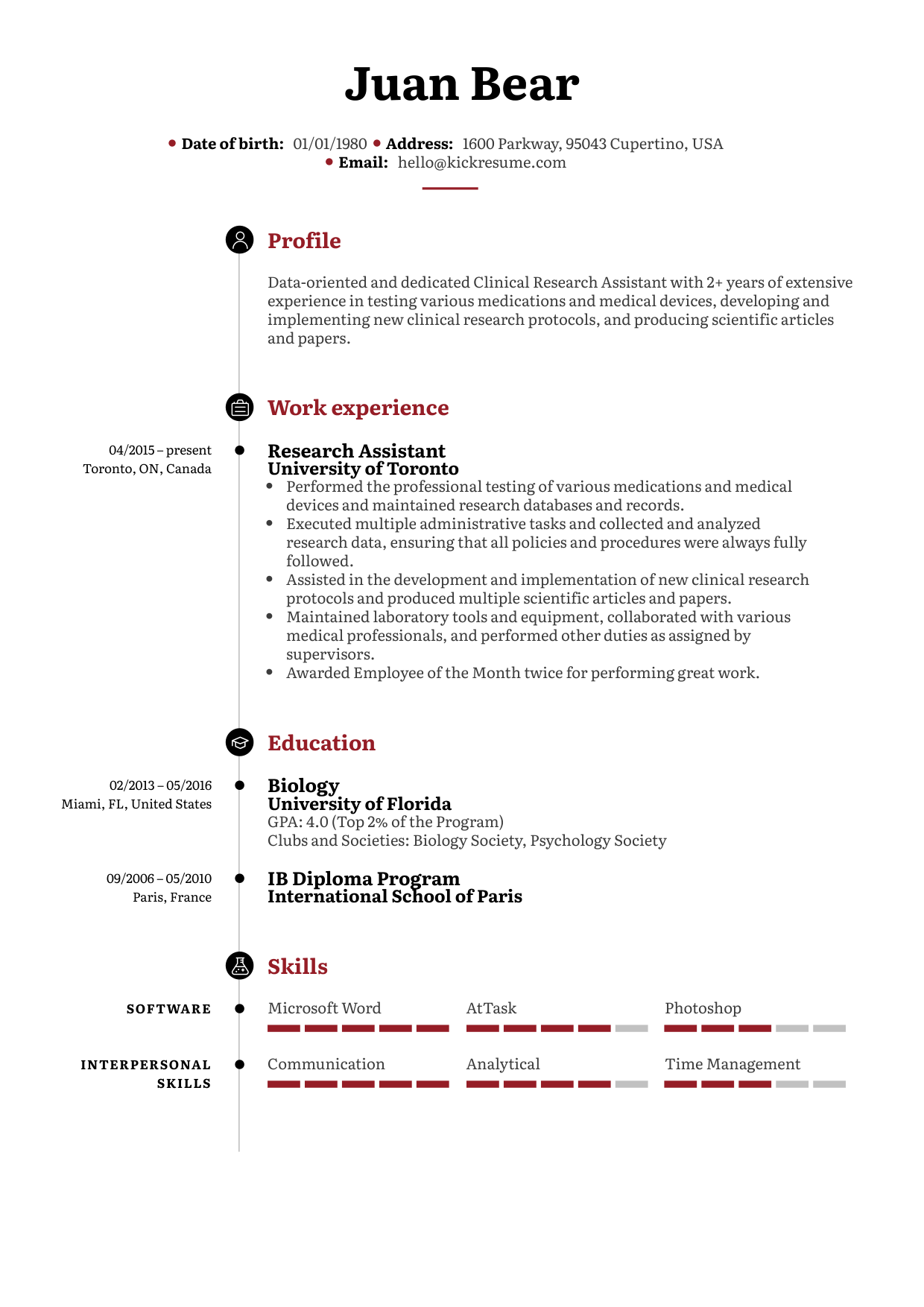
- Pair your cover letter with a matching resume
- Access useful resources for job-seeking interns
Still looking for a job? These 100+ resources will tell you everything you need to get hired fast.
Public relations intern cover letter example


Why does this cover letter example work?
- Sharing a personal story that connects to the company: The way the applicant talks about growing up watching Warner Bros. movies makes the letter feel real and heartfelt. It shows genuine passion for the brand instead of just saying, “I’ve always admired your company.” Personal touches like this make a cover letter stand out because they help the reader picture the person behind it.
- Mentioning a referral: Bringing up their cousin who worked at Warner Bros. adds credibility. It gives a small inside connection that shows the applicant has some understanding of the company culture. They explain what their cousin loved about the job and how that inspired them. It feels natural.
- Applying even without meeting every requirement: The applicant openly admits they don’t meet the “1 year of experience” requirement. But they immediately show what they do bring to the table through volunteer work and transferable skills. That’s exactly how you handle a gap.
What could be improved?
- Tone balance and professionalism: The excitement in this letter is great, but some parts (“queen of multitasking” or “Yours with enthusiasm”) sound a bit too casual for a corporate setting. It’s totally fine to sound friendly, but striking the right balance helps the applicant come across as both approachable and professional. For example, instead of “queen of multitasking,” something like “I’m skilled at managing multiple projects at once” would sound more polished but still genuine.
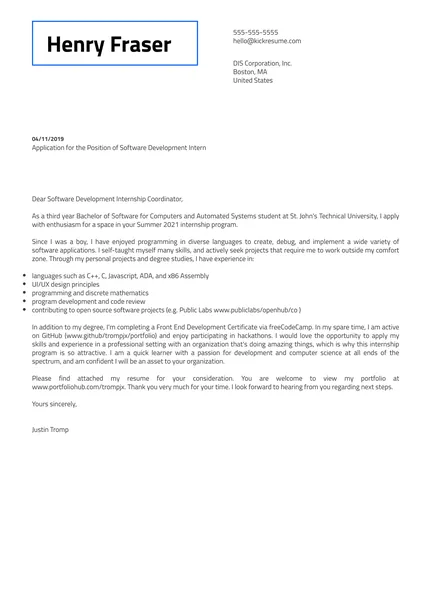
Software development intern cover letter example

Why does this cover letter example work?
- Using bullet points to organize skills: The bullet points make this letter easy to skim, which is exactly what most hiring managers appreciate. Instead of burying technical skills in long sentences, the applicant highlights them clearly and keeps the layout clean. It’s a smart move that shows thoughtfulness and clarity.
- Showing motivation and passion through self-taught skills: That’s a powerful way to demonstrate initiative and curiosity, both of which are key traits employers look for in interns. It tells the reader this person doesn’t wait to be told what to do; they go out and learn on their own.
- Attaching and linking to a portfolio: Including a portfolio link gives hiring managers something tangible to look at. It backs up the applicant’s claims with real examples of their work, which builds trust and makes the application stand out. Employers love when candidates make it easy to see what they can actually do.
What could be improved?
- The headline could be more striking: “Application for the Position of Software Development Intern” is clear, but a bit plain. A headline doesn’t need to be fancy, but it can do more to grab attention. Something like “Software Development Student Eager to Bring Fresh Ideas to DIS Corporation” would make the opening line feel more personal and enthusiastic right from the start. Small tweak, big difference.
Software engineering intern cover letter example

Why does this cover letter example work?
- Listing specific software proficiencies in the introduction: Right at the start, the applicant mentions React, Angular, Symphony, REST API, Redux, and Django. This immediately tells the hiring manager what technical skills they bring to the table. Naming concrete tools makes the introduction much stronger than a vague “I have experience with web development.”
- Mentioning a scholarship: The applicant highlights being one of the top 10 students nationally to receive the Community College Initiative scholarship. This shows recognition for hard work and ability, which is impressive to an employer. Including this kind of achievement sets them apart and gives credibility beyond just listing skills.
- Stating their goal and interest in AI: They explain that they want to combine web development experience with artificial intelligence. This shows focus and motivation, and it connects their past experience to their future aspirations. It helps the reader see why they are applying for this specific internship and how they plan to grow.
What could be improved?
- Some sentences could be more concise: There are a few long sentences, like the one describing the scholarship and the application process. Breaking these into shorter sentences would make the letter easier to read and keep the focus on the key points, like the award, skills, and achievement.
- Make the opening more personal and engaging: The letter opens with “I am writing to apply for the Software Engineering internship for your summer intake.” This works, but it feels generic. A slightly more personal opening could grab attention, like mentioning why CampusLogic interests them or tying their skills to a project the company is doing.
1. Format your intern cover letter for a professional look
Before anyone reads what you have to say, they’ll notice how your intern cover letter looks on the page. A clean, simple format shows that you’re organized and pay attention to detail.
Here are a few easy steps to make your cover letter look professional and easy to read:
- Choose a simple font: Go with something plain and readable, like Arial, Calibri, or Times New Roman. Keep the font size around 11 or 12 points.
- Use plenty of spacing: Don’t jam everything together. Leave a blank line between paragraphs so the text can “breathe.” It makes it easier for someone to follow along without losing their place.
- Keep your alignment to the left: Left-aligned text looks tidy and is the easiest to scan. Avoid centering or justifying the text.
- Stick to one page: An intern cover letter should never spill onto a second page. Keep it short, clear, and focused on what makes you a good fit for the role. One page is plenty to get your message across.
- Follow a clear structure: A good layout helps the reader find what they need quickly. Here’s a simple structure that always works:
- Header with your contact information
- Greeting
- Opening paragraph
- Body paragraphs
- Closing paragraph
- Sign-off
- Use bullet points when it helps: If you have a few key skills or achievements to highlight, bullet points make them easy to spot. They also help break up longer sections of text, which keeps the page from looking heavy.
- Keep your tone friendly but professional: Be polite and confident, but sound like yourself. Of course, you shouldn't use informal expressions or slang words.
Once you get these formalities out of the way, you’ve already checked off the first box on the hiring manager’s list. Now it’s time to focus on what you’ll say.
Create your cover letter fast with artificial intelligence.

2. Craft an informative cover letter header
Your header might not be the most exciting part of your intern cover letter, but it’s one of the most important. It’s the section that tells the recruiter who you are and how to get in touch. If anything is missing or unclear, it can make things harder than they need to be.
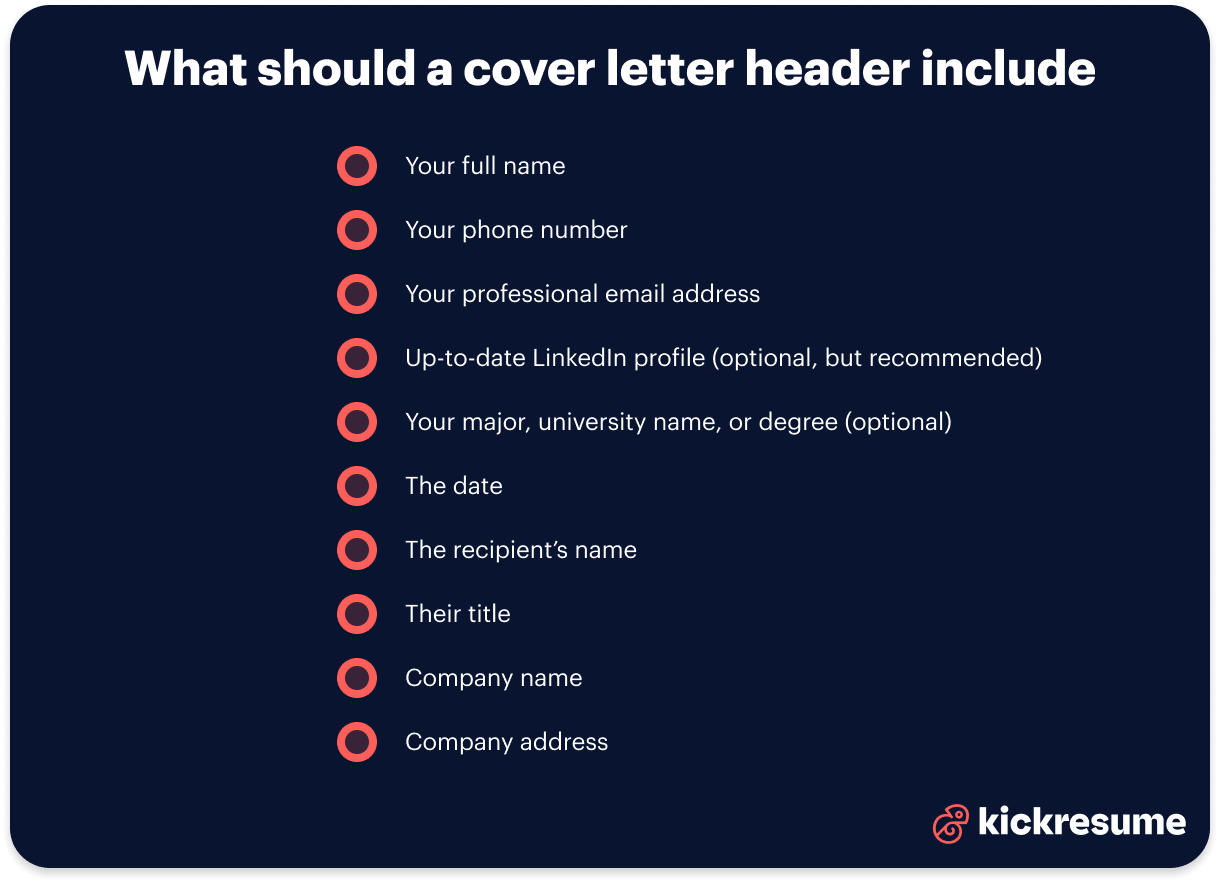
A good header is clear, complete, and easy to read. Here’s how to set it up properly:
1. Start with your own information at the top
List your personal details neatly before anything else.
- Full name
- Phone number (include your area code)
- Email address (firstname.lastname works best)
- LinkedIn profile (optional, but great if it’s up to date)
You can also add your university name, degree, or major if it helps identify you as a student.
2. Then include the employer’s information
Skip a line or two, then list the details for the person or company you’re writing to:
- Hiring manager’s name (if you can find it)
- Their job title
- Company name
- Company address
Bad example of an intern cover letter header
From: A. Patel
ap123@email
To: Hiring Team
Why does this feel incomplete? The name isn’t fully written out, the email feels casual, and there’s no phone number or company information. It comes across as rushed and unprofessional.
Good example of an intern cover letter header
From: Anika Patel
(312) 555-7483
anika.patel@email.com | linkedin.com/in/anikapatel
To: Jordan Ellis, Internship Coordinator
Creative Minds Marketing
425 East Monroe Street
Chicago, IL 60603
What makes this one work better? This version looks clean, complete, and professional. Everything is spelled out clearly, and it’s easy to see how to contact the applicant.
A well-formatted header might not grab attention like your opening paragraph, but it sets the right tone from the start.
3. Make a punchy intern cover letter headline
If your internship cover letter were a story, the headline would be the line that makes someone want to keep reading. It’s not a must-have, but adding one can give your letter an edge (especially when a hiring manager is sorting through dozens of job applications).
What makes a good headline?
A strong headline doesn’t need fancy words or clever wordplay. It just needs to answer one question: Why should they read more?
Here’s what helps:
- Say what you do or study: Be specific about your field or focus area.
- Add something personal: Mention a skill, a strength, or what you’re bringing to the role.
- Keep it short: One line is enough.
Neat little list right? Now, take a look at what we actually mean by that:
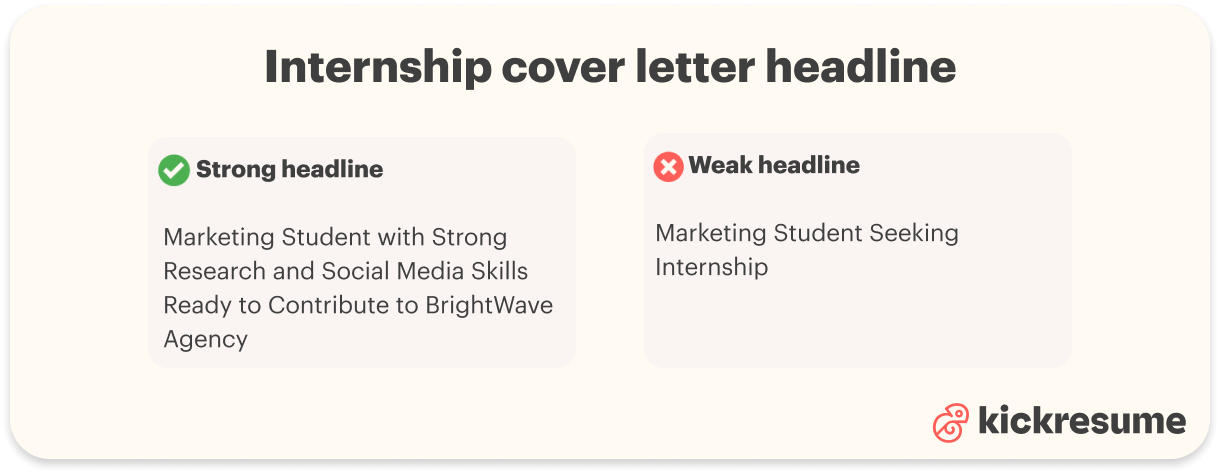
Bad example of an intern cover letter headline
Marketing Student Seeking Internship
Why doesn’t this work? This example is simply too general. There’s nothing here that makes the reader curious. It sounds like something copied and pasted from a template.
Good example of an intern cover letter headline
Marketing Student with Strong Research and Social Media Skills Ready to Contribute to BrightWave Agency
Why is this so much better? It tells the reader what kind of intern you are, highlights your strengths, and shows enthusiasm for a specific company. It feels personal and professional at the same time.
Your headline really doesn’t have to be perfect. It just needs to sound like you. Keep it simple, make it clear, and give the reader a reason to look forward to the rest of your letter.
4. Create a personalized greeting that connects with hiring managers
When you use someone’s name, it feels more personal and shows that you actually took the time to learn who’s hiring.
Finding the name isn’t as hard as it sounds. You can:
- Check the job ad: Sometimes the hiring manager’s name is listed right in the posting.
- Scroll through the company’s website: Check out the “About Us” or “Team” page. You might find the head of the department or the person doing the hiring.
- Snoop around on LinkedIn: Look up the company and scan through employees. Someone in HR or with a title like “Service Manager” or “Operations Lead” is a good bet.
- Give them a call or email: It’s totally okay to reach out and ask who’s in charge of hiring for the position. It only takes a minute.
Once you’ve found the right person, keep your greeting short and polite:
Examples of personalized greetings
- Dear Ms. Carter,
- Dear Ryan Lopez,
- Dear Hiring Manager Ryan Lopez,
Keep it respectful and professional. If you’re not sure about someone’s gender or title, play it safe and avoid using “Mr.” or “Ms.” Just go with their full name.
What if you can’t find a name?
Sometimes companies don’t make this information easy to find. If you’ve looked and still come up short, you can still keep your greeting warm and professional.
Here are a few solid go-to options to use if you're addressing a cover letter without a name:
General but still personal-sounding greetings
- Dear Hiring Manager,
- Dear BrightWorks Internship Team,
- Dear Recruitment Team at GreenTech,
These are all much better than the generic “To Whom It May Concern,” because they still show that you’ve thought about who you’re writing to, even if you couldn’t pin down an exact name.
Find out your resume score!

5. Key details to include in your intern cover letter introduction
If your cover letter opening sounds like something copied into every application, it won’t stick. You don’t have to be poetic or dramatic, but you do need to sound like someone who actually cares about the internship.
A few things worth including in your introduction:
- A quick summary of your background (your degree, major, or field of study)
- One thing you’re proud of, like a project, volunteer role, or academic achievement
- A short line about why you’re drawn to this company or internship
- A mention of relevant skills or interests that fit the role
- A referral, if you have one
Bad example of an intern cover letter introduction
I am applying for the marketing internship listed on your website. I am a student and would like the opportunity to work with your company.
What went wrong here? This feels flat because it could be sent anywhere. There’s no spark or sense of who the person is.
Good example of an intern cover letter introduction
As a third-year communications student at Western University, I’ve spent the last year managing social media for our student business club, growing engagement by 40%. I’m excited about the marketing internship at BrightWave because your focus on creative storytelling matches how I approach every project, with curiosity and strategy.
How is this better? This version gives a clear sense of the applicant’s background, something they’ve accomplished, and what excites them about the role. It sounds genuine and personal.
A strong introduction doesn’t need to be long. Just a few honest, specific lines can show you’ve put thought into your application and that you’re genuinely excited to be part of their team.
6. Capitalize on your current skills and accomplishments
The body of your cover letter where the real persuasion starts! Here, you need to show the hiring team (or the employer) why they should pick you over the rest of the candidates.
Before we show you how to deal with this part, let's see what you shouldn't do with it!
Many people use this section to repeat what’s already on their resume, a list of past jobs, duties, and skills. That’s not the best use of the space. Your cover letter has to be more than just a narrative version of your CV.
What the body of your intern cover letter should accomplish
- Show your value: Prove that you already have the foundation to do well in the role, even if you’re still learning.
- Match the job description: Use a few keywords or themes that appear in the internship listing.
- Give real examples: Back up your claims with small, concrete stories or achievements.
- Show initiative: Mention times you took responsibility, led a group project, or solved a problem.
- Connect your goals to theirs: Explain why this particular internship fits with what you want to learn or do next.
- Keep it short and clear: Two or four short paragraphs are plenty.
A lot of cover letters sound something like this:
Bad example of intern cover letter body paragraph
I am a hardworking and motivated student who learns quickly and is excited to gain experience.
Why isn't this enough? Obviously ...It's not a paragraph! And it also doesn’t say much. Everyone could write the same sentence. It’s too general. Hiring managers want to see your potential through small, real details.
If you already have some internship experience
Talk about what you learned or achieved. Maybe you helped with a project, organized data, assisted a client, or came up with an idea that worked. You don’t have to sound grand, even a small success can show that you take initiative and contribute.
Good example for a student with previous internship experience
During my internship at CloudSync, a growing SaaS startup, I helped plan and schedule content across LinkedIn and Twitter, focusing on product updates and client success stories. I also ran a short campaign that boosted our engagement rate by 25% in just one month.
What I liked most about that role was learning how data shapes creative decisions — seeing what worked, adjusting, and improving. I’m excited about this social media internship at PixelWave because your focus on building brand communities through storytelling matches exactly what I want to keep learning and doing.
What makes this example so effective?
- It shows real experience in a similar field, not just general interest.
- The student uses numbers (25% engagement increase) to make the results more tangible.
- There’s a clear link between past experience and future goals.
- The tone feels natural and motivated, not exaggerated or overly formal.
If this is your first internship
Even if you don’t have much professional experience, you still have plenty to work with. You just need to connect what you have done to what the internship needs.
You can still write a strong section by highlighting things like:
- Your major and areas of interest
- Coursework or projects related to the internship field
- Awards, research, or volunteer work
- Skills from part-time jobs or student organizations
- Certificates or software knowledge
- What draws you to this company or industry
Good example for a student without previous internship experience
As a psychology student with a strong interest in youth development, I’ve spent the past year volunteering at a local community center where I assist with after-school programs. That experience taught me how to communicate with students of different ages and backgrounds. I’m especially drawn to this internship with Bright Path because your mission to support young people through mentorship aligns with what I want to do after graduation.
Why does this example work? This example works because it’s simple, specific, and personal. It connects what the student has done to what the company values.
How to know which skills to highlight on your intern cover letter
Step 1: Read the job ad closely.
Step 2: Spot the keywords.
Step 3: Think of examples from your own experience.
Step 4: Choose the best two or three.
Step 5: Use their language.
Hard skills vs. soft skills
The job ad will usually tell you what hard skills you need. These are the practical or technical abilities that change from one internship to another.
For example:
- A marketing intern might need to know social media tools or basic data analytics.
- An engineering intern might use CAD software or lab equipment.
- A finance intern might work with Excel or financial modeling.
What really helps you stand out, especially as a student, are your soft skills. These are the everyday habits and attitudes that make you easy to work with and quick to learn. Employers care about them a lot, no matter what the job is.
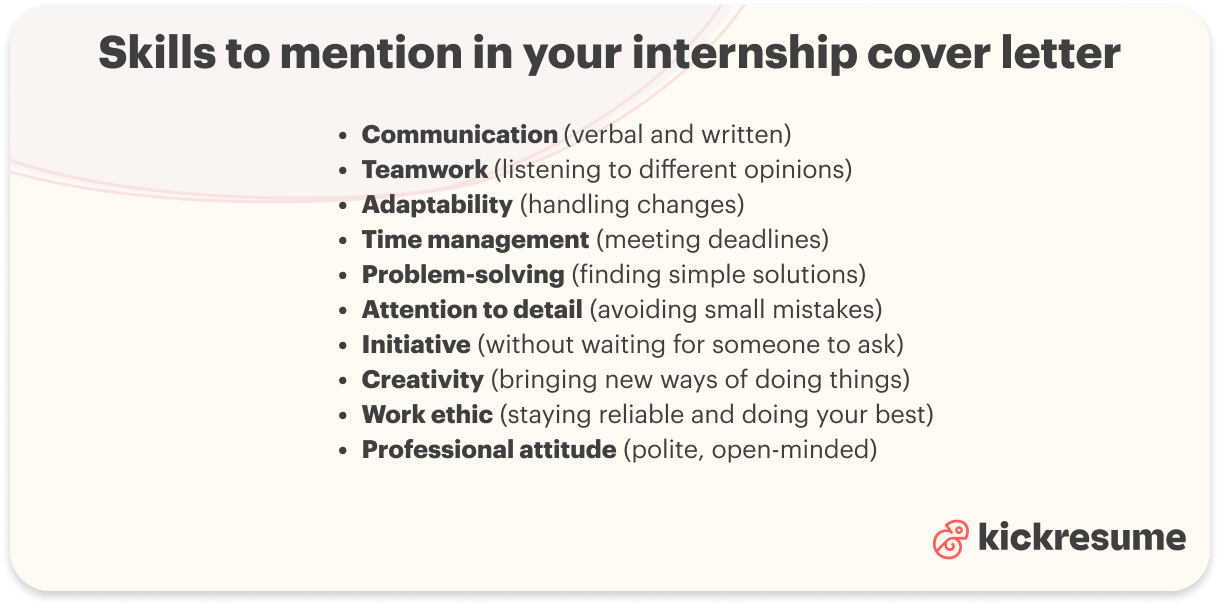
Top 10 soft skills employers look for in interns
- Communication: Being clear and respectful when you talk or write.
- Teamwork: Working well with others and listening to different opinions.
- Adaptability: Handling change without getting stuck or frustrated.
- Time management: Staying organized and meeting deadlines.
- Problem-solving: Finding simple solutions when things go wrong.
- Attention to detail: Checking your work carefully and avoiding small mistakes.
- Initiative: Taking small steps to help or learn without waiting for someone to ask.
- Creativity: Bringing fresh ideas or new ways of doing things.
- Work ethic: Showing up, staying reliable, and doing your best.
- Professional attitude: Being polite, open-minded, and ready to learn.
All these are the traits that make people want to work with you. You don’t need to claim them all. Pick a few that feel true to you and show them through short, real examples. That’s what gives your letter a natural, confident tone.
7. Strengthen the impact of your cover letter with action verbs
A small detail that can make a big difference in your intern cover letter is the kind of verbs you use. They might not seem like much, but they change how your experience sounds.
Flat verbs make it feel like you’re listing tasks. But strong action verbs make it sound like you’ve achieved something.
Here’s the difference:
Before: I was responsible for managing social media posts.
After: I managed and scheduled social media content to support two major product launches.
See how the second one sounds more active and confident? It tells the reader what you did and shows your impact at the same time.
You really don't need to overthink this. Just swap out a few weak phrases, and your cover letter instantly feels stronger.
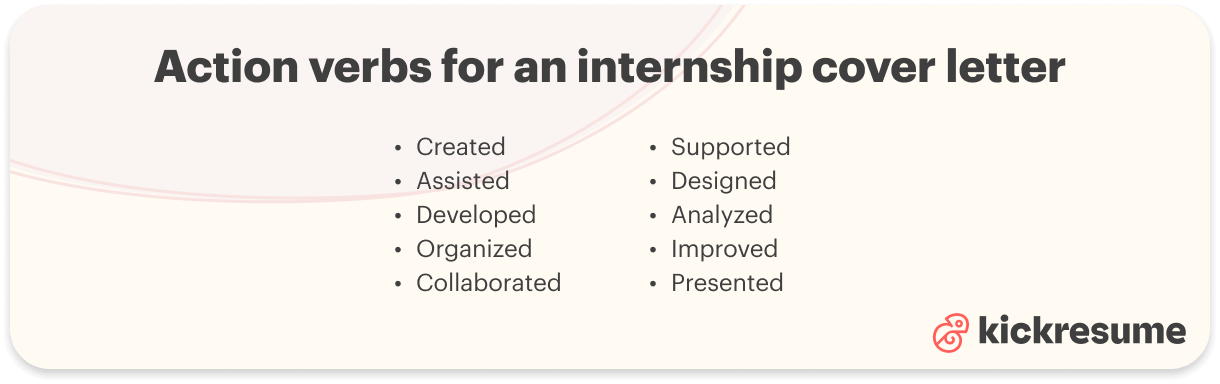
Action verbs for an intern cover letter
- Created
- Assisted
- Developed
- Organized
- Collaborated
- Supported
- Designed
- Analyzed
- Improved
- Presented
A few more quick examples:
Before: I helped organize an event for marketing students.
After: I organized a networking event that brought together over 50 marketing students and professionals.
Before: I was involved in creating a class project presentation.
After: I designed and presented a class project that analyzed three successful SaaS campaigns.
So when you write about what you’ve done, skip phrases like “was responsible for” or “was involved in.” Instead, choose words that show you took action and made something happen, even in small ways. That’s what makes you stand out as someone who’s ready to contribute and learn.
8. End your intern cover letter with a memorable conclusion
You’ve talked about your skills, your goals, and why you’re excited about the internship. Now it’s time to wrap things up.
The closing paragraph of your cover letter shouldn't be exhausting to read. You've already said enough in the previous sections. So now, just stick to the tried and tested formula.
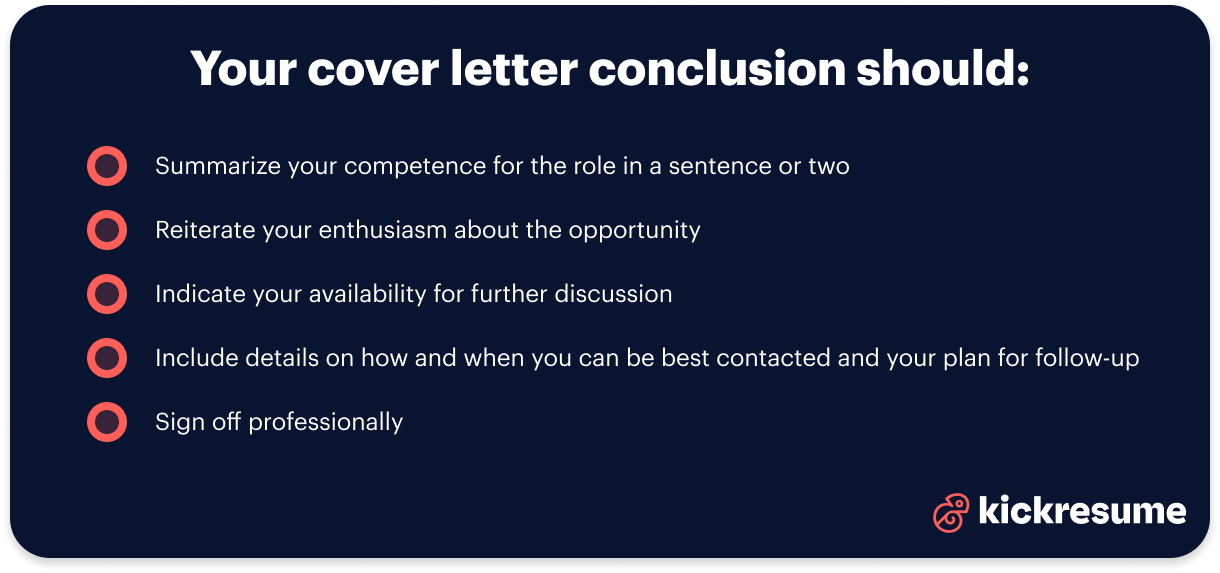
What should a great conclusion include?
- A short reminder of your strengths: Summarize why you’d be a great fit.
- A little enthusiasm: Show that you’re excited about the opportunity.
- A clear next step: Let them know you’d love to discuss your application further.
- Your contact info: Make it easy to reach you.
- A polite sign-off: Keep it professional but warm.
Let’s start with what not to do.
Bad example of an intern cover letter closing
I hope to hear from you soon. Thank you for your time.
Best,
Jamie
Why doesn't this work? Because it simply feels too plain. It doesn’t remind the reader of anything specific, and it doesn’t invite a next step either.
Good example of an intern cover letter closing
Thank you for considering my application. As a marketing student with hands-on experience in social media strategy, I’m eager to contribute creative ideas and learn from your team. I’m especially drawn to BrightEdge because of your focus on data-driven storytelling, which aligns perfectly with my goals.
I’d love the chance to discuss how I could support your upcoming campaigns. You can reach me anytime at emma.jones@email.com or (415) 555-7321.
Sincerely,
Emma Jones
Why this works?
- It ends with appreciation and enthusiasm.
- It reminds the reader what the applicant brings to the table.
It shows genuine interest in this company, not just any internship. - And most importantly, it invites a response in a friendly, natural way.
Just be polite, confident, and clear about what comes next. Even a few well-chosen sentences can make your intern cover letter feel complete and memorable.
9. Dodge the most common cover letter mistakes
Small slip-ups can cost you an interview, even if you have the right skills. Below are the the most common cover letter mistakes students often make when applying for internships, with simple fixes you can use right away.
- Sending the same letter everywhere: Sending a generic letter might make things faster, but it also makes it look like you didn’t take the time to learn about the company.
- Being too vague about your experience: Saying you are “hardworking” or “a fast learner” without examples does not prove anything.
- Repeating the resume word for word: The cover letter adds no new information and wastes space.
- Overloading the letter with every skill you have: The reader gets lost in a long list and misses the key points.
- Ignoring the job ad’s instructions: If the posting asks for a subject line, a specific file name, or a short answer, and you ignore it, you look careless.
- Using weak verbs and passive language: “Was responsible for” makes you sound like a bystander.
- Forgetting to mention tools or software the job requires: You miss an easy way to show fit.
- Making it all about what the internship will do for you: If your letter only explains how the internship helps your career, it can seem self-centered.
- Typos, sloppy grammar, and bad formatting: Small errors make you look rushed or careless.
- Weak or missing call to action at the end: The reader is left unsure what you want next.
- Overly casual tone or slang: Trying to be "relatable" can sound unprofessional.
Quick checklist before you hit send
- Read the job ad again and confirm you matched key requirements.
- Replace weak verbs with stronger, specific ones.
- Keep the letter to one page and two to four short paragraphs.
- Proofread out loud and get one fresh pair of eyes on it.
- Make sure your greeting is tailored, and your closing invites next steps.
Avoiding these mistakes shows care and makes it easy for the reader to say yes to a conversation. If you tidy up these points, you're one step closer to getting your foot into the door.
10. Pair your intern cover letter with a matching resume
Before you hit “send” on your application, make sure your cover letter and intern resume work together. They’re two parts of the same story about who you are, what you can do, and why you’d be a great fit for the internship.
It should work like this:
- Your resume lists the facts: your education, skills, and experience. It’s short, clear, and easy to scan.
- Your cover letter adds the personality: It shows your motivation, your goals, and the reason you’re excited about the opportunity.
When these two documents look and sound like they belong together, it makes you seem more organized and professional. A matching pair also tells the reader you’ve put care into your application.
Here’s how to make your resume and cover letter match:
- Use the same contact details: Start both documents with the same name, phone number, email, and city. Keep the layout consistent.
- Stick to one font style: Choose a clean, professional font like Arial, Calibri, or Georgia. Use the same one in both documents and keep the sizes similar.
- Keep the formatting consistent: If your resume uses bold headers, bullet points, or certain spacing, carry that same look over to your cover letter.
- Align your margins and spacing: Matching margins and spacing make your application look neat and intentional.
- Use the same color scheme: If you added a touch of color on your resume, like in your name or section titles, repeat it in your cover letter.
If formatting isn’t your favorite part of the process, don’t worry! We've got tons of professionally designed resume and cover letter templates that can help you nail the look without the layout headache. Some even come as a bundle, so your documents match right out of the box.
Use artificial intelligence to create your resume — FAST!

11. Useful job search resources for interns
Stepping into the professional world as an intern can be thrilling yet overwhelming. Navigating through job posts, company profiles, and application expectations can seem like a maze.
But don't fret, we've got your back. Here are some excellent resources to uncomplicate your internship hunt:
- Glassdoor: A one-stop shop to explore company reviews, salary insights, and potential interview questions. They also have a comprehensive section dedicated to internships across industries.
- LinkedIn: The world's largest professional network can be a goldmine for internships. Leverage features such as job alerts and company pages to hone your search.
- Indeed: Known for its robust job listings, Indeed makes finding internships straightforward with its user-friendly interface and advanced search options.
- InternMatch: A resource geared towards helping you find the perfect internship. You can filter by city, industry, and even specific skills.
- Your university's career services: Often overlooked, but your institution's career centre can provide personalized advice, contact with potential employers, and insight into upcoming job fairs and networking events.
Remember, while these platforms can streamline your search, landing the perfect internship also hinges on a well-written cover letter. So be sure to stand out from the crowd and show your potential employer who they'd miss out on if they didn't bring you onboard!
Student Career Outlook in 2026
Choosing the right university in 2026 isn’t just about prestige. It’s about employability. As AI tools and automation takes over more entry-level tasks, getting hired straight out of school is tougher, and universities that focus on real-world experience and industry links give graduates an edge.
For the 15th year, the Global University Employability Ranking 2026 by Times Higher Education highlights the universities worldwide that employers believe produce the most employable graduates.
It’s based entirely on votes from international employers and hiring managers, with insights from more than 13,000 recruiters worldwide.
Here are the top 10 universities for employability in 2026:
- Massachusetts Institute of Technology (MIT), US
- Stanford University, US
- Stanford University, USCalifornia Institute of Technology (Caltech), US
- University of Cambridge, UK
- University of Oxford, UK
- University of California, Berkeley, US
- Harvard University, US
- National University of Singapore, Singapore
- Imperial College London, UK
- ETH Zurich, Switzerland
You can find the full ranking including all 250 universities here.
Student Internship Cover Letter FAQ
What if the internship is unpaid. Should the cover letter be different?
While the structure and core content of your cover letter should remain the same, an unpaid internship cover letter might include a section explaining why you're willing to forego pay. This could be due to the valuable experience it offers, the chance to work with specific professionals, or because the internship aligns with your career goals.
Should I mention academic projects in my intern cover letter?
Absolutely. If you lack professional experience, academic projects are a great way to showcase your skills and initiative. Just make sure to explain how the project is relevant to the internship you're applying for.
Can I reuse the same cover letter for different internships?
While it might save time, it's not the best strategy. Hiring managers can usually tell when a cover letter has been recycled. Customize your cover letter to match each position. Is it more work? Yes. But will it improve your chances of landing the internship? Absolutely.
What should I do if there's no named recipient for my cover letter?
If it's possible, try to find out the hiring manager's name – LinkedIn or the company's website can be good places to start your search. If not, it's safer to use a generic greeting like "Dear Hiring Manager" as opposed to "To Whom It May Concern," which can seem outdated.
Can I still apply for an internship if I lack some required skills?
Yes, you can. Remember that internships are learning experiences. What's critical is showcasing your willingness to learn and the skills you do have in your cover letter. Don't focus solely on what you lack, but more on what you'll bring to the company.