People used to talk about jobs being for life, but the average tenure for workers has been dropping steadily for years.
We spoke to Séverine Boulard, an HR consultant with over 20 years of experience, to understand what's driving the shift. The expert also told us about how workplace loyalty goes both ways, with examples of what it looks like for an employer to be loyal towards their staff.
Key takeaways:
- Gen Z aren’t disloyal—just looking for the right fit. Younger generations take an active role in making sure their employer fits their needs and offers the flexibility they want.
- Loyalty is a two-way street. Workplace loyalty today is defined by an ongoing relationship of trust and support between employer and employee.
- Culture is more important than compensation. While employees look for a great pay package, they’re more likely to be convinced to stay long term by recognition, fair treatment, and good relationships.
- Managers are key. Shaping the day-to-day experience of their team members, managers and team leaders can make or break staff retention.
Younger workers aren't leaving any faster than Boomers did
The popular narrative is that Gen Z workers are abandoning their employers faster than any generation before them—that the "job for life" is dead because young people simply won't commit. But the data tells a more nuanced story.
Research from the National Institute of Retirement Security shows that early-career tenure has barely changed in 40 years. Baby Boomers aged 25–34 in 1983 stayed at jobs for an average of 3 years; workers the same age in 2024 stayed 2.7 years—a difference of about three months. The much bigger drop has been among workers aged 45–54, whose average tenure has fallen from 9.5 years in 1983 to 7 years in 2024.
In other words, young workers have always changed jobs relatively quickly. What's actually changed is that older workers used to stick around longer than they do now. When today's Gen Z reach their 40s and 50s, the tenure data may look quite different from what current headlines suggest.
So why don't younger workers seem to stay as long? Séverine puts it down to choice rather than disloyalty: "Earlier generations often stayed longer, partly because there were fewer alternatives and expectations were different. Today, with more visibility and mobility, younger generations tend to reassess their situation more frequently."
That doesn't mean they're disloyal—it means they're more active in deciding whether to stay. 'Job hopping' for higher pay is part of the picture, but workers today also "feel less pressure to stay in situations that no longer feel aligned". Stability was the priority a generation ago; today, flexibility matters more, which is partly why portfolio careers are on the rise.
So if it's not about a loyalty deficit, what has actually changed about how workers approach their employers—and what makes them stay or leave today?
Workplace loyalty is more complex than just your tenure
We asked Séverine to tell us what workplace loyalty really means. The expert said that while it’s often thought of staying at your job for a long period of time, it’s “not that simple”. It’s actually a two-way relationship between the worker and their employer—one which should be built on trust and fairness. And if the employee doesn’t feel like that relationship is working for them any more, it’s increasingly likely that they’ll leave.
Séverine told us, “People do not stay just because they are 'loyal' in principle. They stay when the experience feels right to them. Today, loyalty feels less automatic and more like an ongoing decision employees make based on what they see and experience.”
How employers can keep—or lose—their workers’ loyalty
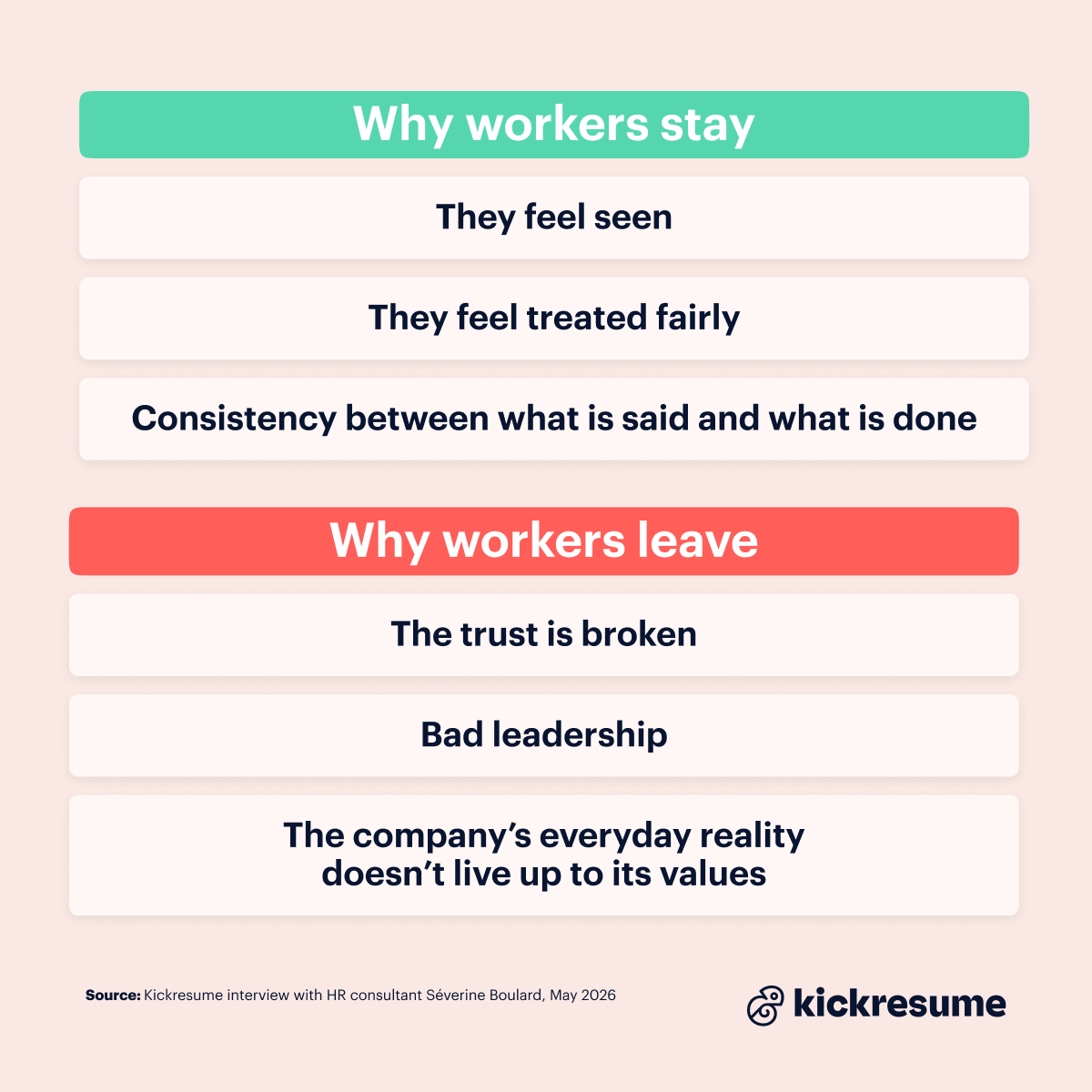
So if staying at a company is now an ongoing decision we make every day, what can organizations do to make sure their employees want to stay long-term? Séverine advised: "People tend to stay where they feel seen, fairly treated, and where there is consistency between what is said and what is done."
While that recognition might look like promotions and pay raises, managers who can't help their team climb the career ladder right now can still play a big role—by praising employees to senior leadership, or by choosing them for interesting new projects.
Team leaders and middle managers carry a particular responsibility here, as Séverine explained: "They shape most of the daily experience." That means keeping employees informed, making sure they feel supported and able to grow, and communicating clearly about expectations and how decisions are made.
In contrast, here's what Séverine warned could push workers toward the exit: "A loss of loyalty usually follows a breach of trust: unclear decisions, inconsistent leadership behaviour, or a gap between stated values and everyday reality."
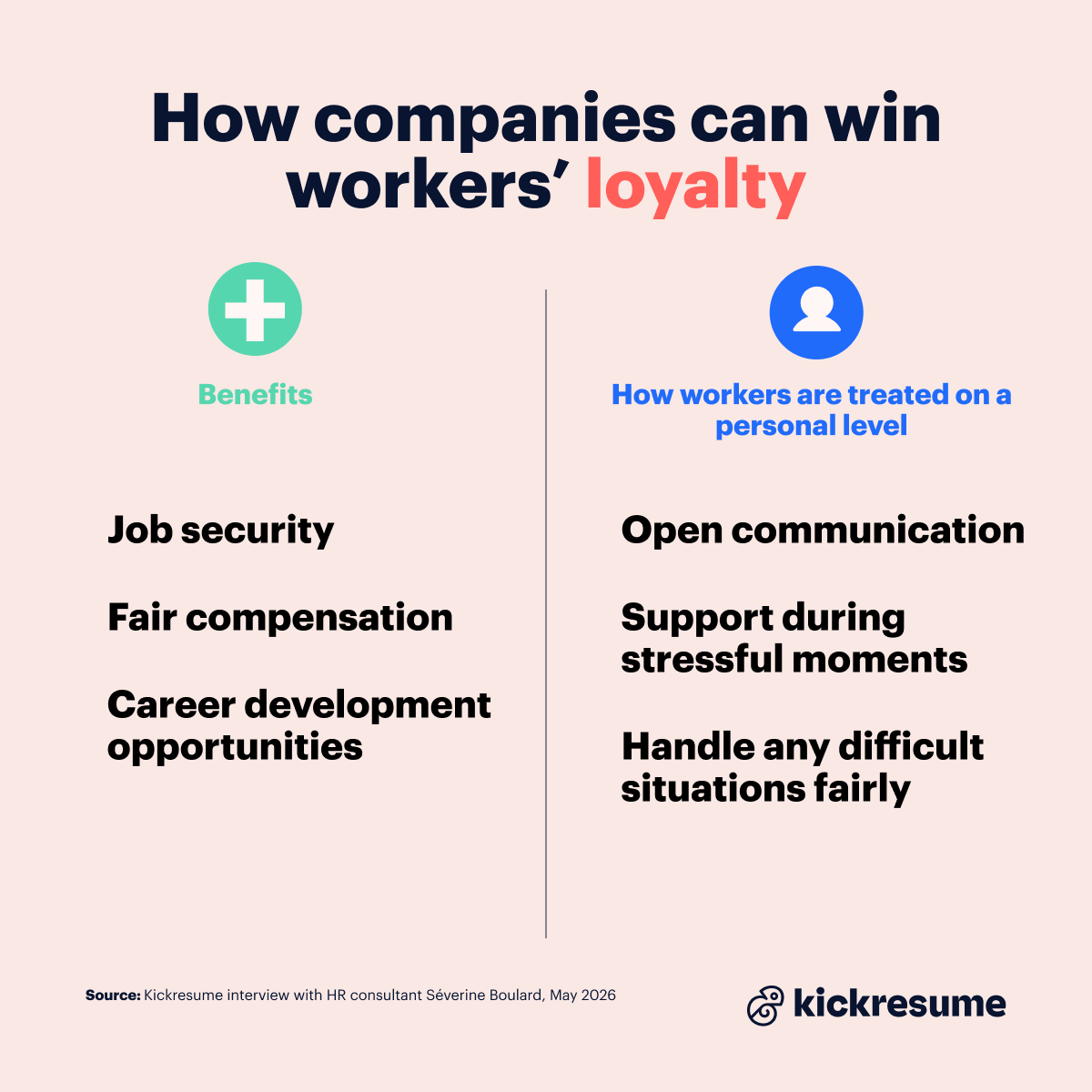
But keeping loyalty also means actively demonstrating it. We asked Séverine what workers value most, and what signals to them that their employer genuinely wants them to stay and succeed. She explained that it falls into two categories.
The first is structural—how employees are treated by the organization as an institution. This includes fair pay, job security, and opportunities for career development.
The second is personal—how employees are treated day to day. Is there open communication across the company? When the workload gets tough, is there enough support? When difficult situations arise, are they handled fairly?
Séverine summed it up by saying that while policies matter, "it's more about what people actually experience when it matters."
Why employees decide to leave
When workers no longer feel that the relationship is working, they'll eventually make a move. We asked Séverine to go into a bit more detail on some of the top reasons employees leave their jobs, and the HR consultant provided us with the following list:
- Lack of recognition
- Unclear direction
- Limited career growth
- Broken trust
- Poor leadership—whether that's at the management or senior level
You might notice compensation isn't on the list. Séverine acknowledged it can be a factor, but rarely the whole story. As she explained: "Good leadership, flexibility, progression opportunities, autonomy, and feeling valued can outweigh compensation alone for many people. Once basic compensation expectations are met, the day-to-day environment tends to have a huge impact on retention."
The decision to leave also rarely happens overnight. These issues tend to build gradually—part of a pattern that employees notice over time and feel increasingly strongly about.
Sometimes a single decision can be the breaking point, but workers don't always leave immediately. Instead, they may begin to mentally disengage—a process often called "quiet quitting."
Séverine told us this is becoming more common: "One thing I notice more today is a kind of quiet withdrawal. Employees may still perform well externally, but internally they become less invested, less proactive, and less connected to the organization long-term. It's not always visible immediately, which is why many companies are surprised when strong employees suddenly leave."
If you're weighing whether your current workplace is still the right fit, our interview with career coach Laura Tipping includes a practical 30-day action plan.
Loyalty is about how you show up, not how long you stay
As Séverine has explained, simply staying with your company doesn't necessarily mean you're still engaged and committed. So what does genuine loyalty from an employee actually look like?
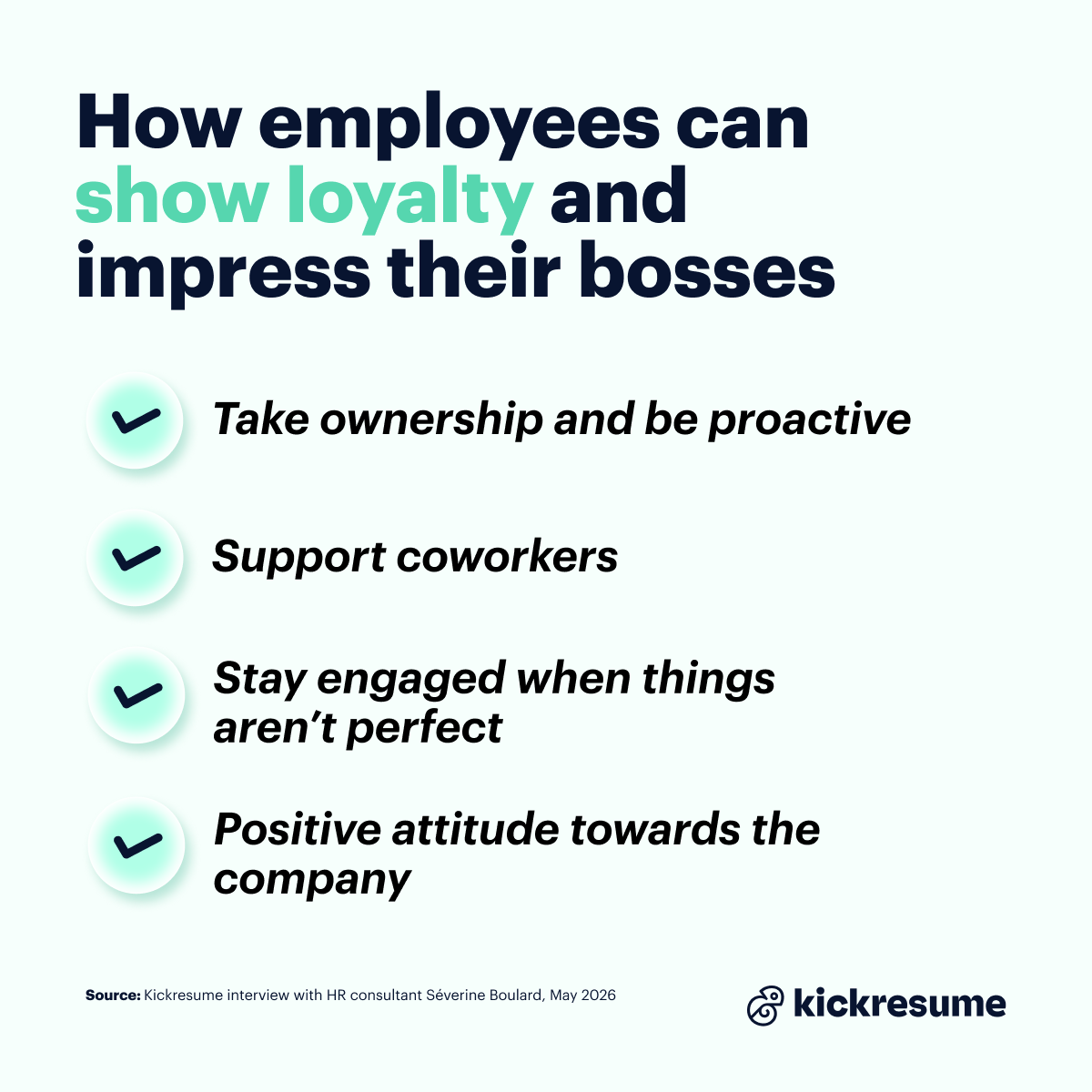
Séverine told us: "What I often see is employees taking ownership, supporting their teams, and staying engaged even when things are not perfect. They contribute beyond what is strictly required, and they tend to be more constructive when challenges come up."
It also shows in smaller ways: "how they talk about the company externally or how they handle difficult moments internally." A helpful comment in a meeting about a tricky problem, or a positive LinkedIn post about working at the company—these things are noticed.
Final thoughts
As the world of work has changed over the years, the meaning of workplace loyalty has shifted. As Séverine notes, today’s landscape is “more dynamic, and a bit more balanced between employer and employee.”
Workers are increasingly prioritizing flexibility and career growth over traditional stability. Looking ahead, Séverine expects this concept of loyalty to continue evolving alongside the job market and wider economy. As the HR consultant told us, “In more uncertain periods, people tend to stay longer for stability. When the market is stronger, they move more easily.”
If your current role no longer offers the flexibility or growth you need, it might be time for a change. Kickresume’s suite of AI tools is designed to help you land the perfect new job and level up your career.
Note
In May 2026, Kickresume spoke to Séverine Boulard, HR consultant and founder of HR Graff Consulting GmbH, to hear her insights into how workplace loyalty has changed over the years, both in terms of what employers and employees expect. With 20 years of experience in the sector, the consultant shared an overview of the topic, along with predictions as to what may happen in the future.
About Kickresume
Kickresume is an AI-based career tool that helps candidates source jobs and raise salary with powerful resume and cover letter tools, skills analytics, and automated job search assistance. It has already helped more than 8 million job seekers worldwide.