
Being a good negotiator is a seriously underrated skill. It can help employees at any level, from a junior staff member asking for a raise to a team leader motivating their direct reports during stressful times.
To explore this topic, we teamed up with Monika Varela, a clinical psychologist and coach who delivers negotiation skills workshops for businesses. Monika shared her advice with us, including how to prepare for an important meeting and what to do on the day.
When we asked Monika to define negotiation, she said it’s “the skillful balance between empathy and strategy—understanding what truly matters to others while staying clear about your own goals, and working together to create outcomes that benefit everyone.” We think that pretty much sums it up!
What you'll learn
- Negotiation is all about building or maintaining a good working relationship.
- You need a suitable plan B in case you don’t reach the outcome you want.
- Put yourself in the other person’s shoes, to understand where they’re coming from as well as making them feel understood.
- While assertiveness doesn’t come naturally to everyone, it’s an essential skill for effective negotiation.
- Prepare ahead of your meeting by predicting their objections and doing your research.
- Don’t be afraid to openly acknowledge the tension in the room—it might actually help you both move past it.
Step one of negotiation is building rapport
There are a few important steps you should follow from the beginning of a negotiation to reaching an agreement. Once you’ve done it a few times, it gets easier to follow the steps. We asked Monika Varela to help us put together a simple checklist.
1. Build the relationship
- Focus on establishing trust and respect
- Applies whether you already know the person or are meeting them for the first time
2. Communicate effectively
- Actively listen
- Acknowledge their feelings
- Use ‘I’ statements
- Be clear and concise
3. Find a good outcome
- Realistic and doable
- Fair to both parties
4. Secure clear commitments
- Agree on these at the end
- Define next steps, timelines, and responsibilities
The first step is building the relationship, because “good negotiation starts with trust and respect”. This applies whether it’s someone you already work with, or someone you’re hoping to work with in the future.
Communication is key. Monika advised, “Listen more than you speak and aim to understand before being understood.” Use active listening and acknowledge how the person you’re talking to feels to show that you get where they’re coming from.
The other person will also appreciate it if you’re clear and concise throughout the negotiation, which cuts confusion and keeps things simple. Another part of effective communication is using “I” statements, to talk about your needs, rather than using accusatory statements that start with “You”.
As the meeting draws to a close, you should be moving towards an agreement. A good outcome should meet everyone's key interests and be fair, reasonable, and realistic. There's no point in going for a 'pie-in-the-sky' solution that would never work, even if it makes everyone happy!
Finally, after an agreement is made, both parties should define the next steps, responsibilities, and an actionable timeline. Once you’ve come to a conclusion you might feel ready to relax and call it a day. But if you take a little extra time to work out the details, there won’t be any surprises further down the line.
.png)
Brainstorm solutions together for a win-win outcome
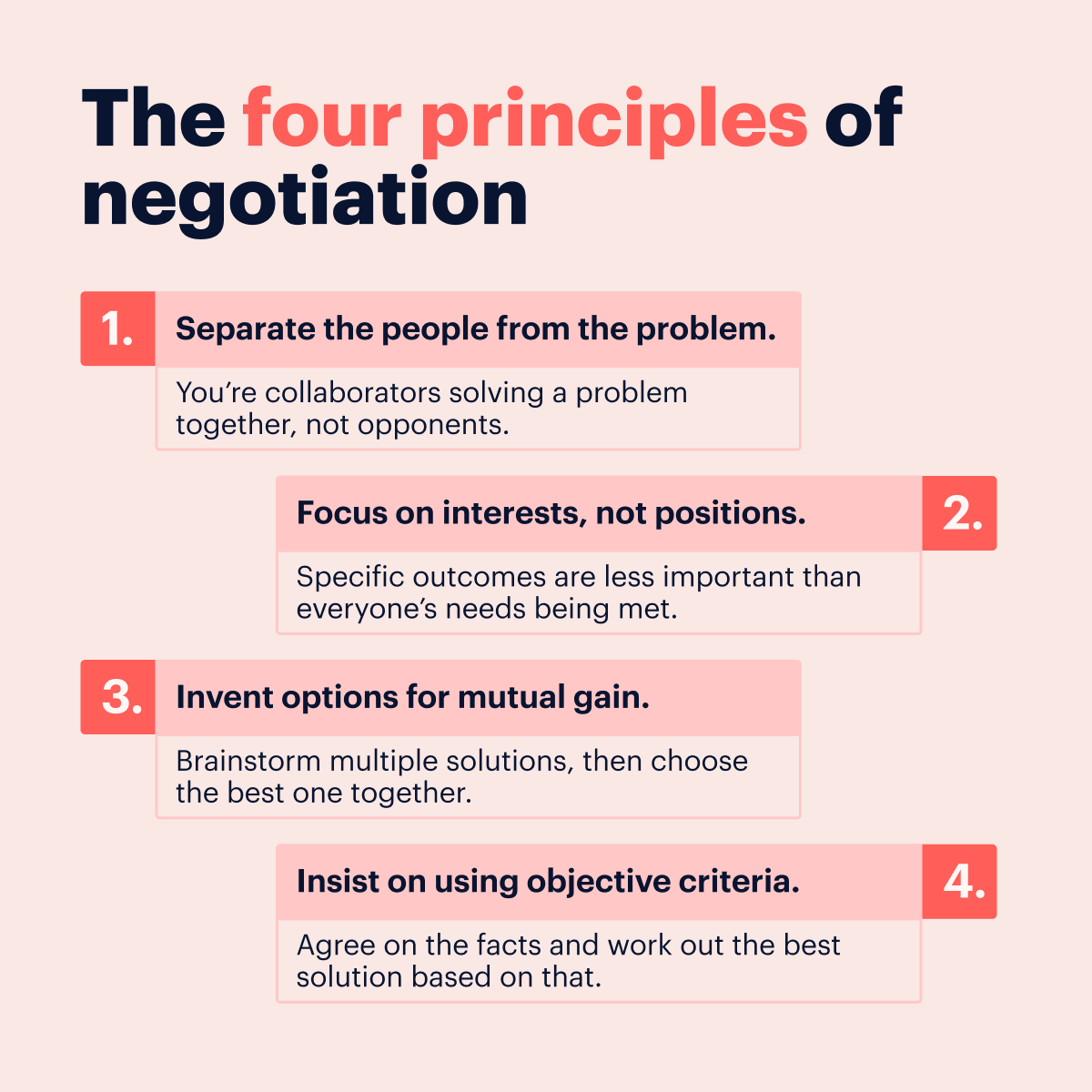
Negotiator and mediator William Ury and Harvard law professor Roger Fisher shared four key principles of negotiation in their best-selling book Getting To Yes, which is one of the most highly respected pieces of writing on the subject. Monika Varela broke down these principles for us.
- Separate the people from the problem. This is the secret to keeping things calm. Think of yourselves as collaborators solving a problem together, rather than as opponents. If you’re trying to reach an agreement with a colleague, client or stakeholder who you have a difficult relationship with, this is especially important to remember—it’s not personal.
- Focus on interests, not positions. This means not getting stuck on the exact details of the outcome, instead making sure that everyone’s needs are met. A position is a specific demand, but an interest is the motivation behind it—once you know where you’re both coming from, it’s easier to find a solution that works for you both.
- Invent options for mutual gain. Don’t settle on the first solution you think of, just to get it over and done with—if you take the time to brainstorm a range of options together, you’re more likely to find a mutually beneficial way to work it out. Try coming up with options that are low cost to you but high benefit to the person you’re talking to (and vice versa) to find a win-win outcome.
- Finally, all parties should insist on using objective criteria. Use professional standards, company data, or another reputable source to help you decide what a good outcome would look like, so you can make the best decision together.
Don’t go into a negotiation without a backup plan
Hopefully, your negotiation will go smoothly and both parties will walk away happy with an agreement. But just in case things don’t go as planned, you’ll need a BATNA—a Best Alternative To a Negotiated Agreement. That’s your plan B!
For example, if you’re looking for a raise, your BATNA might be one of the following.
- Discussing it again based on your recent performance in 3-6 months time, with your manager setting you some new goals to hit.
- No raise—but a new, more senior title.
- Investment in your professional development.
- Deciding to look for internal opportunities elsewhere in the company.
- Beginning to look for a new job entirely in a different company.
A BATNA helps you get a sense of clarity on what a good or bad outcome might look like, by getting you to imagine different possible solutions. It also makes sure you won’t find yourself on the back foot during your meeting, if it becomes clear that you won’t get your ideal result.
Know your worth and stand your ground
Many people find negotiating for what they want at work a little intimidating—or even downright terrifying. One reason for this could be a lack of confidence in themselves. In our recent survey we found that more than two thirds of workers experience ‘imposter syndrome’.
We asked Monika Varela for her tips on how to negotiate with confidence—here’s what she told us.
- Prepare thoroughly. If you go in knowing what you’re going to say, it’ll be so much easier—the expert shares more detailed tips on how to prepare in the next section of this piece.
- Manage your stress through mindfulness. This will help you reduce your level of anxiety before and during important meetings.
- Develop your emotional intelligence. Your ability to recognize, understand, manage, and express emotions is incredibly valuable—both in terms of managing your own feelings, and understanding those of the person you’re talking to.
- Practice assertive communication. It’s a skill like any other! Try saying “No” a little more often. Practice the specific negotiation scenario with a friend, too, ahead of your meeting.
But how do you communicate assertively? Monika told us, “Assertiveness is not about being forceful or dominating, but about standing up for yourself while respecting others.“ If saying what you want or need tends to make you feel uncomfortable, it’s a sign that you might need to work on this skill.
The expert recommended the work of psychologist and author Manuel J. Smith, especially his Bill of Assertive Rights from the classic self-help book When I Say No, I Feel Guilty. These are the rights that everyone has—including the right to change your mind, the right to disagree with someone’s opinion, and the right to say “no” or “I don’t know”.
What you do before stepping into the meeting room is just as important
Preparing in advance gives you the best foundation for your negotiation, making you feel more confident as well as strengthening your arguments for your desired outcome. Monika Varela passed on her advice on what to do when you’re getting ready.
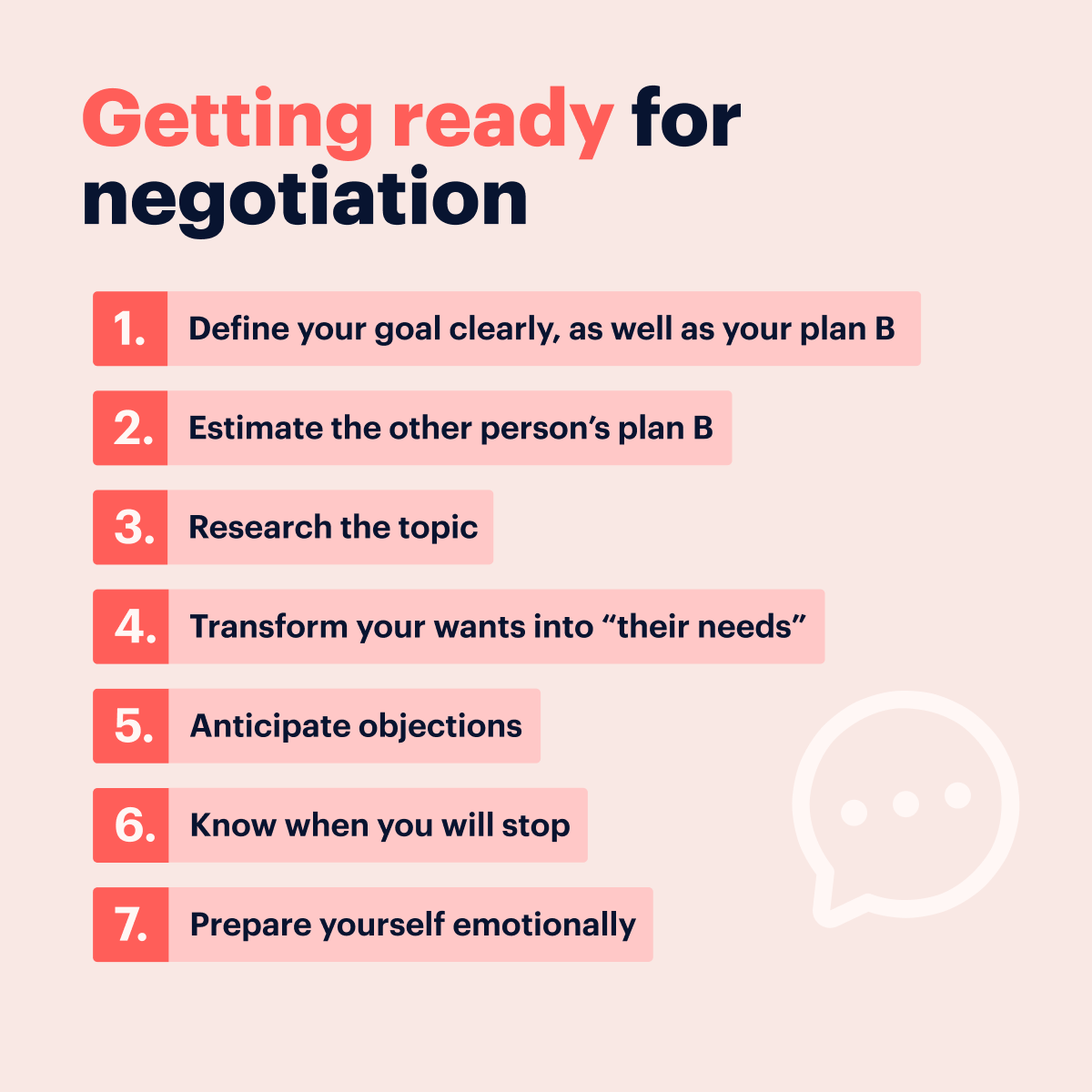
- The first step is to clearly define your goal, as well as your plan B. If you can’t reach an agreement, what’s the next best thing?
- Next, estimate the other person’s plan B. For instance, if you’re hoping you can convince your company’s client to renew their contract for another year, what’s the alternative for them—do they have another company in mind that might have a better offer?
- Spend some time researching. If you’re pushing for a higher salary at your current job, make sure you have a good understanding of what typical salaries are like at the company or in this industry.
- Try and put yourself in the other person’s shoes—what’s most important to them? Here’s an example: if you’re negotiating a project deadline with your boss, you could offer to deliver the most urgent part first, with an extended deadline for the rest of the work.
- The expert also encouraged anticipating any objections ahead of the meeting. It’s good to get ahead and prepare some counterarguments, if there are any reasons why your colleague, client, or prospective employer might not be on board with your proposal.
- Before your meeting, Monika advised deciding on the minimum outcome you’d accept before moving to your plan B. When you’re prepared to walk away, you won’t find yourself agreeing to less than you actually want. Remember that the person you’re talking to will have a minimum outcome too, which determines the Zone of Possible Agreement (ZOPA).
- Finally, prepare yourself emotionally: make sure you’re well rested and try to get a good night’s sleep ahead of your meeting or interview. Then, on the day, the expert recommended practicing mindfulness and breathing exercises. We have some great examples of helpful exercises you can try in our piece on how to look less anxious in an important interview or meeting.
Words matter: don’t shut down the conversation
How you phrase things can have a big impact on how your message is received. We asked Monika Varela to give us a few examples of what not to say, and what you should say instead, in negotiations at work.
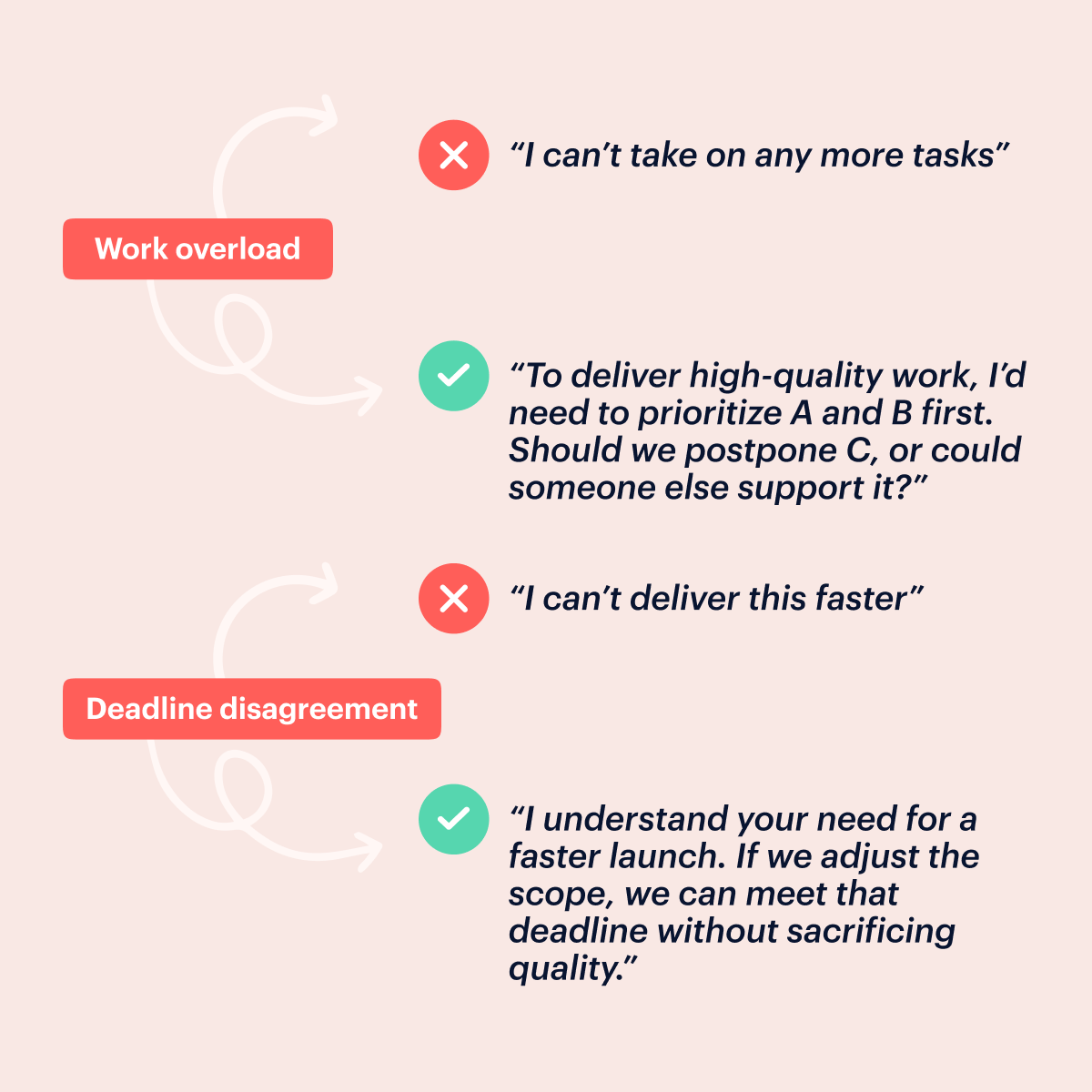
When things are really busy, you might be overloaded with work, yet still be asked to take on even more. Even though “I can’t take on any more tasks” is the truth, something else might be more tactful—like, “To deliver high-quality work, I’d need to prioritize A and B first. Should we postpone C, or could someone else support it?”
With this phrasing, you avoid shutting down the conversation. It shows that you’re willing to work together to find a solution, like bringing in another colleague to help.
The psychologist and coach also gave an example of a project deadline disagreement. Instead of saying, “I can’t deliver this faster,” she recommended, “I understand your need for a faster launch. If we adjust the scope, we can meet that deadline without sacrificing quality."
This goes right back to the second principle of negotiation: focus on interests, not position. The colleague who’s pushing for a faster delivery might be happy with a version of the project that is less ambitious, if it’s ready sooner.
Do you have an interview coming up where you might have to push for the salary or benefits you want? In our article exploring what job seekers really want, career coach Ruth Teigen gave us her tips on how to open the conversation about your expectations at this stage.
Pause before you react, to turn a tough meeting around
But what should you do if the meeting’s not going well? Monika Varela shared that one of her top quotes from the master negotiator William Ury is “Go to the balcony”. That’s his mantra for how to stay calm in these tricky situations!
The balcony isn’t a physical place—it’s a mental and emotional balcony that you retreat to in your mind. Instead of reacting immediately to the point that’s been made, mentally step back, and take a minute to process. This way, you’re much less likely to say something you’ll regret, if you’re feeling annoyed by the way the meeting is going.
If you can feel yourself getting overwhelmed or anxious, you can also excuse yourself and go to the bathroom for a few minutes for a break. And if there isn’t a clear compromise in sight, the psychologist and coach wanted to share a reminder that not all big decisions need to be made right away—you can ask for more time to think.
Asking questions can be a great way to show that you value the other person’s thoughts, and that you want to understand the situation more. However, the expert warned that questions beginning with “Why…” might make the person you’re talking to feel defensive, especially if the mood is already tense.
If things are getting really tough, Monika advises acknowledging it, and maybe even addressing it out loud, before moving on and trying to rebuild the connection. Paraphrase what they’re saying back to them, to make them feel heard and understood.
Final thoughts
Whether you’re explaining the benefits you’re looking for in an interview for a new job, or justifying the budget you’ve requested as a Head of Department, skilful negotiation is a super power. It gets people on your side and helps them understand why giving you what you want is a plus for them.
Being a good negotiator is important for well-being at work, too. For example, defending your boundaries about how much work you’re able to take on is a part of self-care in the workplace—and if you have a team to manage, you’re responsible for protecting their boundaries too. Developing this skill will help you advocate for what you and your colleagues need.
Note
Kickresume spoke to clinical psychologist and coach Monika Varela in September 2025. Drawing on her experience giving workshops on the art of negotiation at work, the expert shared her tips on preparing for a negotiation; successfully coming to an agreement; and what to do when a meeting is going badly.
About Kickresume
Kickresume is an AI-based career tool that helps candidates land jobs and raise their salary with powerful resume and cover letter tools, skills analytics, and automated job search assistance. It already helped more than 8 million job seekers worldwide.