ChatGPT
 Perplexity AI
 Claude
Crafting the perfect plumber cover letter may seem like a pain. But it really doesn't have to be!
For our homes and businesses to be functional and sanitary, we all rely on you to provide us with the proper installation, maintenance, and repair of pipes. Learn how to communicate your value and potential through your cover letter. Just follow our guide and discover the best writing tips, real-life samples, plenty of detailed examples, and sleek templates.


 See more examples like these
In this guide, we teach you the key steps to writing a cover letter as a plumber. Keep reading to learn how to:
- Explore helpful cover letter samples
- Format your plumber cover letter the right way
- Craft informative cover letter header
- Make your headline pop
- Personalize the greeting of your plumber cover letter
- Hook the reader with your introduction
- Flash out your plumbing skills and accomplishments
- Weave powerful action verbs into your cover letter
- Conclude your plumber cover letter convincingly
- Dodge the most common cover letter mistakes
- Pairing your plumber cover letter with a matching resume
- Accessing useful resources for job-seeking bookkeepers
- Average salary and job outlook for bookkeepers
Still looking for a job? These 100+ resources will tell you everything you need to get hired fast.
Plumber cover letter sample


Why does this cover letter example work?
- It mentions relevant certification: Talking about your certifications is a great way to show the hiring manager that you have the right knowledge and training for the job. This is especially effective if your credentials come from a well-known institution in the plumbing field. Plus, it can help set you apart from other applicants.
- It presents a variety of specific skills: Plumbing is a hands-on trade that requires a well-rounded set of skills. This candidate does a great job showcasing that by mentioning silver brazing, soft soldering methods, and welding. A hiring manager reading this will see that the applicant is fully capable of working independently and handling different types of tasks.
What could be improved?
- Use of quantifiable data: While the letter outlines relevant tasks and skills, it would be much stronger with a few specific numbers. For example, the candidate could mention how many jobs they handle per week, the number of installations they've completed, or customer satisfaction rates. Saying they “completed 200+ installations with a 98% satisfaction rate” would make their experience more concrete and show real impact.
- Headline could be more attention-grabbing: While the current version gets the job done, it’s a little too plain. The headline is the first thing a hiring manager sees, so it’s a good idea to make it pop a bit more. Instead of simply stating the position, this candidate could've gone with something more specific. For example: Certified Plumber Specializing in High-Quality Installations & Repairs or Experienced Plumber with 5+ Years in Residential & Commercial Projects.
Carpenter cover letter example

Why does this cover letter example work?
- It speaks with a confident tone: The letter maintains a strong, self-assured voice throughout. Phrases like “I am confident in my ability to excel in this role” show belief in one’s own skills without sounding over the top. Thi is a good balance to strike.
- Its concluding paragraph is effective: The closing wraps things up nicely. It shows enthusiasm, offers availability, and includes contact details in a clear and polite way. This leaves a professional final impression.
- It mentions a professional recognition: Highlighting “Employee of the Month” not once but twice gives a nice touch of credibility. It subtly shows that others have recognized the candidate’s value, which is always a plus.
What could be improved?
- Personalized greeting: The letter opens with “Dear Hiring Manager,” which is fine, but using the hiring manager’s name would’ve made it feel more tailored and personal. A little research goes a long way in making a stronger first connection.
Electrician cover letter template

Why does this cover letter example work?
- Its content is laid out with the reader in mind: The layout of this cover letter works well. It’s quick to scan, easy on the eyes, and makes smart use of white space. The short paragraphs break the information into digestible chunks, while the bullet points help highlight key responsibilities without overwhelming the reader. Overall, it respects the hiring manager’s time and presents the content in a clean, accessible way.
- It mentions relevant education: Mentioning the bachelor’s degree in Electrical Engineering gives the letter a strong boost. It shows dedication, discipline, and a solid foundation of knowledge. The added detail about being Vice President of the Engineering Society also hints at leadership and involvement beyond academics.
What could be improved?
- It lacks emotional connection: While the tone is respectful and professional, it doesn’t really show what makes the candidate interested in this company. Adding a line about why MRU & Co., Inc. stands out (whether it’s the company’s values, recent projects, or reputation) would create a stronger personal link. It’s a missed opportunity to show genuine enthusiasm for being part of their team.
- It lacks specificity: The tasks listed under past experience are solid, but a little vague. Mentioning exact tools, systems, or methods, like using multimeters, working with PLC systems, or following IEC standards, would give the letter more depth and show hands-on knowledge. It would also help the reader picture the candidate in action, rather than just reading a general list of duties.
1. Format your plumber cover letter for a professional look
Before anyone reads a single word of your cover letter, they notice how it looks. A clean, simple format shows you put care into what you do. (Just like in plumbing, neat work stands out.)
Here's a list of a few small choices that can make your cover letter look sharp and easy to read:
- Choose a plain, easy-to-read font: Stick with something basic like Arial, Calibri, or Times New Roman. Font size? Go with 11 or 12 points. You want it big enough to read comfortably, but not so large it looks unprofessional.
- Use clear spacing: Avoid squeezing everything together. Leave a space between each paragraph. It gives the cover letter room to breathe and makes it easier for someone to follow along.
- Keep everything lined up to the left: Left-aligned text looks neat and is the easiest to read. Skip centering or stretching your text — it can get messy fast.
- Follow a simple structure: Here's the order that works best: header, opening paragraph, body paragraphs, closing paragraph.
- Stick to one page: Keep your writing short and focused. Just highlight what makes you a good fit for the job. You don't need to include every single detail about your work history.
- Consider using bullet points: If you want to show off a few key skills or achievements, bullets make them easy to spot. It also helps break up the text, which keeps things from looking like a wall of words.
- Aim for a confident, friendly tone: Write like a professional, but still sound like yourself. As if you were having a conversation about why you’re right for the role.
Once your format looks polished, you’ll feel more confident diving into the writing part. And that’s where you really want to focus your energy.
Create your cover letter fast with artificial intelligence.

2. Write an effective cover letter header as a plumber
Before the hiring manager even reads a word of your cover letter, their eyes will land on your header.
The cover letter header is where hiring managers find your contact information and know exactly how to get in touch.
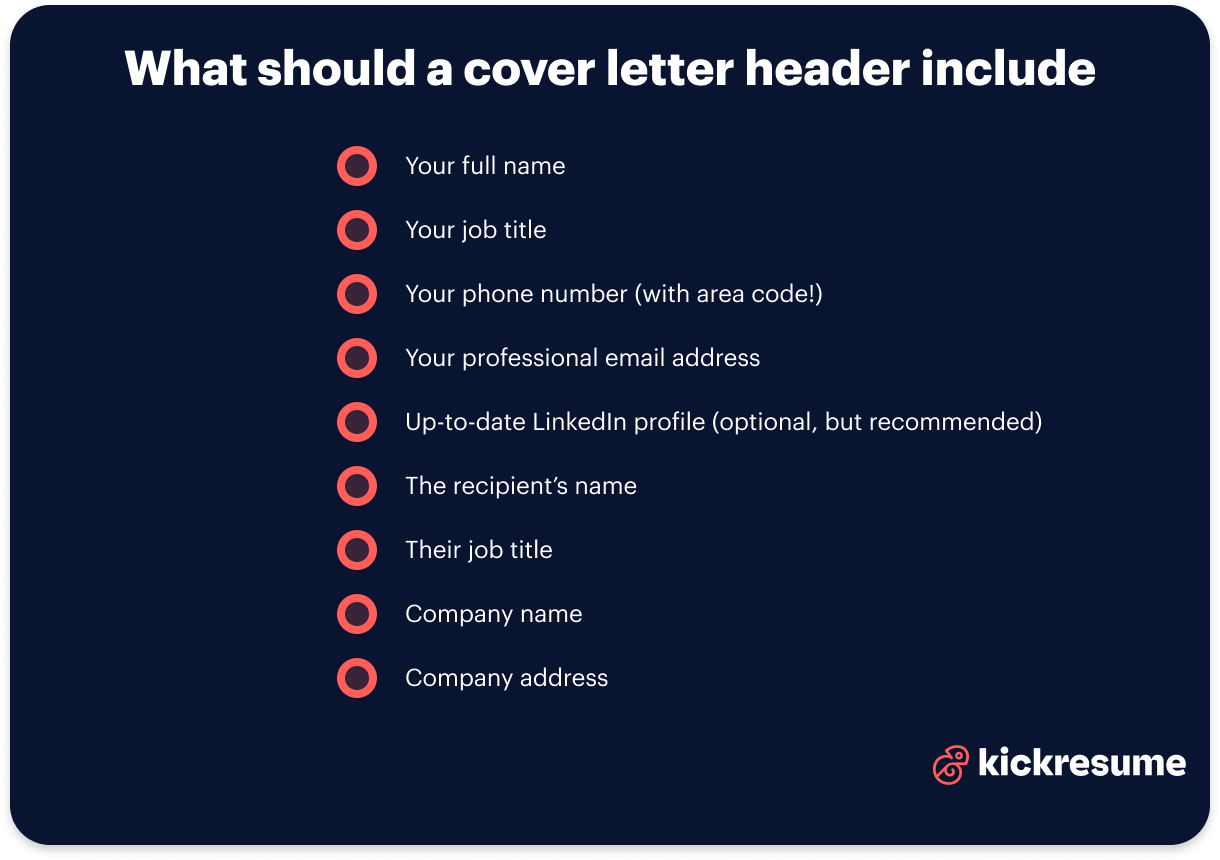
Here’s what you should include in your header:
1. Your contact information
Put this right at the top, and make sure it’s accurate:
- Full name
- Phone number (include the area code)
- Email address (use something professional, firstname.lastname is a safe bet)
- LinkedIn profile (if you have one and it’s up to date)
Optional: You can also add your job title (like Licensed Plumber), especially if it matches the position you’re applying for.
2. The employer’s information
Below your info, add the details for the person or company you’re writing to:
- Name of the hiring manager (if you can find it)
- Their job title
- Company name
- Company address
Let’s look at an example of how not to do it:
Bad example of a plumber cover letter header
From: Mike R.
555-9876 | miker@email
To: Hiring Team
What’s off here? A few things. Firstly, the phone number is missing the area code and the email looks incomplete (or too casual). Secondly, the information about the cover letter’s recipient is reduced to a generic “Hiring Team”. All of these things need to be improved.
Now let’s clean it up:
Good example of a plumber cover letter header
From: Mike Rodriguez
(773) 555-9876
mike.rodriguez@email.com | linkedin.com/in/mikerodriguez
To: Dana Collins, Service Manager
Reliable Plumbing Co.
1200 North Ashland Ave
Chicago, IL 60622
Why does this work? Everything in this example is spelled out clearly. It looks polished, professional, and complete.
Remember, the small details matter because they show that you’re serious about the job and willing to put in the effort to get it. Now that your header is looking sharp, you’re ready to move on to writing a killer cover letter headline!
3. Craft a strong headline that reflects your expertise
Why should you bother with a headline?
Because most hiring managers are busy. They’re scanning, not reading every word. And in a stack of cover letters, a strong headline can be the difference between getting noticed and getting skipped.
A good headline should be:
- Specific: Clearly states what you offer or your key strength.
- Relevant: Tied to the job and showcases a desirable skill or achievement.
- Engaging: Invites the reader to continue reading.
Let’s compare two plumber cover letter headline examples and break down what works. And what doesn’t.
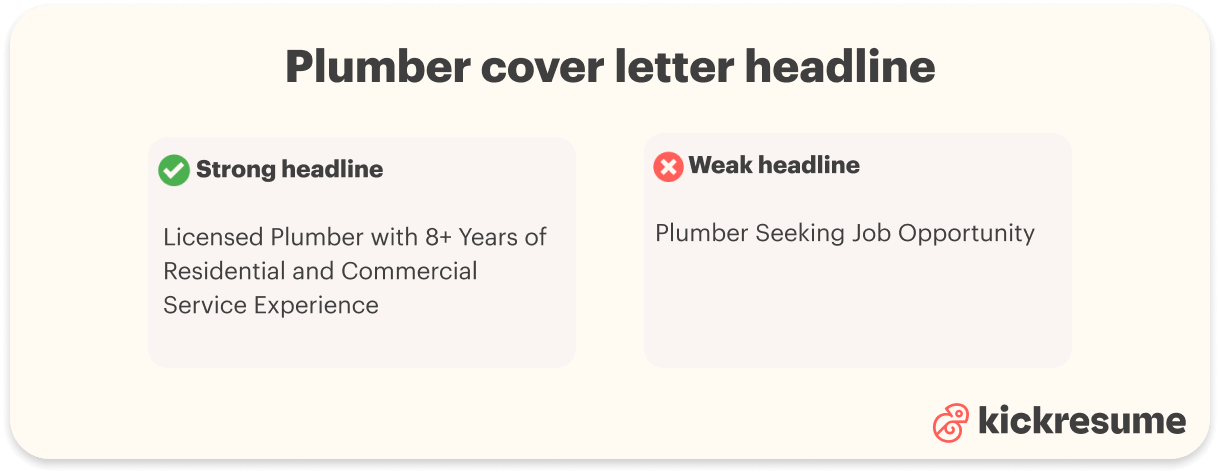
Bad example of a plumber cover letter headline
Plumber Seeking Job Opportunity
Why isn't this enough? This example is definitely not doing you any favors. It’s vague and doesn’t give the reader any useful info. What kind of plumber are you? What kind of work do you do? Are you experienced, licensed, just getting started?
Good example of a plumber cover letter headline
Licensed Plumber with 8+ Years of Residential and Commercial Service Experience
Why is this example such an improvement?
- It’s specific: It tells the reader exactly what kind of plumbing work you’ve done.
- It shows experience:“8+ years” gives a clear idea of your background.
- It sounds confident: You’re leading with your strengths — and that’s what a good headline should do.
Crafting a headline for newcomers to the trade
You don’t need years of experience to write a great headline. You just need to focus on what you do have.
If you’re fresh out of trade school or still in your apprenticeship, try highlighting your training, your drive to learn, or the types of jobs you’ve helped with so far.
Here’s an example that works for someone newer to the field:
Apprentice plumber cover letter headline
Apprentice Plumber with Hands-On Experience in Pipe Installation and Water Heater Maintenance
Remember, your headline is just the beginning. It’s a chance to give the hiring manager a taste of what’s to come in your cover letter. So, keep it professional, focused, and reflective of what you offer, no matter where you are in your career.
4. Create a personalized greeting that connects with hiring managers
Starting your cover letter with something like “To Whom It May Concern” might seem polite, but let’s be honest, it feels cold and outdated. It gives off the impression that you’re sending the same letter to every company on your list.
A thoughtful, personalized greeting, on the other hand, shows that you’ve put in a bit of effort — and that you’re genuinely interested in this job at this company.
So how do you figure out who to address your letter to?
Here are a few quick places to check:
- The job ad: Sometimes the hiring manager’s name is listed right in the posting.
- The company’s website: Check out the “About Us” or “Team” page. You might find the head of the department or the person doing the hiring.
- LinkedIn: Look up the company and scan through employees. Someone in HR or with a title like “Service Manager” or “Operations Lead” is a good bet.
- Give them a call or email: It’s totally okay to reach out and ask who’s in charge of hiring for the position. It only takes a minute.
Once you’ve got a name, here are a few ways you can use it in your greeting:
Examples of personalized greetings
- Dear Ms. Collins,
- Dear Ms. Dana Collins,
- Dear Hiring Manager Ms. Collins,
Keep it respectful and professional. If you’re not sure about someone’s gender or title, play it safe and avoid using “Mr.” or “Ms.” Just go with their full name.
What if you can’t find a name?
Sometimes companies don’t make this information easy to find. If you’ve looked and still come up short, you can still keep your greeting warm and professional.
Here are a few solid go-to options to use if you're addressing a cover letter without a name:
General but still personal-sounding greetings
- Dear Hiring Manager,
- Dear Plumbing Services Team,
- Dear [Company Name] Recruitment Team,
These are all much better than the generic “To Whom It May Concern,” because they still show that you’ve thought about who you’re writing to, even if you couldn’t pin down an exact name.
Taking the time to personalize your greeting, even just a little, makes a big difference. It shows that you’re serious, thoughtful, and genuinely interested in this job at this company.
5. Key details to include in your cover letter introduction
If your introduction sounds like it could’ve been copied and pasted into a hundred other job applications, it’s not going to catch anyone’s attention. You don’t need to write anything fancy or over-the-top. But you do want to sound like a real person who actually cares about the job.
The goal here is simple: make the hiring manager want to keep reading.
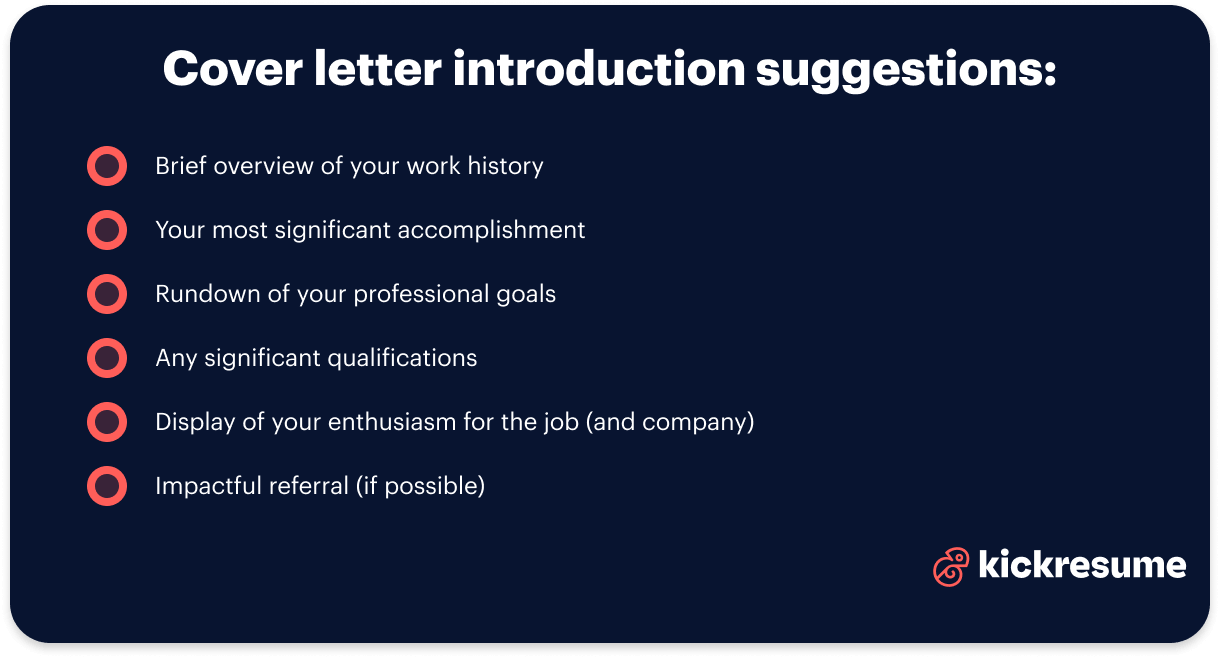
Here are a few key things you should consider including in your intro:
- Brief overview of your work history
- Your most significant accomplishment
- Any relevant qualifications
- Display of your enthusiasm for the job (and company)
- Impactful referral (if possible)
Instead of opening with something flat like “I am applying for the plumber position listed on your website,” try saying what draws you to the role, or what you’re good at, right off the bat.
Bad example of a plumber cover letter introduction
I am writing to apply for the plumber role at your company. I have plumbing experience and I believe I would be a good fit. I look forward to the chance to work with you.
What’s missing here? This example is too vague. We don’t get any details about their skills or what excites them about the role. It could be sent to any plumbing company, and it doesn’t show much effort or personality.
Good example of a plumber cover letter introduction
Over the past 10 years, I’ve worked on everything from residential pipe repairs to full commercial system installs — but what really excites me about this role at ClearFlow Plumbing is your reputation for tackling complex, high-efficiency projects. I take pride in doing clean, code-compliant work the first time, and I’d love to bring that same attention to detail to your team.
Why does this work? It’s clear, specific, and feels personal. The candidate shows their experience, explains what they admire about the company, and hints at what kind of work they’re passionate about.
Tips for newcomers to the trade
Even if you’re just starting out, your intro can still be strong. Just focus on your motivation, any hands-on experience (like an apprenticeship), and your willingness to learn.
Here are some examples of strong intros for newer plumbers:
For an apprentice
As a second-year apprentice with a strong foundation in residential repairs and pipefitting, I’m eager to keep learning from seasoned professionals. What drew me to this role is your company’s focus on mentorship and top-quality workmanship.
For a career changer
After five years in general construction, I’ve recently completed a plumbing certification program — and I’m ready to take that next step. I’m especially drawn to your team's commitment to energy-efficient plumbing solutions, and I’d be proud to be part of that work.
For a recent trade school grad
I’ve just completed my plumbing training at Lincoln Tech, and I’m excited to get started in the field. What stood out to me about your company is your reputation for training new plumbers the right way — with a strong focus on safety, quality, and teamwork.
Taking a little extra time to craft a compelling opening can make a big difference in how your application is received. Make it count, and you’ll be well on your way to catching the hiring manager’s eye!
6. Highlight your professional value as a plumber
This section — the body of your cover letter — is where you get to connect the dots between your experience and the job you’re applying for.
How to structure this section
Don’t overthink the format. Just aim for 2 to 4 short paragraphs that are clear, direct, and focused on your best and most relevant experience. Keep it easy to read and to the point.
Not sure what to talk about? Here are some of the most valuable skills companies look for in plumbers:
Key skills for plumbers to mention in your cover letter
- Pipe installation (residential and/or commercial)
- Leak detection and repair
- Water heater installation and maintenance
- Fixture fitting and troubleshooting
- Blueprint reading and interpretation
- Drainage and sewer line work
- Emergency repair response
- Knowledge of local plumbing codes and safety standards
- Customer communication
- Teamwork on job sites
How to showcase your value with impact
Here’s a simple rule: Don’t just say what you did — show how it helped. Give a little context, mention results if you can, and always try to tie it back to what the company is looking for.
One powerful way to do this is: context + numbers = impact.
Examples for a plumber cover letter
- Pipe installation and repair: “At FlowPro Plumbing, I installed new water and drainage systems in over 30 residential builds, completing all projects ahead of schedule and with zero safety incidents."
- Leak detection: "I used advanced diagnostic tools to locate and repair underground leaks, which helped reduce water waste and saved clients an average of $200 per month on their utility bills."
- Drainage system maintenance: "Led routine maintenance for commercial sewer lines, preventing major blockages and reducing emergency service calls by 40% over a 12-month period."
- Plumbing code knowledge: "Ensured every job complied with local plumbing codes, contributing to a 100% first-time inspection pass rate across all projects in 2023."
Tips for those with less experience
Even if you’re newer to the field, there’s plenty you can say. Focus on what you’ve learned, how you’ve helped on job sites, and the skills you’ve picked up so far.
Examples for newer plumbers or apprentices
During my apprenticeship with ClearWater Plumbing, I:
- Assisted in rough-in and finish work on residential remodels, learning to read blueprints and prep materials independently.
- Supported licensed plumbers with leak detection and fixture installation, helping cut job time by 15%.
- Took the lead on cleanup, tool maintenance, and customer walkthroughs — always making sure the site was safe and tidy.
While in trade school, I completed hands-on training in pipe cutting, soldering, and drainage layout. I’m now eager to put those skills to work in a fast-paced, real-world setting.
The body of your cover letter is where your experience and how you add value. Be specific, back it up with results, and stay focused on what matters to this role. The clearer you are, the easier it’ll be for the hiring manager to picture you as part of their team.
7. Enhance your plumber cover letter with dynamic and relevant action verbs
When you're writing your cover letter, you want it to hold the hiring manager’s attention from start to finish. Of course, talking about your skills and achievements is important — but how you talk about them also makes a big difference.
One simple way to give your cover letter more confidence? Use action verbs.
To help you out, here are some strong action verbs you can use in a plumber cover letter, each one with a sample sentence to show it in action (pun intended):
Action verbs for a plumber cover letter (with examples)
- Installed: I installed over 120 plumbing systems across residential and commercial properties, consistently completing projects 15% ahead of schedule.
- Repaired: In my previous role, I repaired more than 50 water heaters and pipe leaks per month, reducing repeat service calls by 30% through thorough diagnostics.
- Diagnosed: I accurately diagnosed complex plumbing issues in high-rise buildings, cutting down troubleshooting time by 40%.
- Upgraded: I upgraded outdated piping in 20+ homes, improving water pressure by up to 50% and reducing annual maintenance requests by 35%.
- Inspected: By inspecting plumbing systems regularly across a portfolio of 10 commercial sites, I identified and addressed potential issues early, avoiding an estimated $25,000 in emergency repairs over one year.
- Maintained: I maintained plumbing systems for a 200-unit residential complex, achieving a 98% tenant satisfaction rating through quick turnaround times.
- Troubleshot: I troubleshot urgent plumbing failures during off-hours, resolving over 95% of emergency calls on the first visit.
- Replaced: I replaced worn-out piping and fixtures in a 15-building renovation project, reducing water waste by 20% and increasing overall system reliability.
- Tested: After every installation, I tested plumbing systems for leaks and pressure integrity, contributing to a 99% pass rate on third-party inspections.
- Collaborated: I collaborated with general contractors and HVAC teams on 30+ multi-phase construction jobs, helping to keep timelines on track and saving an average of $10,000 per project in rework costs.
Instead of just listing what you were responsible for, you’re showing what you actually did and the impact you made. It’s the difference between sounding passive and sounding capable.
So when you're writing about your work, skip the generic “responsible for” language. Choose words that actually show what you did and what kind of plumber you are.

8. Write a confident closing statement for your cover letter
You’ve walked the reader through your skills, your experience, and your enthusiasm. All that's left now is to end on a strong note.
The closing paragraph of your cover letter is your chance to leave a positive final impression and encourage the hiring manager to get in touch.
What should a great conclusion include?
- Summary of competence: Highlight why you’re the best person for the role.
- Reiterate enthusiasm: Express genuine excitement about the opportunity.
- Contact information: Clearly state how and when you can be contacted.
- Follow-up plan: Indicate how and when you’ll follow up on your application.
- Formal sign-off: End with a professional closing.
Let’s start with what not to do.
Bad example of a plumber cover letter closing
I hope to hear from you. Thank you for reading this. Have a good day.
Best,
James
What’s wrong here? This conclusion feels flat. It doesn’t give a reason to remember the applicant, and it lacks energy. There's no reminder of qualifications or a clear next step. It just ends without much impact.
Good example of a plumber cover letter closing
Thank you for taking the time to review my application. With over eight years of experience handling everything from emergency repairs to full system installations, I’m confident I can bring both reliability and expertise to your team. I’m especially excited about the opportunity to work with a company known for its dedication to quality service and customer satisfaction.
I’d be happy to talk more about how I can contribute to your projects and am available for a call or meeting at your convenience. You can reach me at (773) 555-9876 or email me at mike.rodriguez@email.com.
Sincerely,
Mike Rodriguez
What makes this example so effective? This example hits every key point. It opens with appreciation, reminds the hiring manager of the candidate’s strengths, and ends with a clear call to action. It’s professional, friendly, and easy to follow up on.
You don’t need fancy words or a long speech. Just a few clear, confident sentences that show you’re excited and ready to move forward. The closing might be the last part the reader sees. So make sure it leaves a lasting (and positive) impression.
9. Avoid common mistakes in plumber cover letters
Even if you have years of hands-on experience and the right skills for the job, a few small slip-ups in your cover letter can send the wrong message.
Here are some of the most common cover letter mistakes plumbers make, and how you can steer clear of them:
- Using the same cover letter for every job: Sending a generic letter might make things faster, but it also makes it look like you didn’t take the time to learn about the company.
- Writing too much (or not enough): Your cover letter shouldn’t be a full autobiography, but it also shouldn’t be so short that it feels rushed.
- Making it all about yourself: Yes, your experience matters, but your cover letter isn’t just a list of what you want. If you only talk about how this job will help your career, you might come off as self-focused.
- Repeating your resume word-for-word: Your resume already lists what you’ve done. Your cover letter is your chance to go a bit deeper.
- Ignoring the job posting instructions: If the listing asks you to mention a license number, submit documents in a certain format, or include a subject line, do it!
- Letting typos and grammar mistakes slip through: A few small errors can make your letter look rushed or careless.
- Skipping proper formatting: A messy or hard-to-read letter can leave a bad impression, no matter how strong your experience is.
Catching these common mistakes is less about perfection and more about care. Take the time to double-check your work. It shows respect for the reader, and it sets you apart as someone who’s serious about getting things right.
10. Pair your plumber cover letter with a matching resume
Before you send in your job application, make sure you’ve got both pieces of the puzzle — your cover letter and your plumber resume. They work best when they’re side by side, telling a complete story about who you are, what you can do, and why you’re the right person for the job.
Think of it like this:
- Your resume is the blueprint. It's clean, structured, and straight to the point. It shows your skills, certifications, and work history in a clear, organized way.
- Your cover letter is the voice. It brings your personality in, explains the “why” behind your work, and helps you connect with the person reading it.
Even though they do different things, they need to look like they belong together. A mismatched pair can feel disorganized.
Here’s how to make your cover letter and resume visually in sync:
- Use the same contact info at the top: Your name, phone number, email, and location should be styled and placed the same way on both documents.
- Stick with the same font: Don’t switch things up between documents. Choose one professional font (like Arial, Calibri, or Georgia), and use it across both your cover letter and resume. Keep the font size and spacing consistent too.
- Match your formatting style: If you’re using bold section headers or bullet points in your resume, try to keep that same clean style in your cover letter.
- Keep margins and spacing uniform: When your documents have the same margin widths and spacing, they instantly look neater.
- Use matching colors (if you’re using any): If your resume uses a splash of color, maybe for your name or headers, carry that same touch over to your cover letter. Just keep it subtle and professional. A little goes a long way.
If formatting isn’t your favorite part of the process, don’t worry! We've got tons of professionally designed resume and cover letter templates that can help you nail the look without the layout headache. Some even come as a bundle, so your documents match right out of the box.
Use artificial intelligence to create your resume — FAST!

11. Top resources for job-seeking plumbers
With your plumber cover letter ready, there's just one more thing standing between you and your ideal job — the actual job hunt. Undoubtedly, the process of job searching can be a challenge, but with the right resources, you'll be able to rise to the occasion without any issues:
- PlumbingJobs.com: Dedicated to plumbing careers, this site lists job openings for plumbers across various sectors, including residential, commercial, and industrial.
- Plumbing-Heating-Cooling Contractors Association (PHCC): This organization offers a job board as well as numerous training resources and certification opportunities to help you advance in your career.
- LinkedIn: When it comes to networking, no platform does the job quite like LinkedIn. Use it to network with other plumbing professionals and discover job opportunities through your connections and targeted searches.
- HomeAdvisor Pro: This platform is great for independent plumbing contractors looking to find freelance work.
- National Inspection Testing and Certification Corporation (NITC): Being certified can improve your job prospects significantly, as many employers look for certified professionals to ensure competency and compliance with industry standards.
- PlumbingNet.com: This website is a useful resource for plumbers looking to make industry connections or find employment with suppliers and manufacturers in the plumbing sector.
Even though industry-specific organizations and job boards are perfect for finding the right opportunities, don't underestimate the power of general job search engines like Indeed, Monster, ZipRecruiter, or Glassdoor.
Construction Career Outlook in 2026
Construction occupations are set to expand faster than average between now and 2034, with roughly 649,300 job openings projected each year (Source: U.S. Bureau of Labor Statistics).
One big driver is renewable energy projects. Solar Photovoltaic Installers are projected to grow 48%, adding about 4,100 new positions annually as clean-energy infrastructure expands.
Beyond renewables, the work itself is changing. In 2026, construction is getting safer and faster thanks to drones, robotics, and AI project tools. Tradespeople who add tech skills like BIM and smart building systems to their hands-on experience will be in higher demand.
Average US base salaries across popular Construction roles:
- Carpenter: $65,644/year
- Construction Worker: $41,461/year
- Electrician: $67,329/year
- Painter: $74,177/year
- Plumber: $62,274/year
- Construction Manager: $101,443/year
- Construction Estimator: $90,535/year
- Construction Inspector: $41,833/year
These salary estimates come from Indeed (as of January 2026), and are based on anonymous submissions from workers, along with salary data from job postings on the platform over the last 36 months. Exact figures vary by location, company size, and experience level.
Overall, if you’re thinking about starting a career in construction—or you want to advance within the field—now is a good time to explore the opportunities the industry provides.
Plumber Cover Letter FAQ
Why should I include keywords in my plumber cover letter?
Strategic use of keywords is essential for getting your cover letter through the Applicant Tracking Systems (ATS). To find out which keywords to use, you need to review the job posting carefully and watch out for phrases such as “commercial plumbing,” “leak repairs,” “fixture installation,” or “water heating systems.” Next, incorporate these naturally throughout your cover letter.
How long should my plumber cover letter be?
A cover letter should ideally be one page long. This is enough space to concisely introduce yourself, explain why you are a good fit for the job, and discuss a few key achievements without overwhelming the reader with too much information. That's why you should stick to 2-4 body paragraphs (+ introductory and closing paragraphs).
How should I showcase my plumbing skills in my cover letter?
You need to focus on specific projects or tasks from your previous jobs that best illustrate your skills. Mention any specialized areas of expertise, such as residential service, commercial plumbing, or pipefitting. And to really drive all your points home, include quantifiable data whenever possible.
How do I tailor my cover letter for different types of plumbing jobs?
Read the job description carefully and adapt your cover letter to reflect the specific skills and experiences that are most relevant to the position. For example, if you're applying for a commercial plumbing position, emphasize your experience with large-scale plumbing systems and compliance with commercial building codes.
How can I address a career gap in my cover letter?
If you have gaps in your employment history, be upfront about it. Address them briefly and positively! Explain what you were doing during that time that could be seen as beneficial to your career as a plumber, such as furthering your education, volunteering, or freelance projects. This shows proactive behavior and a commitment to your profession.